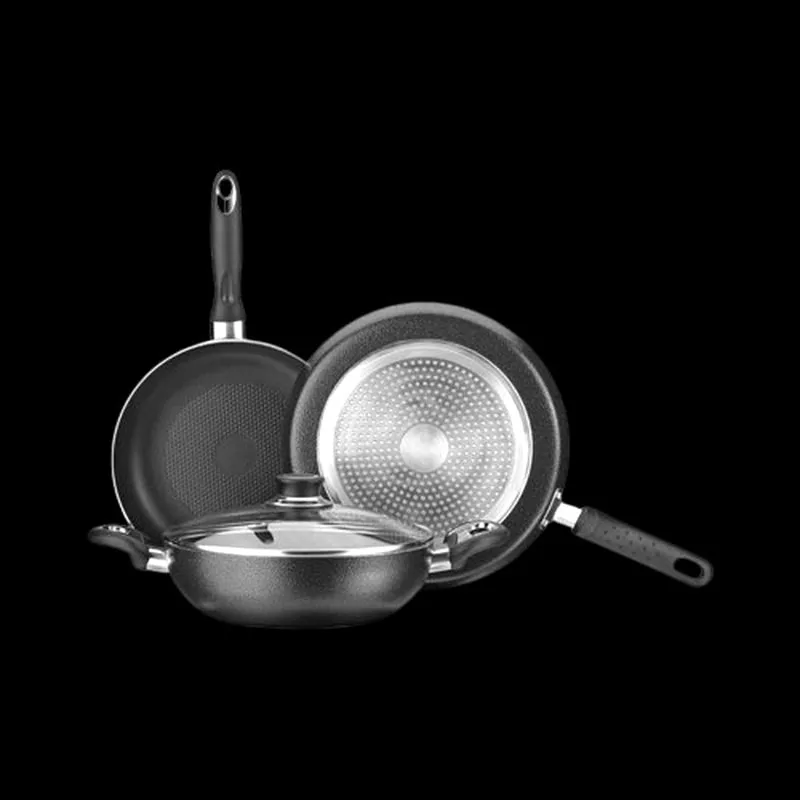
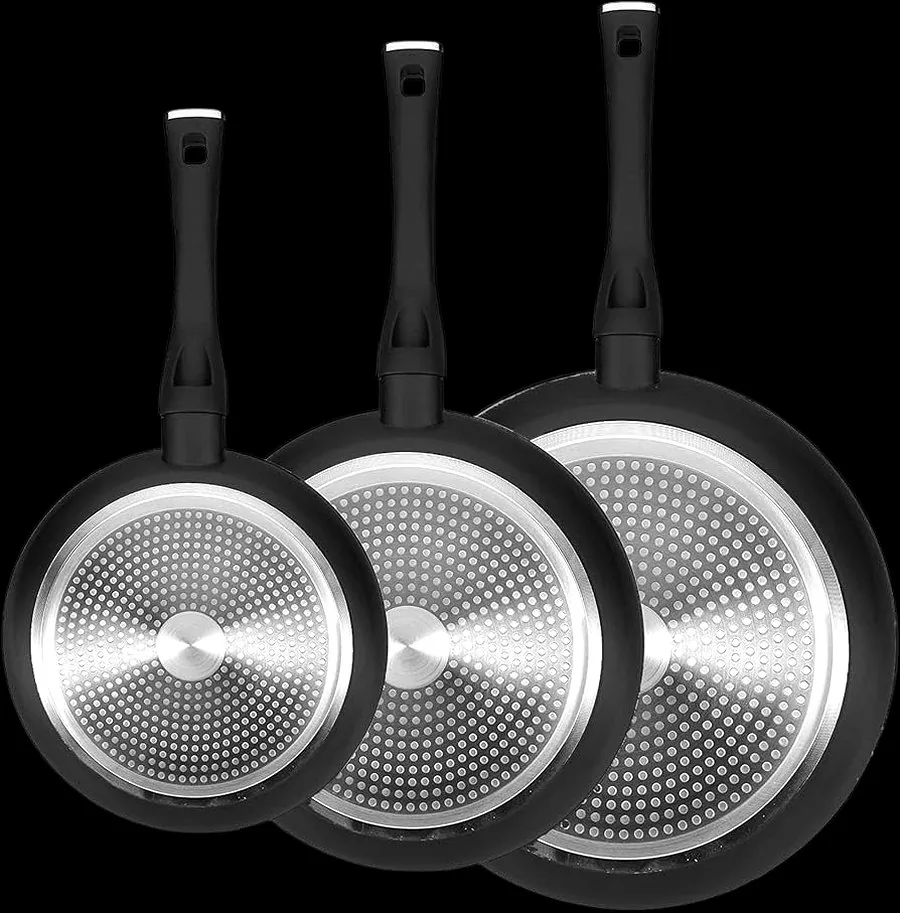
Non-stick fry pans fitted with SS 430 induction base plates manufactured by Jagruti Steels
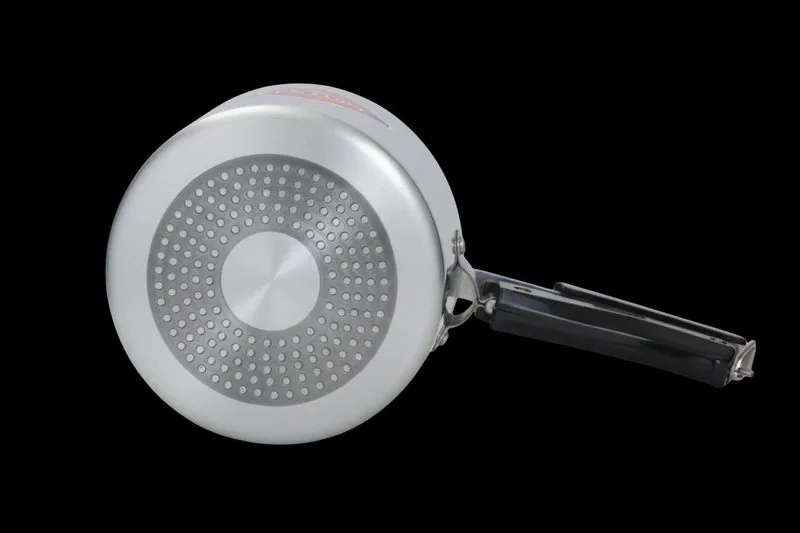
Aluminium pressure cooker body with stamped stainless steel induction base plate
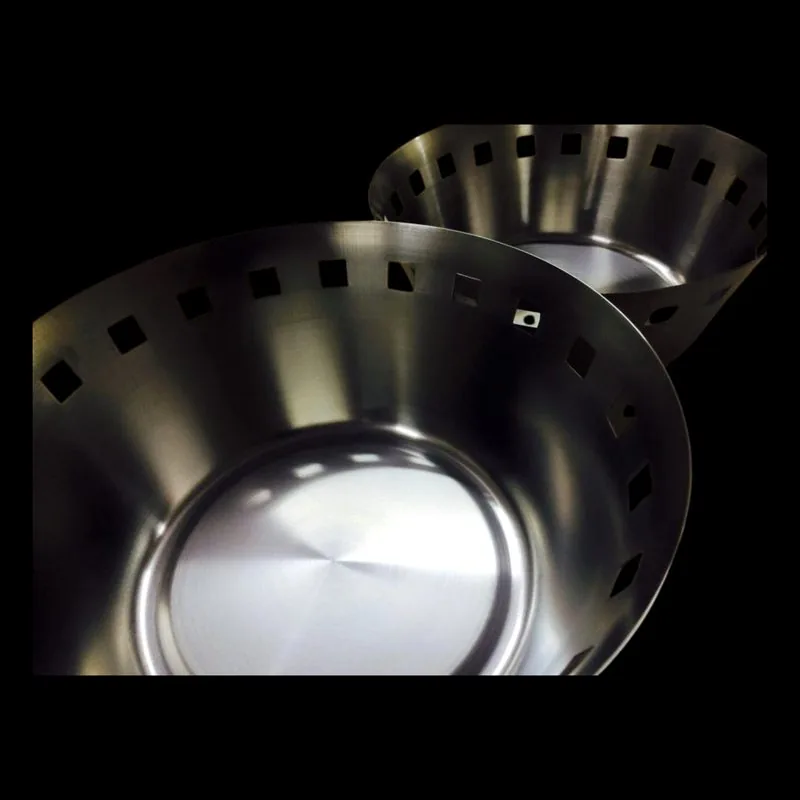
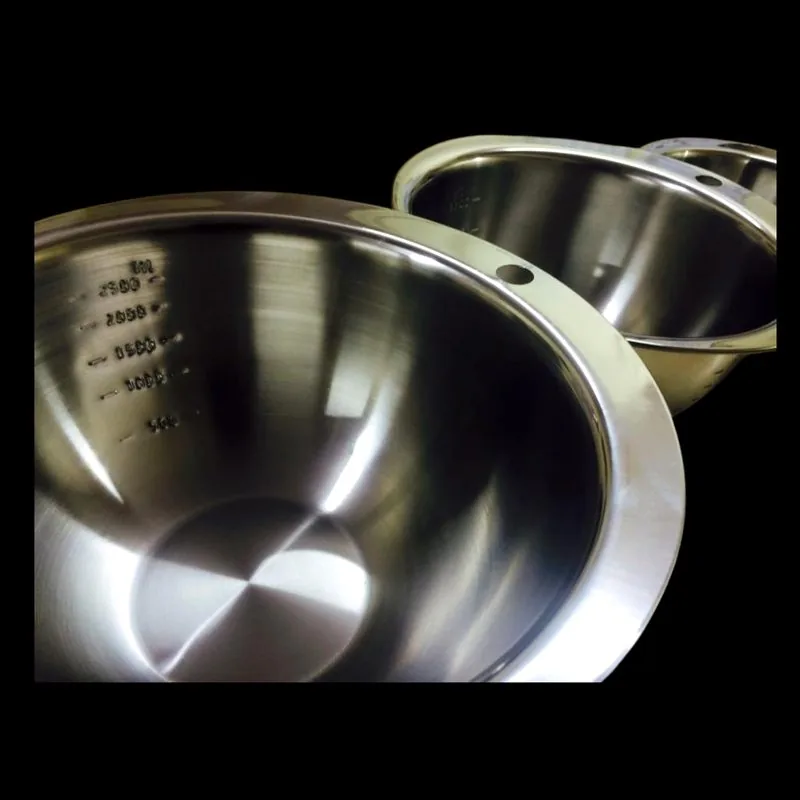
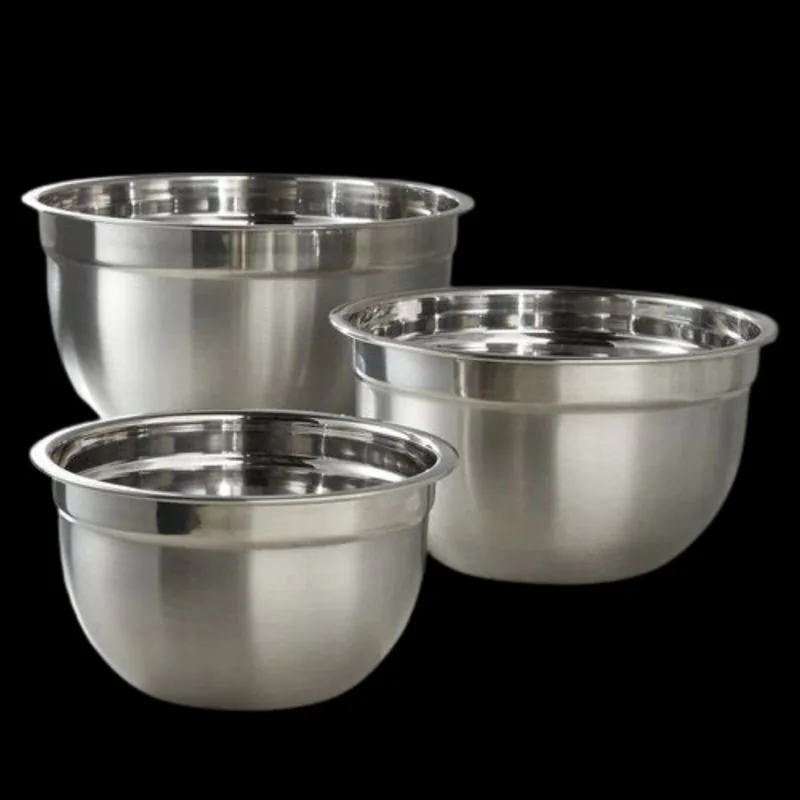
Deep drawn stainless steel bowls produced on hydraulic presses in Mumbai
Global B2B Sourcing & Technical Authority · Est. 1974

The Ultimate Sourcing & Metallurgy Guide to SS 430 Induction Base Plates

Engineering standards, perforation dynamics, thermal expansion control, delamination prevention, and global OEM procurement trends for ferritic EN 1.4016 stainless steel induction discs.

Technical Sourcing & Material Science

Why SS 430 (EN 1.4016) Is the Unrivaled Standard for Induction Base Plates

Understanding the physics of electromagnetic induction heating, thermal expansion differentials, and mechanical interlocking mechanisms in modern cookware manufacturing.

SECTION 01

The Electromagnetic Physics of Induction Heating

Global procurement teams often confront a fundamental metallurgical dilemma: why can't food-grade austenitic stainless steel (such as SS 304 / EN 1.4301) be directly energized by an induction cooktop? The answer lies in the atomic crystalline lattice of the alloy.

Induction cooktop hobs generate high-frequency magnetic fields operating between 20 kHz and 50 kHz. When these alternating magnetic lines of force penetrate cookware, they generate two primary phenomena: micro-eddy currents and magnetic hysteresis loss. SS 304 possesses an austenitic face-centered cubic (FCC) crystal structure, making it non-magnetic with a relative magnetic permeability ($\mu_r$) close to 1. Consequently, SS 304 cannot efficiently capture magnetic flux or induce heat on standard induction hobs.

In contrast, SS 430 (EN 1.4016 / AISI 430) is a ferritic stainless steel featuring a body-centered cubic (BCC) crystal matrix. Containing 16% to 18% chromium with zero nickel content, SS 430 exhibits high magnetic permeability ($\mu_r > 600$) and a Curie temperature exceeding 730°C. This specific lattice configuration causes instantaneous magnetic domain realignment under the induction coil, transferring high thermal energy into the cookware base with conversion efficiencies exceeding 85% to 90%.

Get a Quote

SS 430 induction base plates bonded to non-stick pan bodies
Figure 1: SS 430 Ferritic Induction Base Discs Impact-Bonded to Aluminium Cookware Vessels
;$17.2 \times 10^{-6} / \text{K}$ ($20-100^\circ\text{C}$) ;$12.0 \times 10^{-6} / \text{K}$ ($20-100^\circ\text{C}$)
Comprehensive Metallurgy & Performance Matrix: SS 430 vs SS 304 vs Mild Steel
Metallurgical Parameter SS 430 (EN 1.4016 Ferritic) SS 304 (EN 1.4301 Austenitic) Mild Steel (IS 2062 / Carbon Steel)
Microstructure Matrix Body-Centered Cubic (BCC) Face-Centered Cubic (FCC) Body-Centered Cubic (BCC)
Induction Field Compatibility Excellent (>88% Thermal Efficiency) Incompatible (<12% Magnetic Coupling) High (>90% Thermal Efficiency)
Relative Magnetic Permeability ($\mu_r$) 600 – 1000 1.008 – 1.02 (Non-magnetic) 1000 – 2000
Coefficient of Thermal Expansion (CTE) $10.4 \times 10^{-6} / \text{K}$ ($20-100^\circ\text{C}$)
Chromium & Nickel Content 16.0% – 18.0% Cr | 0.0% Ni 17.5% – 19.5% Cr | 8.0% – 10.5% Ni < 0.3% Cr | 0.0% Ni
Yield Strength ($R_{p0.2}$) ≥ 260 MPa ≥ 210 MPa ≥ 250 MPa
Tensile Strength ($R_m$) 450 – 600 MPa 520 – 720 MPa 400 – 540 MPa
Corrosion & Oxidation Resistance High (Passivated Surface Protection) Superior (Pitting Resistance) Poor (Requires Coating / Plating)
Impact Bonding Flow Rate Optimal (Cold Work Hardening Rate) Moderate (High Work Hardening) High (Deforms Easily under Pressure)
OEM Product Selection

High-Performance SS 430 Induction Base Solutions

Engineered for non-stick aluminium pans, pressure cookers, tri-ply cookware, and commercial kitchenware applications worldwide.

Non-stick fry pans fitted with SS 430 induction base plates
RECOMMENDATION 01

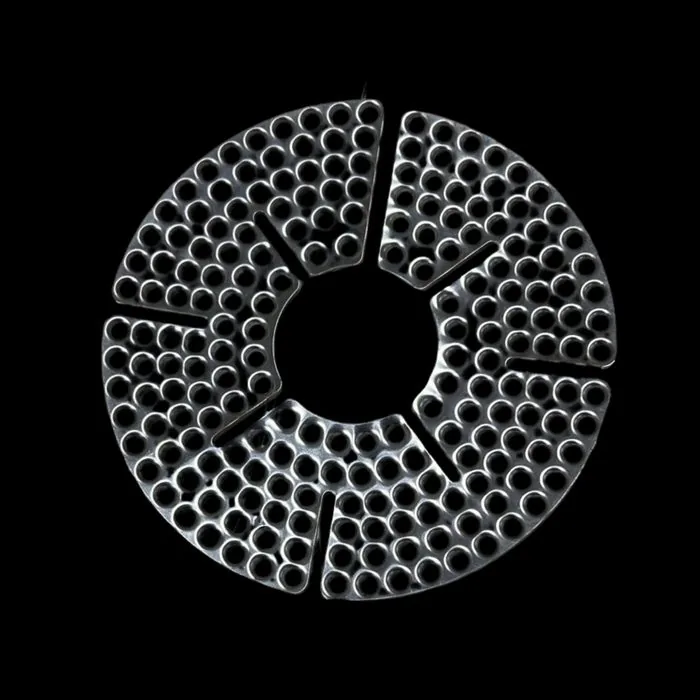
Perforated SS 430 Base Discs for Non-Stick Pans

Designed specifically for friction-welding and high-pressure impact bonding on die-cast and forged aluminium fry pans, tawas, and wok bodies. Features micro-burr-free hole edges to prevent coating blisters during PTFE/ceramic curing.

Diameters: 120 mm – 220 mm | Gauge: 0.4 mm – 0.5 mm
Get a Quote

Aluminium pressure cooker with induction base plate
RECOMMENDATION 02

Heavy-Duty Pressure Cooker Induction Bottom Plates

Precision-stamped SS 430 heavy discs rated for repeated thermal expansion and 1–2 bar internal pressure cycles. Concentric perforation layouts guarantee even thermal dispersion and zero concavity distortion over time.

Diameters: 140 mm – 240 mm | High Mechanical Grip

Get a Quote

Deep drawn stainless steel vessels and bowls
RECOMMENDATION 03

Deep Drawn Induction-Compatible Cookware Liners

Integrated SS 430 deep-drawn bases for multi-cookers, rice cooker inner pots, and commercial soup kettles. High draw ratio retention ensures uniform magnetic density across radius bends without cracking.

Multi-Stage Hydraulic Draw | Seamless Finish

Get a Quote

Perforation & Mechanical Interlocking Physics

Optimizing Hole Geometry & Open-Area Ratios

How exact hole pitch, counter-sinking, and perforation layouts prevent delamination and air entrapment during high-tonnage impact bonding.

The Mechanical Interlocking Mechanism

In cookware manufacturing, thermal delamination—where the stainless steel base separates from the aluminium body after months of hot-cold thermal cycling—is the single primary cause of consumer field returns. Sourcing managers must evaluate how the SS 430 plate bonds mechanically with the substrate.

During the impact bonding process (typically executed at pressures between 1,500 tons and 3,000 tons at temperatures around 450°C to 500°C), softened aluminium flows plastically into the perforated orifices of the SS 430 base disc. As the aluminium penetrates the hole array, it expands laterally against the disc's internal punch burrs, forming thousands of micro-rivets.

If the open-area ratio is too low (<20%), insufficient aluminium flows through, resulting in weak shear strength. If the open-area ratio is too high (>45%), the structural rigidity of the SS 430 disc is compromised, leading to warping under local overheating. Jagruti Steels engineers hole patterns with optimal 30% to 38% open-area ratios, balancing structural planar integrity with maximum shear bond strength (>45 MPa).

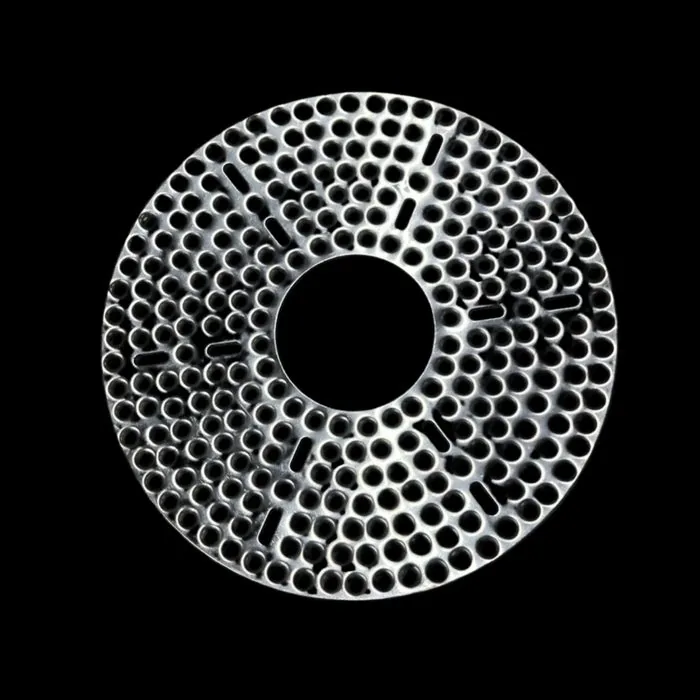
SS 430 induction base plate pattern 1
Precision Concentric Hole Pattern for 140 mm – 180 mm Pan Bases
Induction base plate pattern 1
Pattern Type A-101Concentric Radial Perforation · High Shear Bond
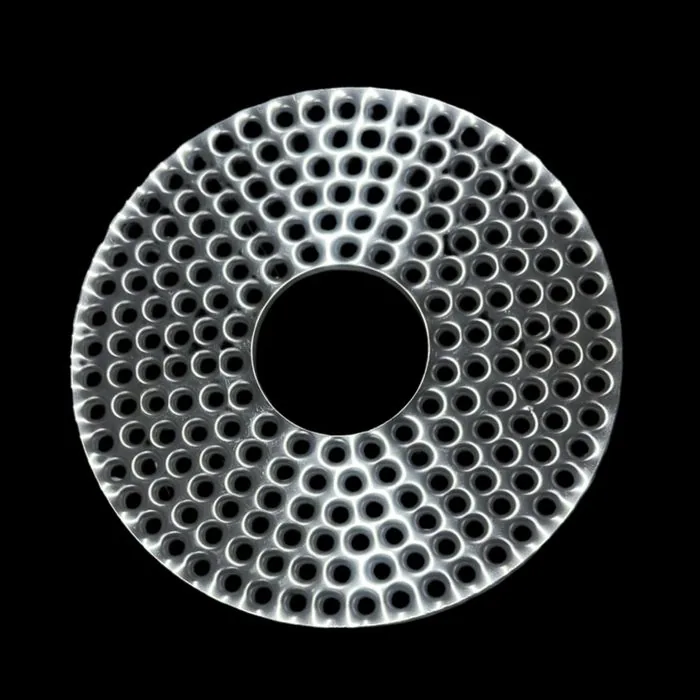
Induction base plate pattern 2
Pattern Type B-202Staggered Honeycomb · Rapid Heat Diffusion
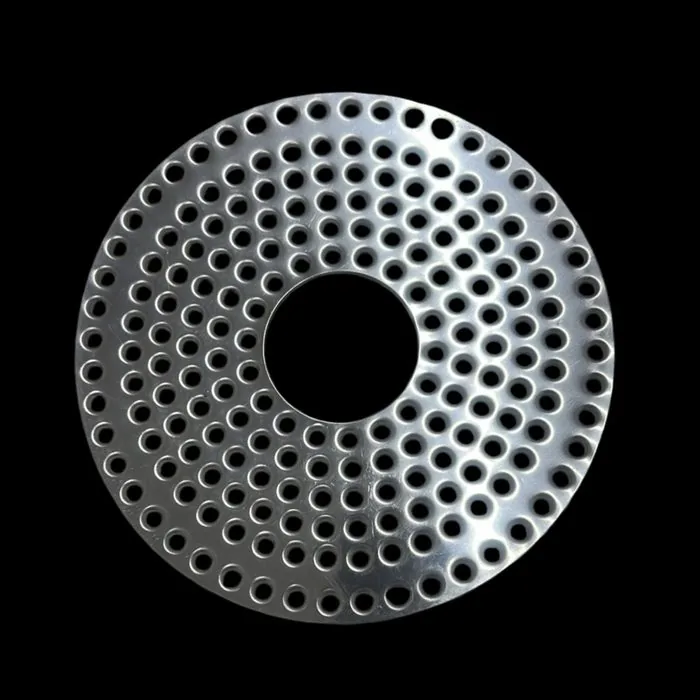
Induction base plate pattern 3
Pattern Type C-303Starburst Grid · Heavy Pressure Cooker Grade
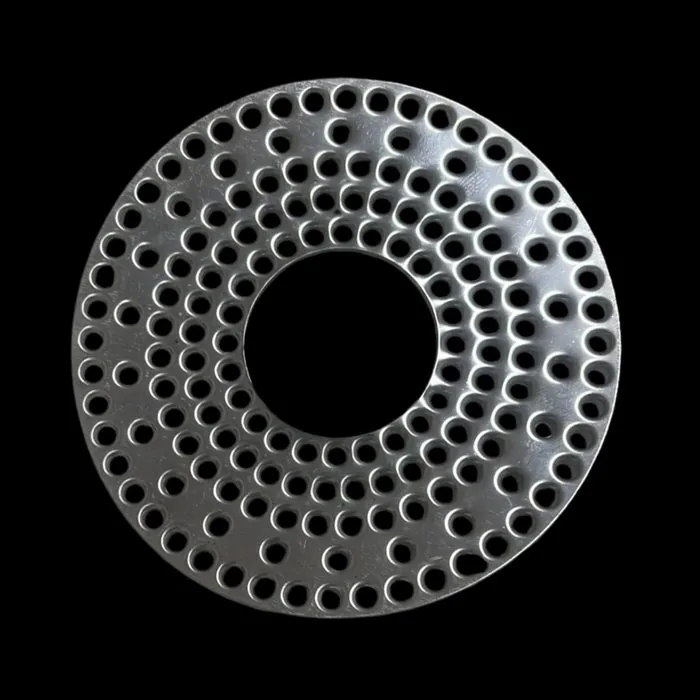
Induction base plate pattern 4
Pattern Type D-404Spiral Vector Layout · Low-Noise Induction
Induction base plate pattern 5
Pattern Type E-505Custom Logo Emboss + Edge Cut
Custom Tooling Dies Cut in-house from your exact engineering CAD files Get a Quote
R&D & Process Innovation

Product Development & Engineering Advancement Trends

How Jagruti Steels integrates metallurgy, toolroom engineering, and surface chemistry to solve real-world cookware manufacturing challenges.

Metallurgical Innovation

Passivation & Micro-Burr Elimination

During high-speed mechanical punching of SS 430, microscopic burrs can form around hole perimeters. If unaddressed, these burrs tear into the aluminium body during impact bonding or cause pinhole rusting after dishwasher washing. Jagruti Steels employs automated rotary vibratory deburring followed by chemical citric/nitric passivation to remove free iron contaminants, creating an impenetrable passive chromium oxide ($\text{Cr}_2\text{O}_3$) surface layer.

Get a Quote

Tooling Engineering

Progressive Dies with Stress Relief Zones

Continuous stamping generates internal residual stress in ferritic stainless steel sheet metal, causing subtle dish distortions during high-temperature cookware washing. Our in-house toolroom designs proprietary progressive press dies featuring secondary stress-relief coining steps. This ensures that every finished disc remains flat within strict dimensional limits through thousands of thermal cycles.

Get a Quote

Extended Cookware Component Lineup

Beyond Base Plates: Complete OEM Stamping Integration

Leverage our 50 years of press tooling experience for matching lids, vessel bodies, steamer inserts, and commercial hospitality hardware.

CATEGORY 01

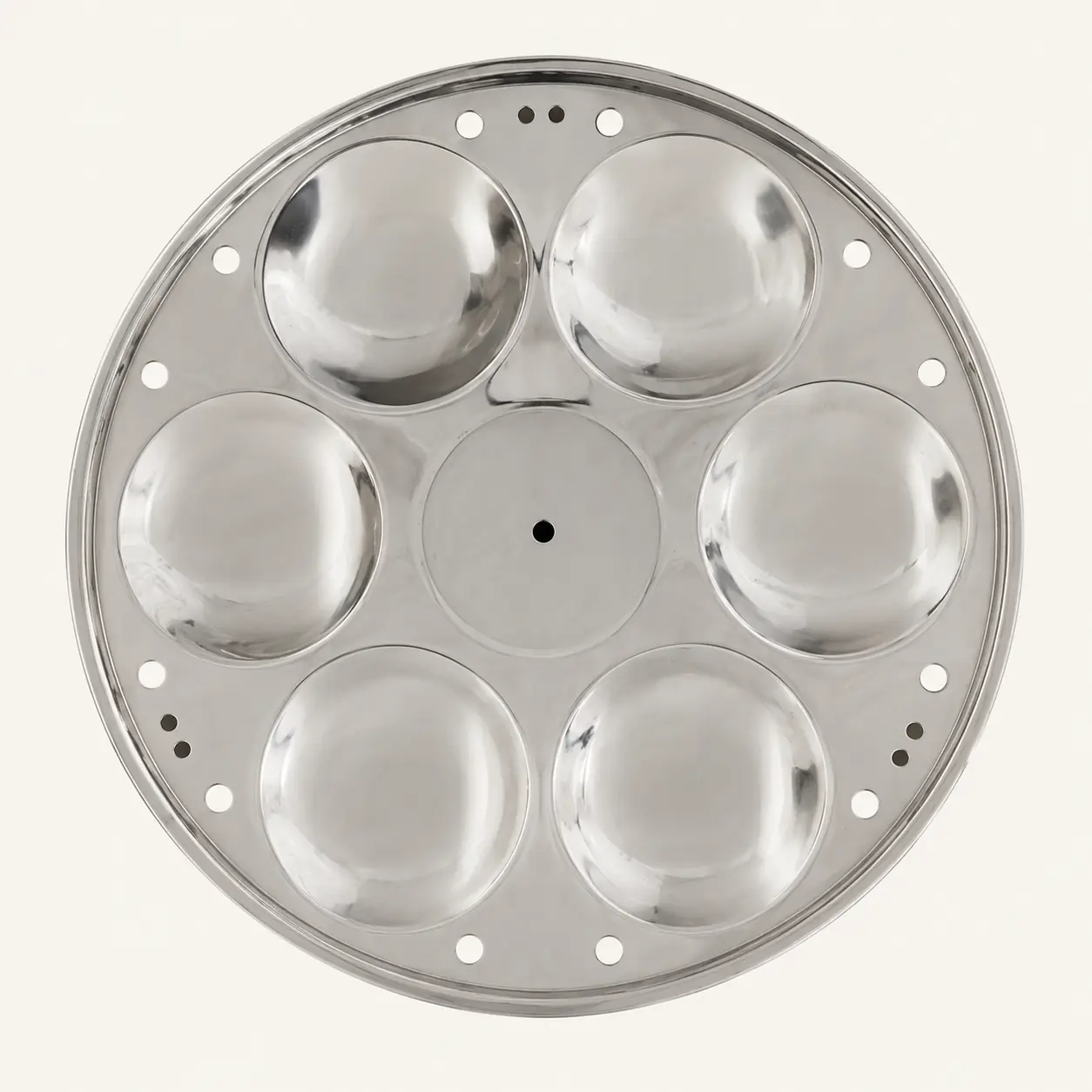
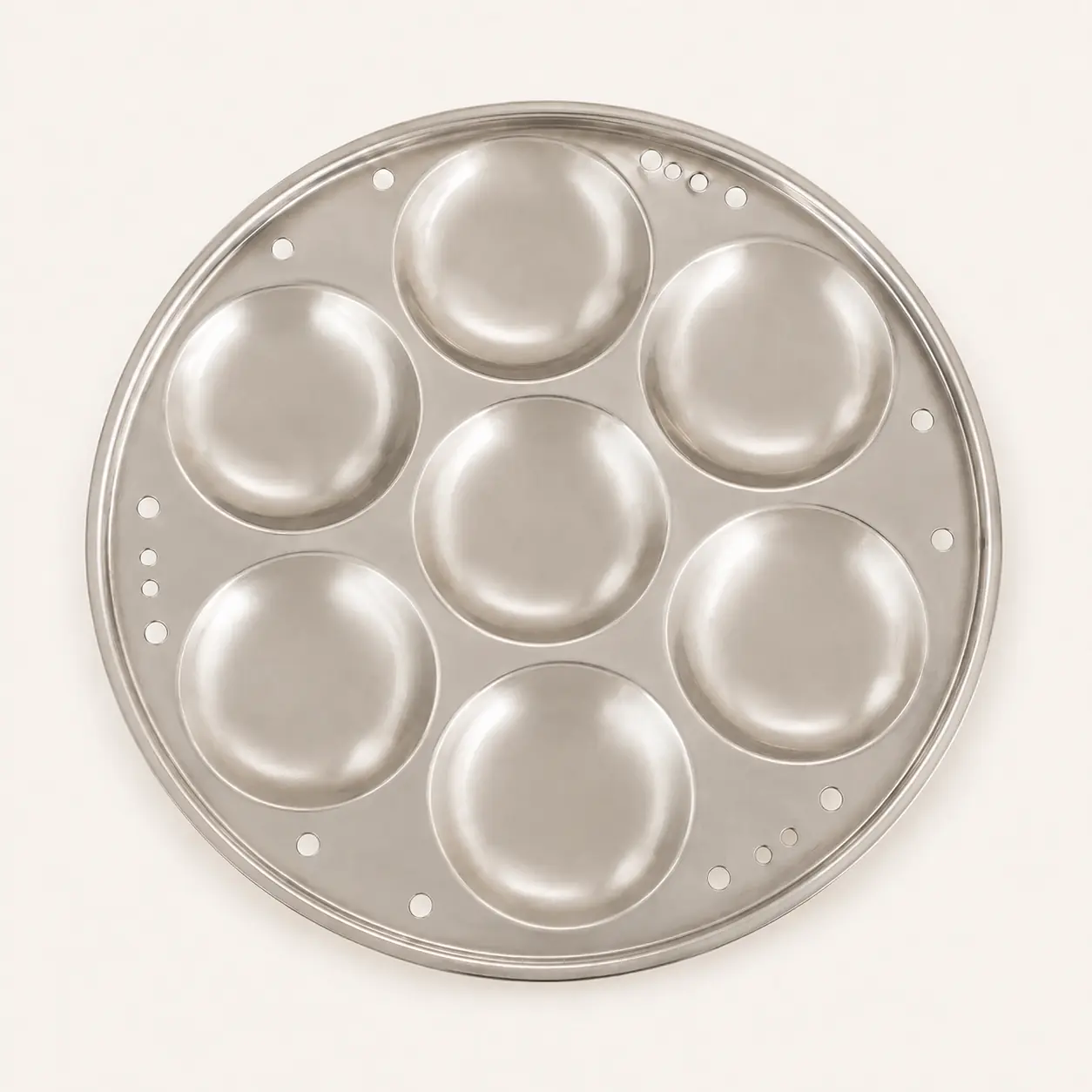
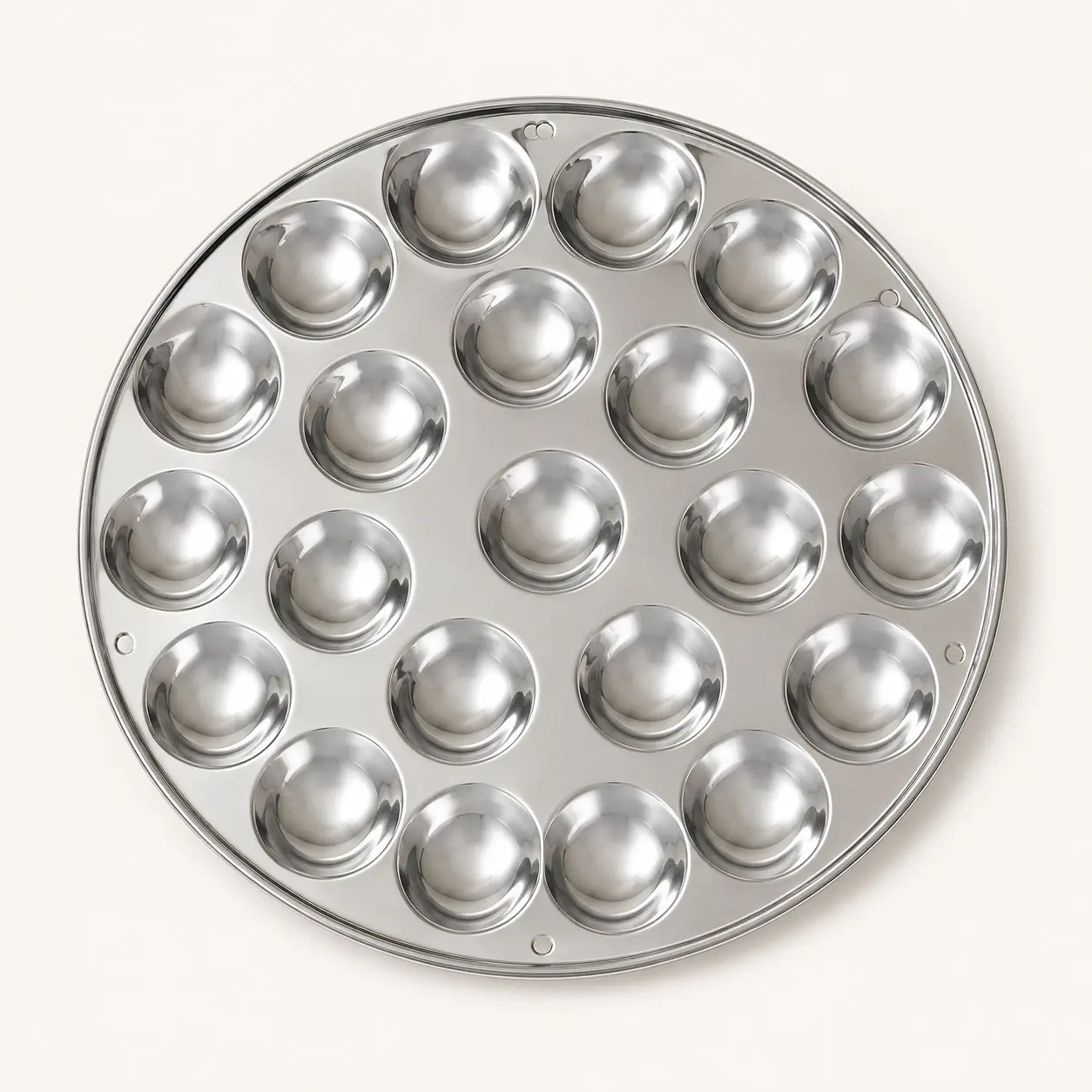
Multi-Kadai, Idli & Steamer Inserts

Precision-drawn stainless steel plates featuring 6-cavity, 7-cavity, mini-idli, and perforated steamer patterns. Manufactured from food-contact approved SS 304 or SS 430 with smooth rolled edges for safety and easy stackability.

Food-Grade Standard · Uniform Steam Hole Pitch

Get a Quote

6-cavity stainless steel idli plate
6-Cavity Plate
7-cavity stainless steel idli plate
7-Cavity Plate
Mini idli plate insert
Mini-Idli Insert
CATEGORY 02

Commercial Food Service Ware & Heavy Hardware

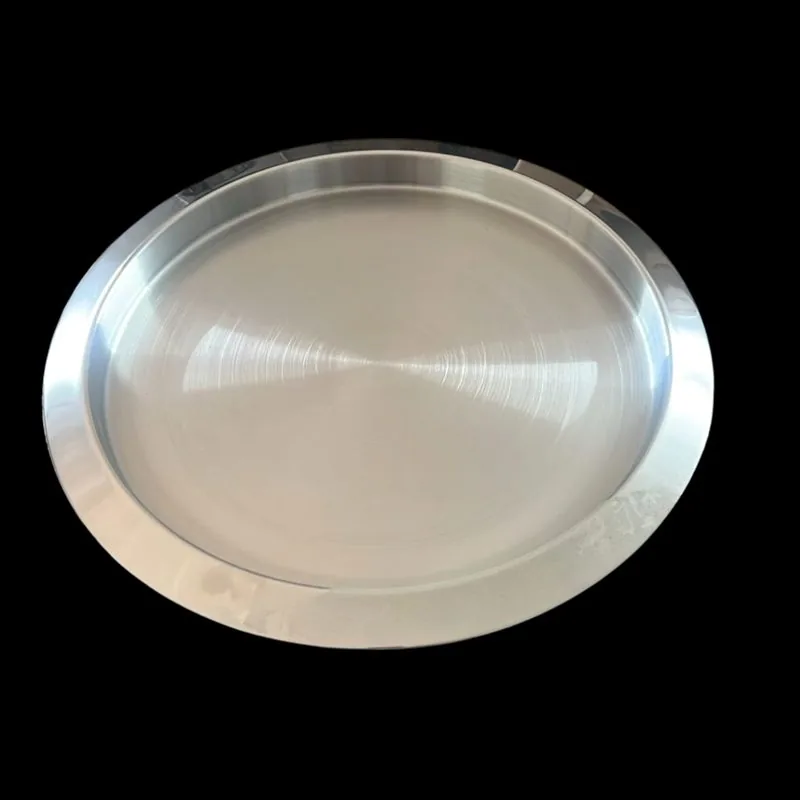
Deep-drawn mixing bowls, bread baskets, bar trays, fryer baskets, and dome food covers engineered for heavy commercial dishwashing and hospitality operations.

Commercial Grade · Mirror & Satin Finishes

Get a Quote

Stainless steel bar trays
Bar Trays
Stainless steel bread baskets
Bread Baskets
Stainless steel measuring bowls
Measuring Bowls
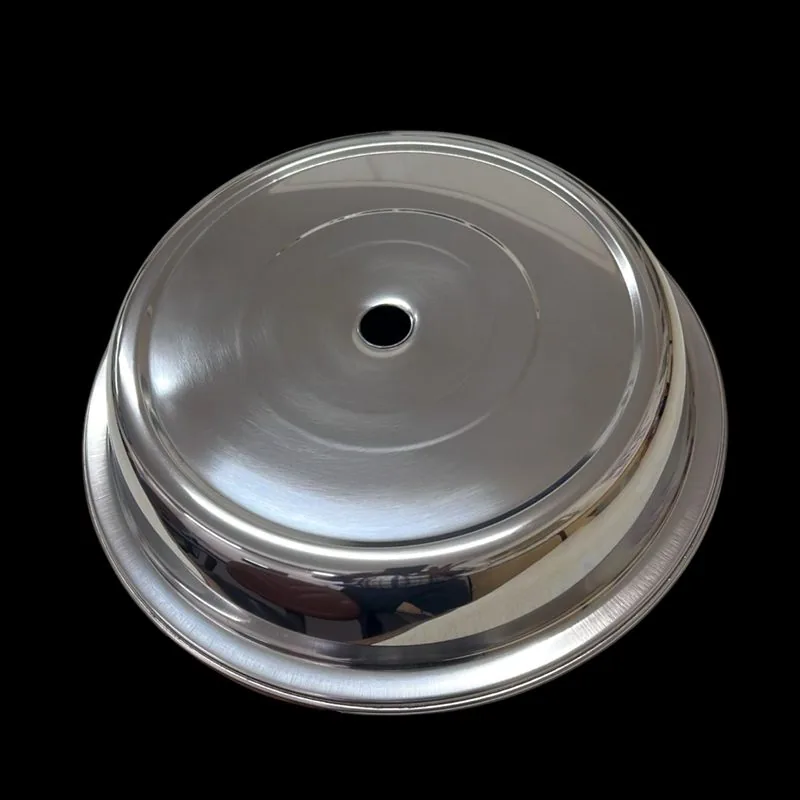
Stainless steel dome food covers
Dome Covers
Why Leading Brands Choose Jagruti Steels

50 Years of Engineering Integrity, Precision & Accountability

Established in Mumbai in 1974, we operate as a dedicated B2B OEM manufacturing partner—never competing with our customers under our own retail brand.

50+Years Pressing Experience
2Dual Plants (Mumbai & Gujarat)
15+Export Destination Countries
100%In-House Tooling Dies
0Retail Brand Conflicts
Mumbai Headquarters & Toolroom

Jagruti Steels Pvt. Ltd.

Primary client coordination, engineering design, toolmaking, precision prototype sampling, and component manufacturing. Single point of contact for international procurement. GSTIN: 27AAACJ9826****.

Sarigam, Gujarat Manufacturing Unit

Mammal Industries (Sister Concern)

Extended high-volume production facility dedicated to large OEM runs, repeat stamping contracts, and white-label component supply. Located at Village Manda, Sarigam 396155. GSTIN: 24AARFM9084****.

Zero Supply Chain Friction

Integrated Dual-Plant Capacity

Both manufacturing operations share standardized quality protocols, dies, and raw material stock. Sourcing teams gain dual-plant protection during peak cookware production cycles without vendor fragmentation.

Procurement & Technical FAQ

Frequently Asked Questions by Global Sourcing Officers

Answers to key engineering, quality control, shipping, and compliance questions asked by cookware procurement teams.

Induction hobs generate high-frequency magnetic fields that produce heat via magnetic hysteresis and eddy currents in ferromagnetic materials. SS 304 is an austenitic stainless steel with a face-centered cubic structure; it is non-magnetic ($\mu_r \approx 1$) and cannot interact effectively with induction coils. SS 430 is a ferritic stainless steel (EN 1.4016) with high relative magnetic permeability ($\mu_r > 600$), providing immediate energy transfer and rapid heating when bonded to aluminium cookware bodies.

Concavity distortion occurs when residual stamping stress and differential thermal expansion ($CTE$) cause unequal contraction during heating and cooling. We mitigate this through: (1) using fully annealed, tension-leveled prime SS 430 coil stock; (2) engineering stress-relief coining features inside our progressive tooling dies; and (3) maintaining precise perforation hole geometry to allow even heat dissipation across the plate surface.

Yes. We operate a complete internal toolroom. We design, wire-cut, and assemble progressive dies directly from your 2D engineering drawings (DWG/DXF), 3D STEP models, or physical part samples. Outer diameter, gauge (0.4 mm to 0.6 mm), hole pattern, pitch, center hole clearance, and custom brand logos are 100% buyer-defined.

Every shipment is accompanied by a certified Mill Test Report (MTR) according to EN 10204 3.1 standards. This details the exact chemical heat analysis (Chromium %, Carbon %, Manganese %, Silicon %, Phosphorus %, Sulfur %) and mechanical testing (Tensile Strength, Yield Strength, Elongation, Hardness) of the SS 430 lot used, guaranteeing compliance with BIS and EU food-contact norms.

We regularly export under FOB, CIF, or CFR terms. Our primary Mumbai manufacturing facility is located 35 km from Jawaharlal Nehru Port Trust (JNPT / Nhava Sheva, Port Code: INNSA), allowing efficient container stuffing and fast vessel departure schedules. Correct global customs HS classifications are: HS 7220.9090 for circle-cut flat disc blanks, and HS 7326.9099 for finished stamped cookware component plates.

MOQ depends on part dimensions and tooling status. For existing standard die geometries, MOQs start from 5,000 pieces. For custom tooling projects, initial sample evaluation batches (50–100 pieces) are provided upon tool sign-off. First-article samples are usually delivered within 10–14 days of drawing approval, with bulk production lead times running 2 to 3 weeks based on volume schedules.

No. Jagruti Steels Pvt. Ltd. is strictly an OEM / ODM white-label component manufacturer. We do not manufacture or market finished retail cookware under any proprietary brand. Your drawings, die designs, and component orders remain completely confidential and protected.

Direct OEM Sourcing & Engineering Consultation

Ready to Elevate Your Cookware Induction Performance?

Connect directly with our engineering and metallurgy team in Mumbai. Submit your drawings, request sample discs, or obtain transparent container-load pricing today.

Get a Quote Review SS 430 Spec Data