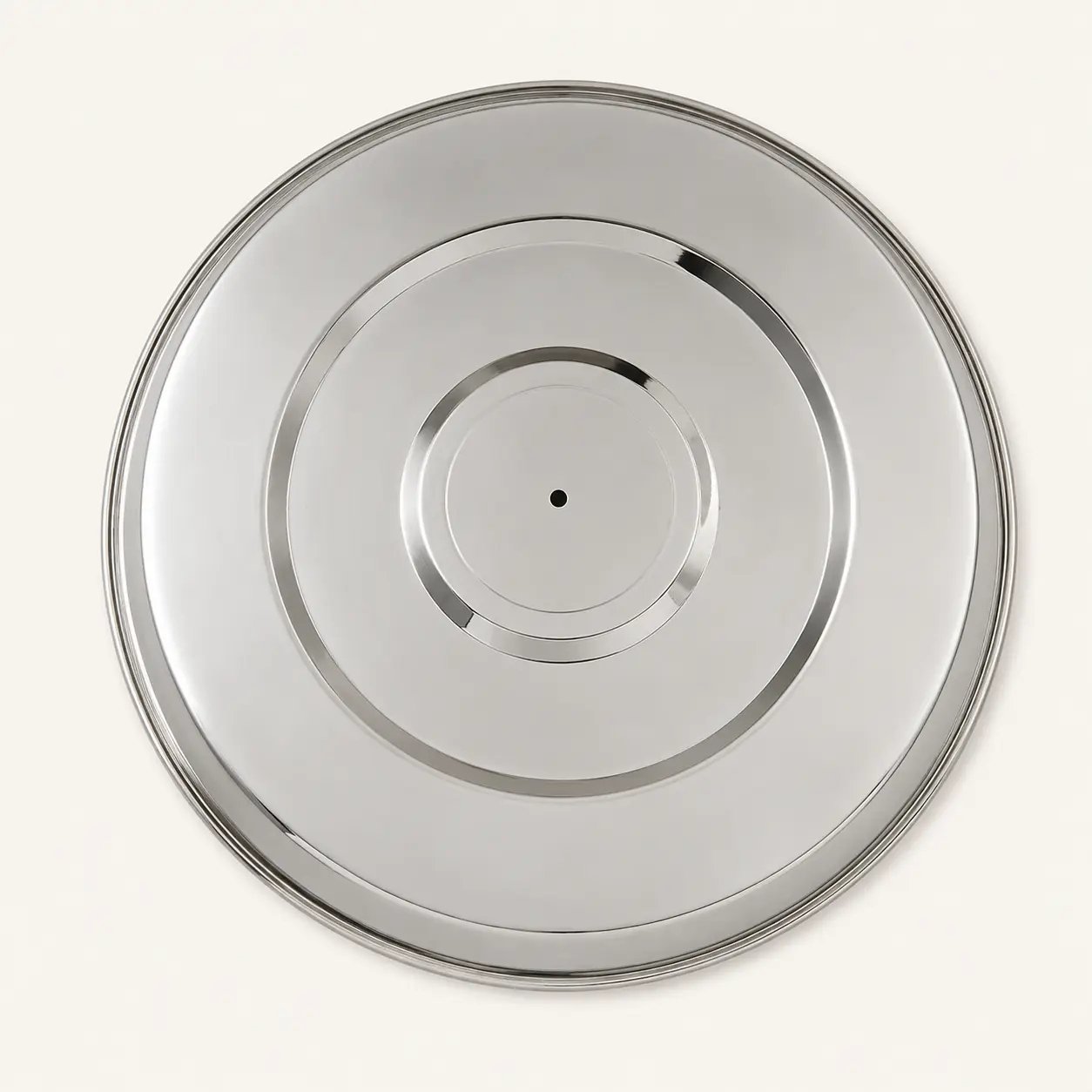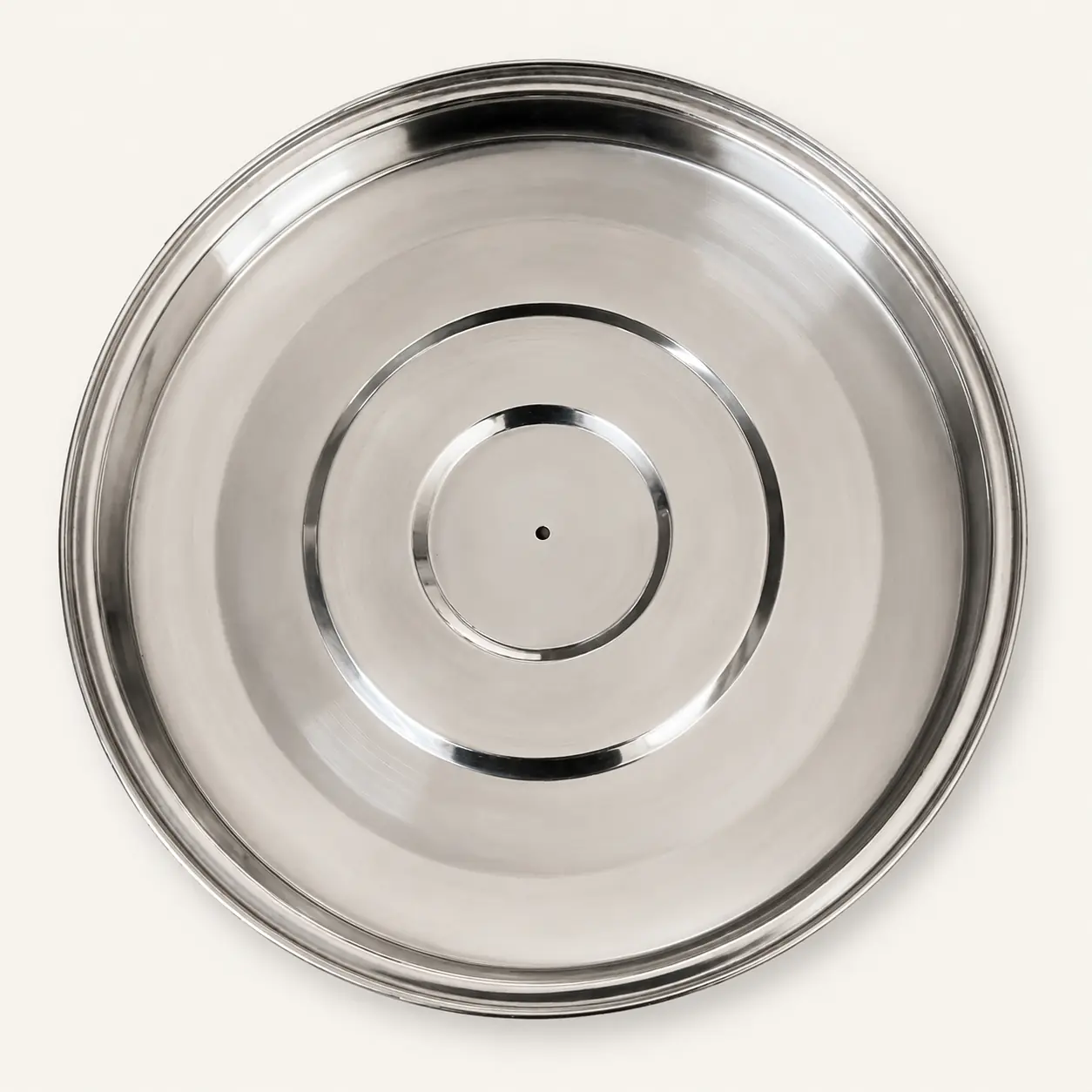
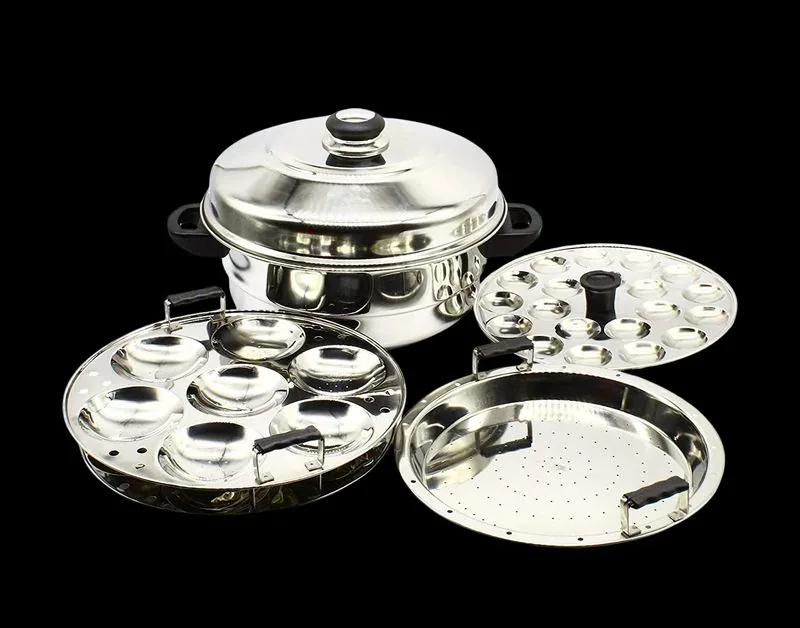
Multi-Kadai Stainless Steel Inserts and steamer plates manufactured by Jagruti Steels
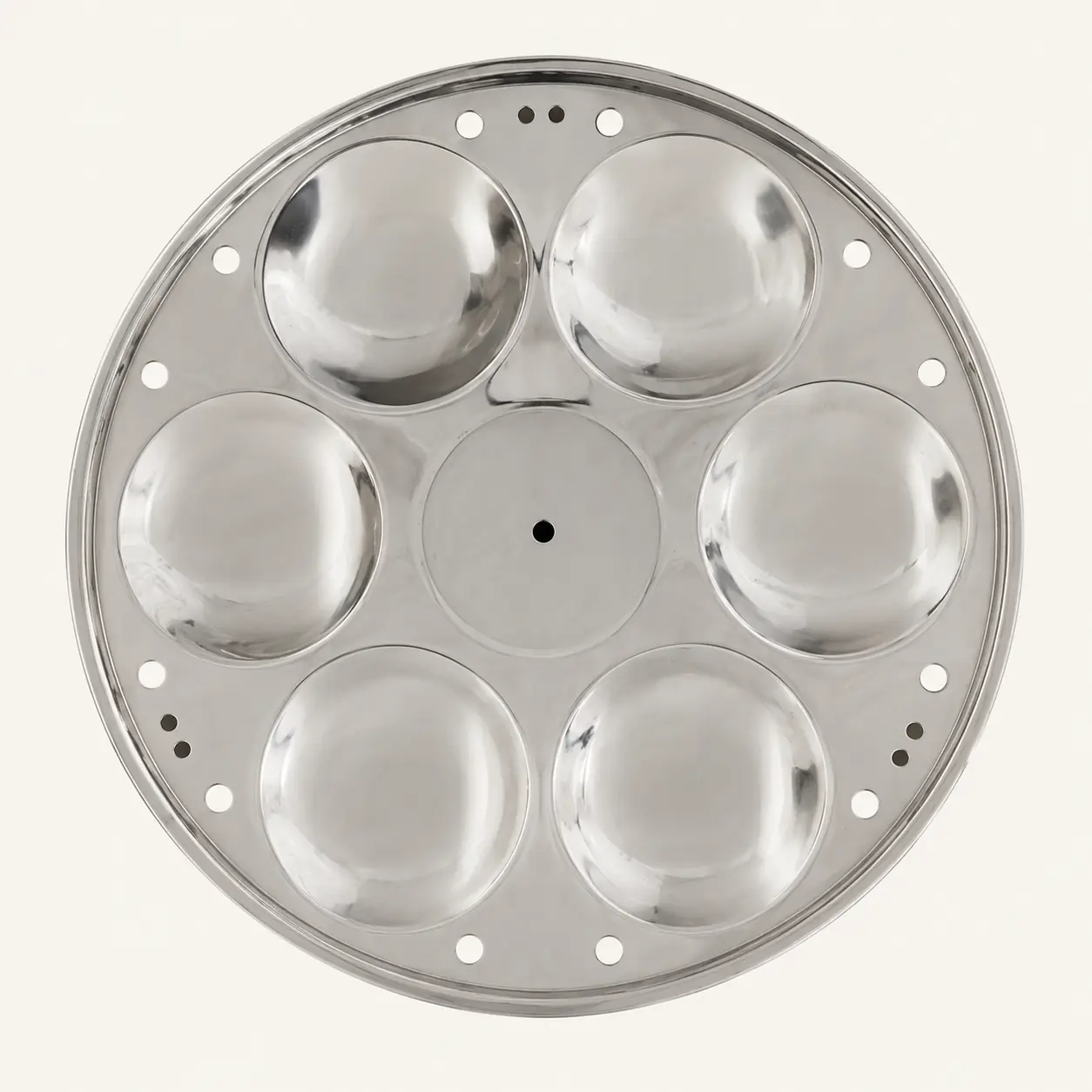
6-Cavity multi-kadai stainless steel idli insert plate
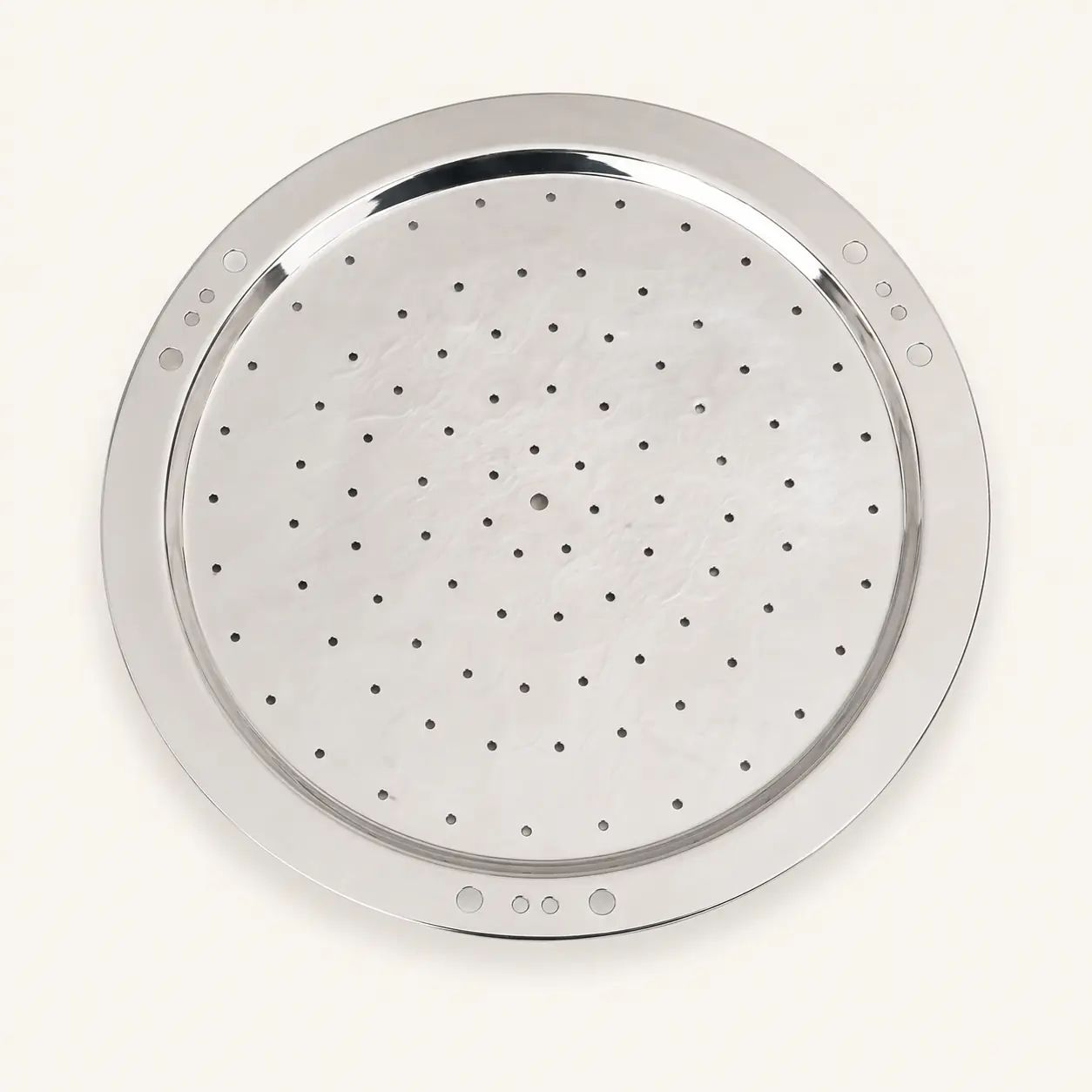
Perforated multi-kadai stainless steel steamer insert plate
B2B Sourcing Guide · OEM Precision Engineering Since 1974

Multi-Kadai Stainless Steel Inserts: Engineering, OEM Manufacturing & Global Procurement Guide

An authoritative technical deep-dive into multi-kadai stainless steel inserts, idli cavity plates, perforated steamer discs, and dough-kadai inserts. Custom pressed in SS 304 and SS 430 for global cookware brands, appliance OEMs, and private-label distributors.

Comprehensive Product Portfolio

Multi-Kadai Stainless Steel Inserts: Structural Variants & Engineering Specifications

Multi-kadai cookware systems rely on interchangeable insert plates to perform steaming, boiling, poaching, and baking within a single vessel body. At Jagruti Steels, every insert is precision-stamped to match your exact CAD drawings, stack height, center-pin alignment, and vessel rim taper.

6-cavity stainless steel idli plate for multi-kadai systems
VARIANT 01

6-Cavity & 7-Cavity Idli Plates

Deep-drawn cavity plates with uniform wall thickness and calibrated steam vent holes. Designed to allow rapid batter expansion without thermal hot spots. Compatible with central tier-locking rods or perimeter stacking handles.

SS 304 · 200–280mm Dia · Mirror / Satin Polish

View Idli Plate Specs →
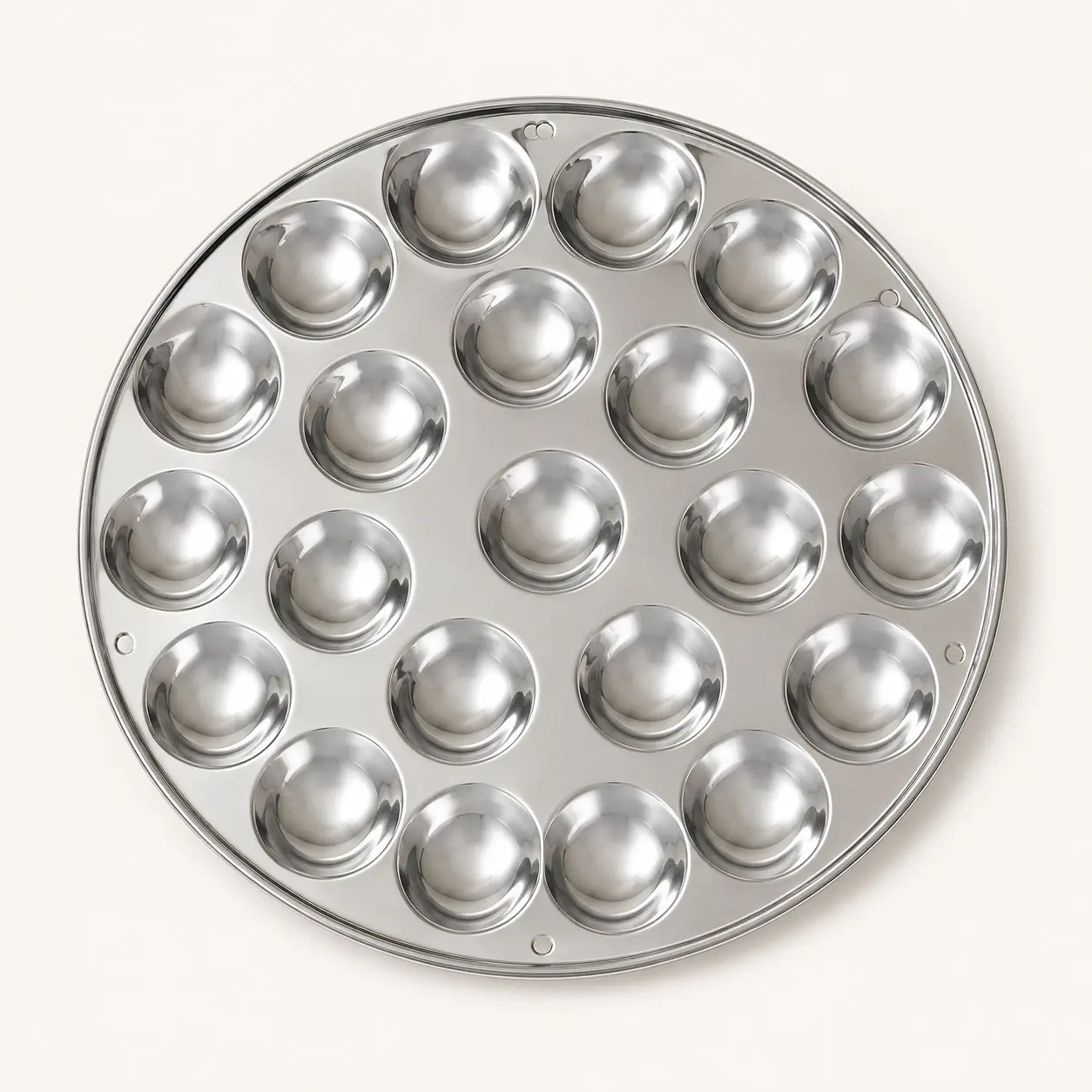
Multi-cavity stainless steel mini idli plate insert
VARIANT 02

High-Density Mini-Idli Inserts

Engineered with 18 to 24 micro-cavities drawn simultaneously in a single hydraulic press stroke. Demands extreme die precision to eliminate metal tearing between adjacent cavities while maintaining structural rigidity.

SS 304 / SS 430 · Precision Drawn · Food Contact Safe

Explore Micro-Tooling →
Perforated stainless steel multi-kadai steamer plate insert
VARIANT 03

Perforated Steamer & Dhokla Plates

Features an optimized open-area perforation grid for even steam dispersion. Applied in steaming momos, vegetables, and dhokla. Pierced with zero-burr tooling to prevent food entrapment and facilitate cleaning.

Custom Open Area % · Rolled Safety Edges

Steamer Plate Data →
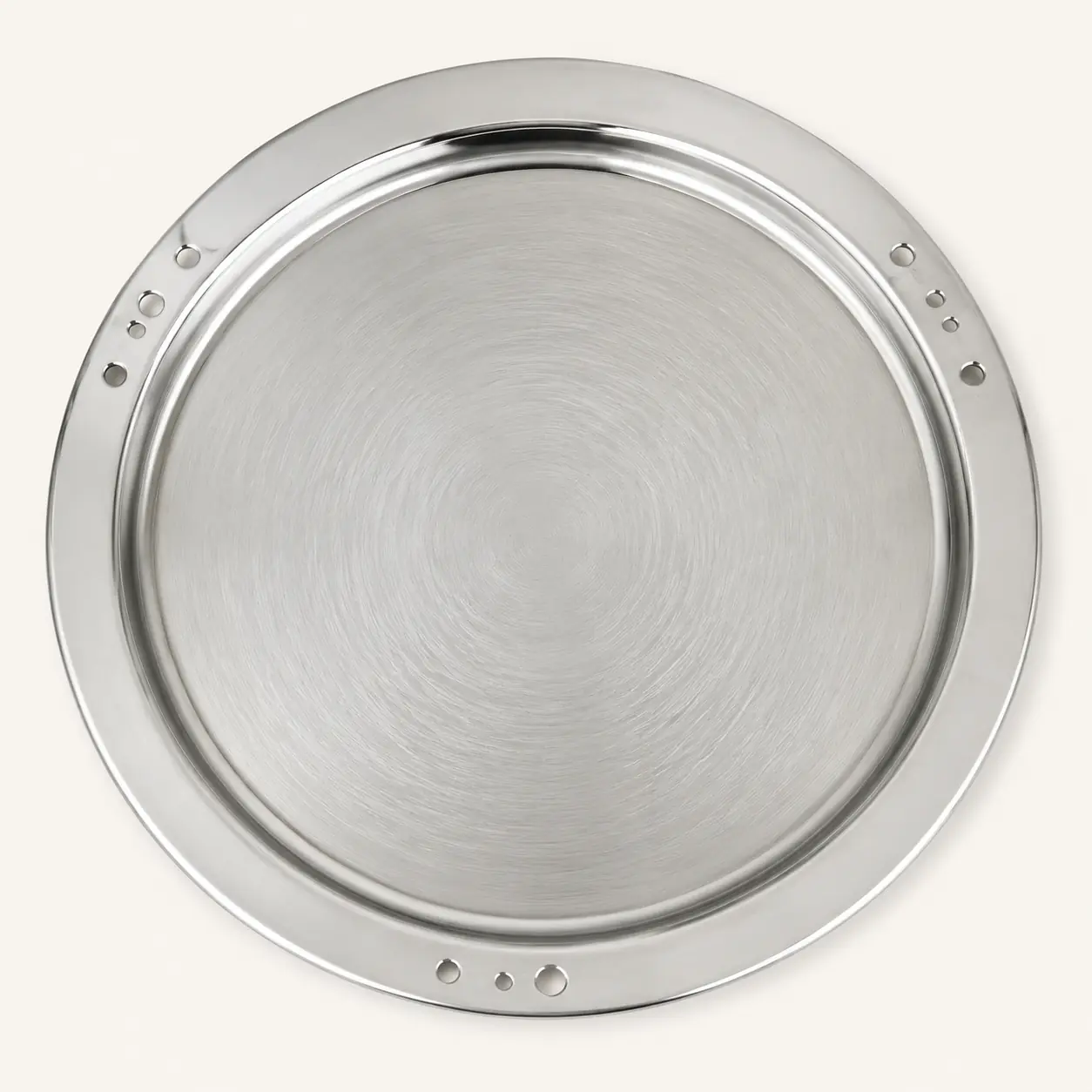
Plain stainless steel insert plate for steamer applications
VARIANT 04

Plain Utility & Patra Steamer Discs

Flat and shallow-drawn solid insert discs designed for steaming delicate dishes or acting as thermal baffle plates. Engineered with rigid concentric beadings to stop warping during prolonged thermal cycling.

Solid Disc · Concentric Ribbing · High Warp Resistance

Formed stainless steel dough-kadai plate front view
VARIANT 05

Concentric Dough-Kadai Inserts

Specially contoured multi-depth plates engineered for steaming traditional stuffed doughs and dumplings. The step-down profile maintains uniform condensation runoff away from food contact zones.

Step-Down Geometry · Condensation Control

Formed stainless steel dough-kadai plate reverse view
VARIANT 06

Stackable Multi-Tier Assemblies

Coordinated sets combining 3 to 5 insert tiers with custom center-stand handles or side-rack indexing notches. Fits seamlessly into standard multi-kadai cookware bodies and commercial multi-cooker appliances.

Modular Tier Sets · Stack Clearance Optimized

Need custom cavity counts, specialized hole pitch, or custom logo embossing on your multi-kadai inserts? Jagruti Steels designs and cuts all progressive dies in-house to match your exact OEM product line specifications.

Get a Quote
Engineering Baseline

Technical Metallurgy: Choosing the Right Grade & Specification

Selecting material grade, wall thickness, and perforation geometry dictates the lifetime performance, corrosion resistance, and thermal efficiency of multi-kadai stainless steel inserts.

Technical Specification Comparison for Multi-Kadai Stainless Steel Inserts
Engineering Parameter SS 304 (EN 1.4301 / AISI 304) SS 430 (EN 1.4016 / AISI 430) Commercial Grade SS 201 (Non-Compliant)
B2B OEM Recommendation Primary Choice for Food Contact Inserts Selected for Induction Baffle/Base Sets Not Recommended (Pitting Risk)
Chemical Composition 18% Cr / 8% Ni (Austenitic) 16–18% Cr / 0% Ni (Ferritic) 14–16% Cr / 1% Ni / High Mn
Corrosion Resistance (Steam/Acid) Superior (Resists food acids & steam) Moderate (Requires dry storage) Poor (Prone to rust spots after dishwasher)
Magnetic Property Non-Magnetic (Austenitic) Ferromagnetic (Induction Active) Slightly Magnetic
Thermal Conductivity (W/m·K) 16.2 W/m·K (Even steam distribution) 26.1 W/m·K (Rapid heat transfer) 15.0 W/m·K
Deep-Draw Elongation (A50) ≥ 40% (No micro-cracking in deep cavities) ≥ 22% (Requires modified draw radii) ≥ 30% (High work-hardening rate)
Food Contact Safety Compliance FDA, EU No 1935/2004, BIS Compliant EU Food Contact Compliant Fails stringent leaching tests

Information Gain: Why Wall Thickness & Edge Rolling Matter in Multi-Kadai Sourcing

Many low-cost suppliers reduce raw material cost by using thin gauge sheet (0.3mm–0.35mm). Under steam pressure and repeated hot/cold cycles, thin multi-kadai inserts suffer from oil-canning—a permanent oil-can bowing defect across cavity centers. Jagruti Steels standardizes on 0.5mm to 0.7mm prime coil stock with perimeter double-rolled rims. This adds 300% flexural rigidity, ensures 100% flat seating inside the kadai vessel, and eliminates raw metal edges that could cut end-users during hand cleaning.

Expert Sourcing Answers

B2B FAQ: Multi-Kadai Stainless Steel Inserts Procurement

Answers to high-intent technical questions frequently submitted by global cookware product managers, manufacturing engineers, and sourcing directors on AI discovery engines.

Thermal warping occurs when perforation patterns induce unequal internal stresses across the sheet during heating and cooling cycles. Jagruti Steels prevents warping by introducing concentric structural stiffening ribs (beading) between perforation zones and employing stress-relieved prime coil stock. Additionally, our pierced hole geometry utilizes calibrated spacing that balances steam open-area ratio (22% to 28%) with structural sheet integrity.

Food-contact inserts such as idli plates and steamer discs should ideally be manufactured from austenitic SS 304 (EN 1.4301 / AISI 304). SS 304 offers superior resistance to acidic food batter, high moisture steam, and domestic dishwashing detergents. For budget-conscious lines or induction-baffle systems, ferritic SS 430 (EN 1.4016) can be utilized, provided proper drying instructions are communicated to prevent surface staining.

Yes. We operate as a full build-to-print OEM component manufacturer. We design and cut custom stamping dies, piercing tools, and deep-draw punches directly from your 3D CAD files (STEP/IGES/DWG) or physical benchmark samples. Diameter, cavity pitch, stack clearance height, rim bevel angle, center-hole tapping, and logo embossing are completely customized to your brand's specifications.

Conventional high-speed punching often leaves sharp micro-burrs on the reverse side of steamer holes. These burrs trap food particles (like rice batter or dough residues), creating bacterial breeding grounds and making hand washing difficult. Jagruti Steels utilizes ultra-tight punch-and-die clearance tooling combined with post-press deburring and electropolishing, yielding 100% smooth, food-safe perforation edges.

Multi-cavity deep drawing subjects sheet metal to complex localized stretching. Our quality assurance protocol includes: (1) Wall thickness measurement at cavity stress points to prevent thinning below 0.38mm, (2) Optical gauge check of cavity depth symmetry (+/- 0.15mm), (3) Rim flatness inspection via surface plate dial indicators to guarantee flush seating, and (4) Spectrometer chemical analysis of incoming coil stock.

For existing standard die profiles (e.g., 200mm, 220mm, 240mm 6-cavity or steamer plates), MOQs start from 1,000 sets. For custom OEM tooling programmes, tooling development requires 3 to 4 weeks, followed by first-article inspection (FAI) approval. Standard volume production lead times range from 15 to 25 days depending on batch size and surface finishing requirements.

All export shipments from Jagruti Steels are accompanied by Mill Test Certificates (MTR) confirming ISO 10204 3.1 chemical and mechanical compliance, Certificate of Origin (COO), commercial invoice, packing list, and correct HS Code documentation (HS 7323 9300 for SS kitchenware inserts or 7326 9099 for stamped metal components). Deliveries are routed via JNPT Port, Mumbai (35 km from our plant).

Enterprise Manufacturing Authority

Why Global Cookware Brands Trust Jagruti Steels

Since 1974, Jagruti Steels Pvt. Ltd. has operated as a silent OEM partner behind lead-brand cookware lines. We combine metallurgical precision, dual-factory infrastructure, and uncompromised quality assurance.

In-House Die Toolroom

Custom progressive dies, compound blanking tools, and multi-cavity draw punches engineered and maintained inside our own toolroom. No third-party bottlenecks or design leakages.

Dual Plant Synergy

Manufacturing operations split across our Mumbai primary base and our Sarigam (Gujarat) mass-production unit (Mammal Industries), offering total supply-chain security during Q3/Q4 peak seasons.

100% Traceable Coil Stock

We source certified Prime SS 304 and SS 430 coils directly from tier-1 steel producers. Every production run is linked to batch heat numbers with comprehensive laboratory test certificates.

Advanced Finishing & Polishing

Automatic mechanical mirror polishing, satin wire drawing, chemical passivation, and electropolishing lines that deliver flawless surface aesthetics resistant to water staining and corrosion.

0Years Manufacturing
0Production Plants
0Press Tonnage Capacity
0White-Label Privacy
0Distance to JNPT Port
Mumbai Facility · HQ & Toolroom

Jagruti Steels Pvt. Ltd.

Primary client management, prototype development, tooling design, initial sampling, and high-precision stainless steel pressing. GSTIN: 27AAACJ9826****.

Sarigam Facility · Gujarat Unit

Mammal Industries

Dedicated high-volume sister unit for mass stamping, deep drawing, mirror polishing, and automated packing. Sarigam 396155. GSTIN: 24AARFM9084****.

OEM Confidentiality

100% White-Label Commitment

We strictly manufacture to buyer drawings. Our brand name never appears on products, master cartons, or shipping containers, ensuring your vendor network remains your proprietary advantage.

Seamless OEM Onboarding

Four Steps to Bulk Multi-Kadai Insert Sourcing

From initial drawing submission to containerized export shipping—engineered for clarity, speed, and strict quality compliance.

  1. 1

    RFQ & Drawing Review

    Submit your multi-kadai insert drawing, CAD model, or sample requirements. Our tooling engineers review draw feasibility, material grade, and unit pricing within 24 hours.

  2. 2

    Tooling & Prototyping

    In-house cutting of dies followed by sample production. First Article Inspection (FAI) samples shipped via express air freight along with dimensional inspection reports.

  3. 3

    Batch Production

    Upon sample approval, mass press runs commence across our hydraulic press lines. Automated deburring, washing, and surface polishing execute under strict batch QC.

  4. 4

    Export Packing & Dispatch

    Inserts are inter-leaved with protective tissue/polyfilm, packed in heavy-duty 5-ply export cartons, palleted, and dispatched via JNPT Port, Mumbai with full MTR documentation.