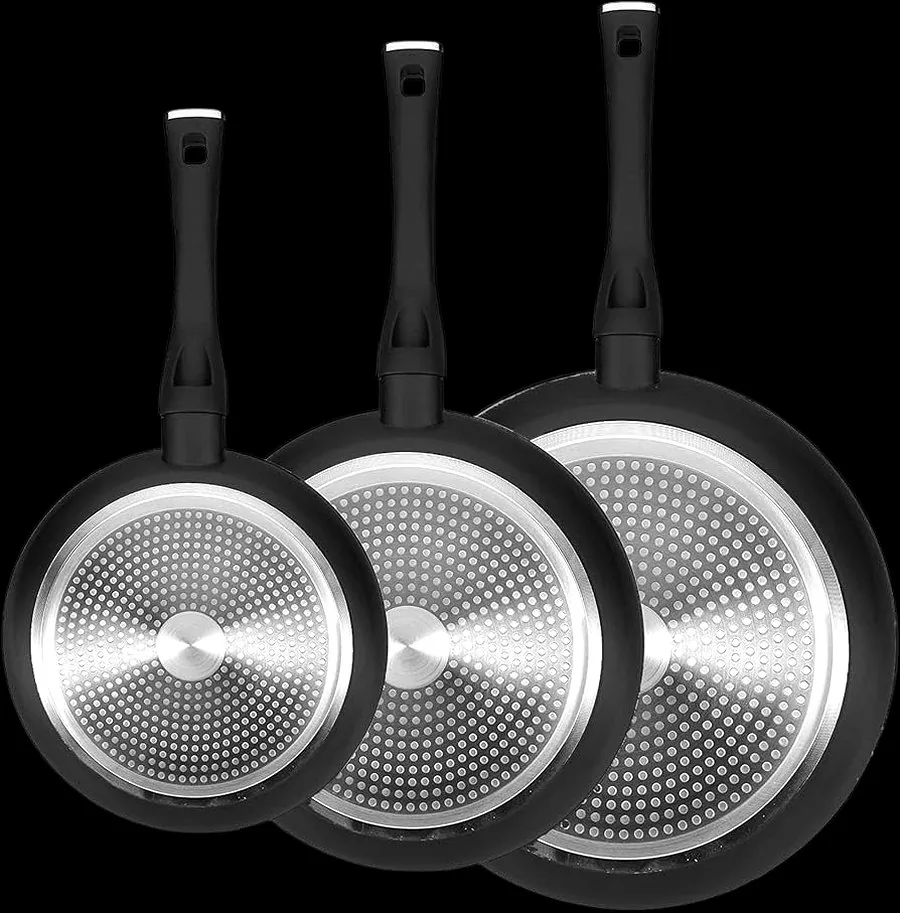
Deep drawn stainless steel vessels and bowls manufactured by Jagruti Steels
Deep drawn pressure cooker shell and cookware body component
OEM stainless steel deep drawn vessel components for global brands
OEM & White-Label Precision Drawing · Since 1974

Deep Drawn Stainless Steel Vessels Engineering & Sourcing Guide

The definitive technical reference for global cookware procurement directors, appliance OEMs, and industrial sourcing teams. Learn how advanced draw ratio mechanics, zero-thinning die design, and material grain control define market-leading deep drawn vessels.

Manufacturing Science

Engineering Mechanics of Deep Drawn Stainless Steel Vessels

Deep drawing is not merely pressing sheet metal into a die; it is a controlled plastic deformation process where radial tensile stresses and tangential compressive stresses interact under heavy blank holder pressure. Sourcing high-integrity deep drawn stainless steel vessels requires mastering metal flow dynamics, work hardening rates, and grain alignment.

01. DEEP DRAW RATIO (LDR)

Limiting Draw Ratio & Stage Calculations

The Limiting Draw Ratio (LDR = $D_0 / d$) defines the maximum blank diameter ($D_0$) relative to the punch diameter ($d$) that can be drawn without fracture. For austenitic stainless steel SS 304, typical single-stage LDR ranges between 2.0 and 2.2. When vessel geometry demands deeper profiles (such as rice cooker inner pots or pressure cooker shells), multi-stage redrawing with precise inter-pass annealing is engineered in-house to reset strain hardening.
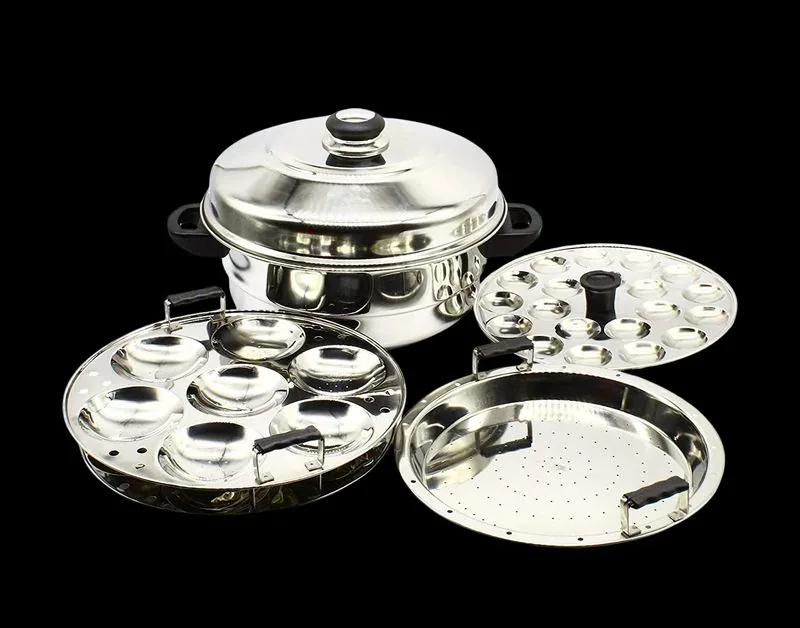
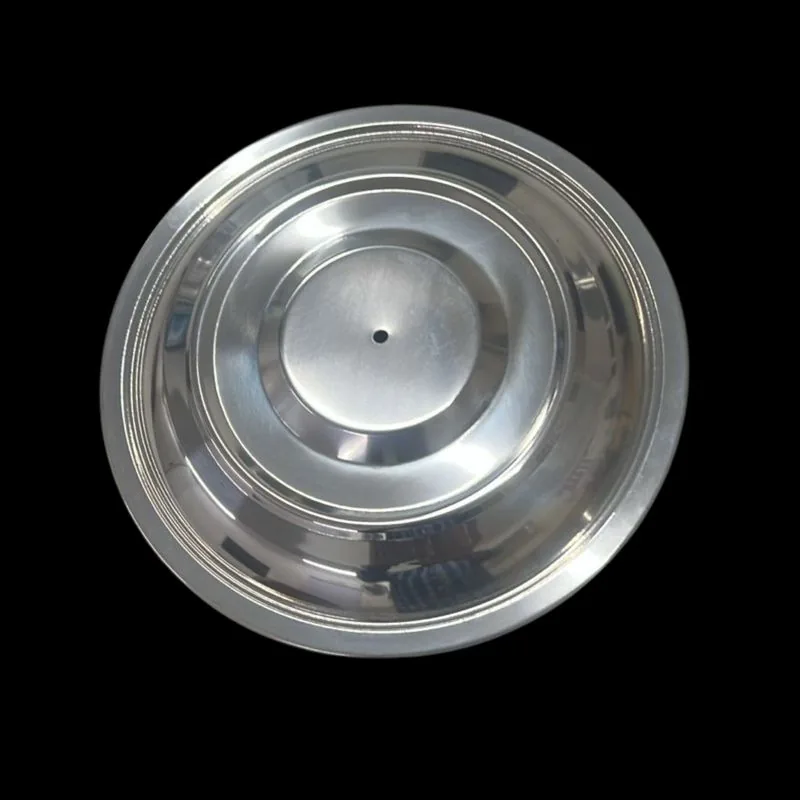
02. EARING & ANISOTROPY

Mitigating Planar Anisotropy ($\Delta r$)

Uneven plastic deformation causes "earing"—wavy height fluctuations along the top lip of the drawn vessel aligned with rolling directions. By specifying prime-grade cold-rolled coils with controlled plastic strain ratios ($r$-value) and uniform grain size (ASTM 7 to 8), Jagruti Steels minimizes earing defects, drastically reducing material trim waste and ensuring uniform lip thickness for secondary bead rolling or welding.

03. BLANK HOLDER FORCE

Hydraulic Pressure & Lubrication

Wrinkling occurs in the flange area due to compressive instability, while excessive blank holder force (BHF) leads to wall necking and fracture at the punch corner radius. Our double-action hydraulic presses utilize micro-adjustable CNC cushion pressures paired with high-viscosity polymeric lubricants to maintain an exact balance between frictional drag and smooth radial draw movement.

Why Wall Thickness Consistency Dictates Vessel Service Life

In commercial food service, pressure cookers, and electric multi-cookers, a vessel subjected to thermal cycling will fail prematurely at localized thin spots created by poor die radii or improper draw steps. Jagruti Steels maintains strict wall-thickness tolerances ($\pm 0.03\text{ mm}$) across the critical transition zone from the flat base to the vertical sidewall, preventing stress corrosion cracking and hot-spot distortion.

Product Portfolio

Precision Deep Drawn Vessels & Stamped Shells

Engineered to exact buyer specifications. From high-capacity commercial kitchenware to precision-drawn appliance liners, every component is manufactured using dedicated in-house press tooling.

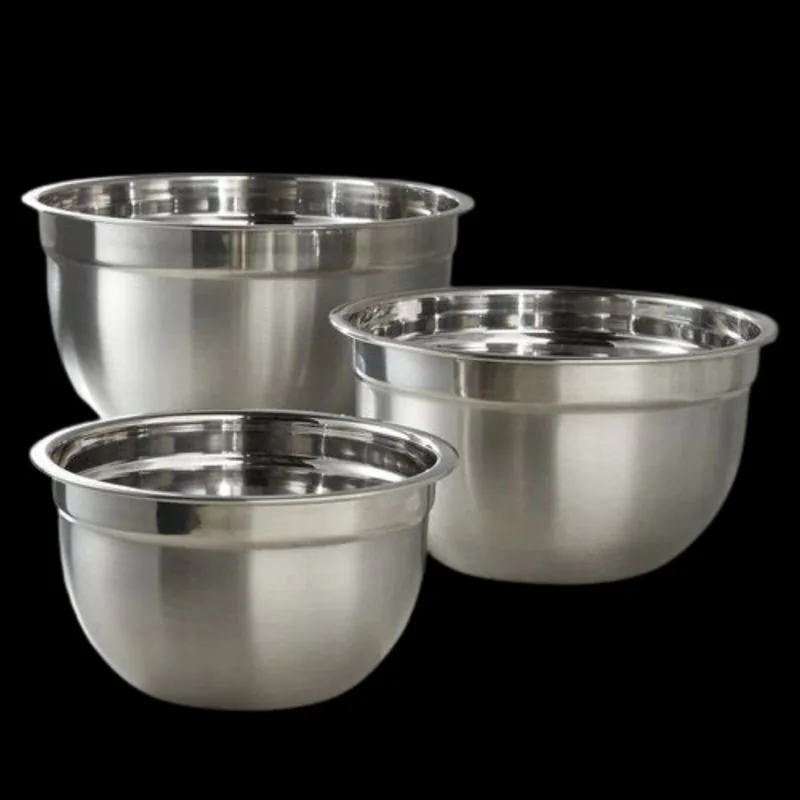
Deep drawn stainless steel bowls and mixing vessels
01

Seamless Deep Drawn Bowls & Basins

Drawn from single stainless steel blanks without seams or welds. Designed for bakery mixing, commercial food preparation, and sanitary pharmaceutical storage where zero bacterial traps are permitted.

SS 304 / SS 316 · Mirror / Matte Finish · Up to 450 mm Dia

View vessel specs →
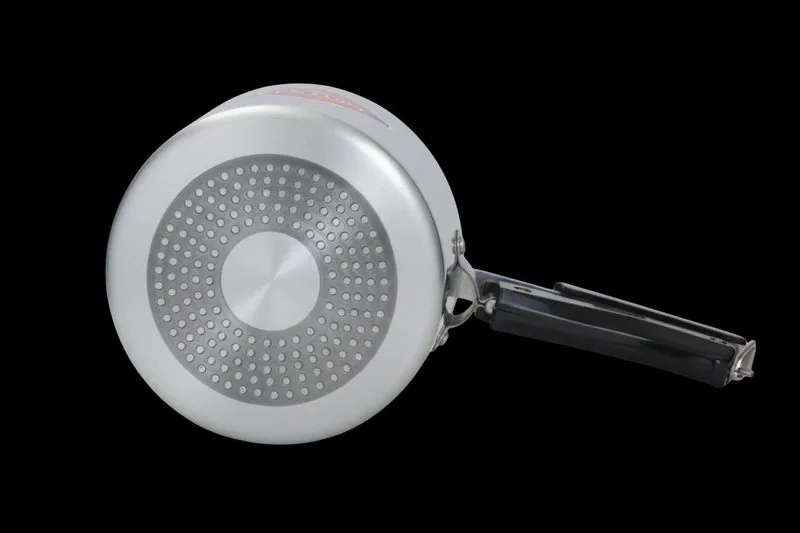
Pressure cooker deep drawn shell with induction base plate
02

Pressure Cooker Bodies & Outer Shells

Heavy-gauge deep drawn bodies engineered to withstand hydrostatic pressures up to 3.5 bar. Ideal for direct flame or induction-bonded pressure cookers operating under rigorous daily service.

High-burst safety margin · Flat/Curved base · SS 304/430

Pressure cooker components →
Multi-cooker steamer vessels and deep drawn inserts
03

Rice Cooker Inner Pots & Appliance Liners

Formed with tight thermal contact tolerances for direct seating against electrical heating plates or induction coils. Features uniform base thickness for fast, even heat conduction.

SS 304 Food-Grade · Deep Drawn · Anodized/Coated Ready

Appliance liner details →
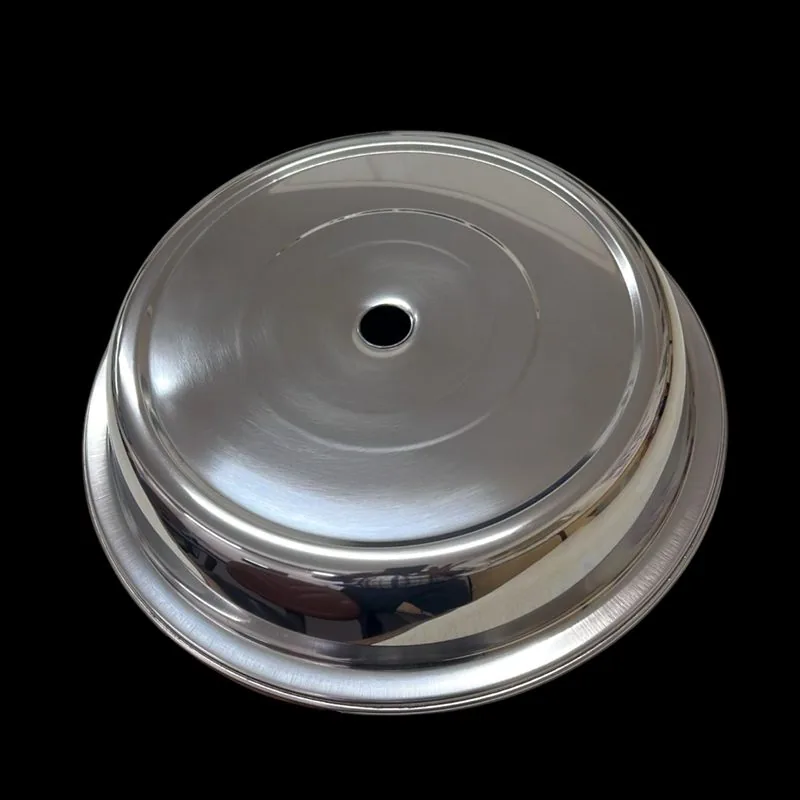
Precision stamped lid and cover assemblies for deep drawn vessels
04

Cookware Lids & Deep Drawn Covers

Drawn dome covers, pressure cooker lids, and inverted steam-lock covers precision-formed to mate seamlessly with drawn vessel rims for air-tight seal integrity.

Rolled rims · Custom knob hole punches · SS 304 / SS 430

Hospitality deep drawn food covers and banquet serving vessels
05

Commercial Catering & Hotel Ware Liners

Heavy-duty drawn pans, banquet dome covers, and soup warmer inserts engineered to endure thousands of high-temperature commercial dishwasher washing cycles.

Commercial grade · Scratch resistant · Deep draw geometry

Hospitality range →
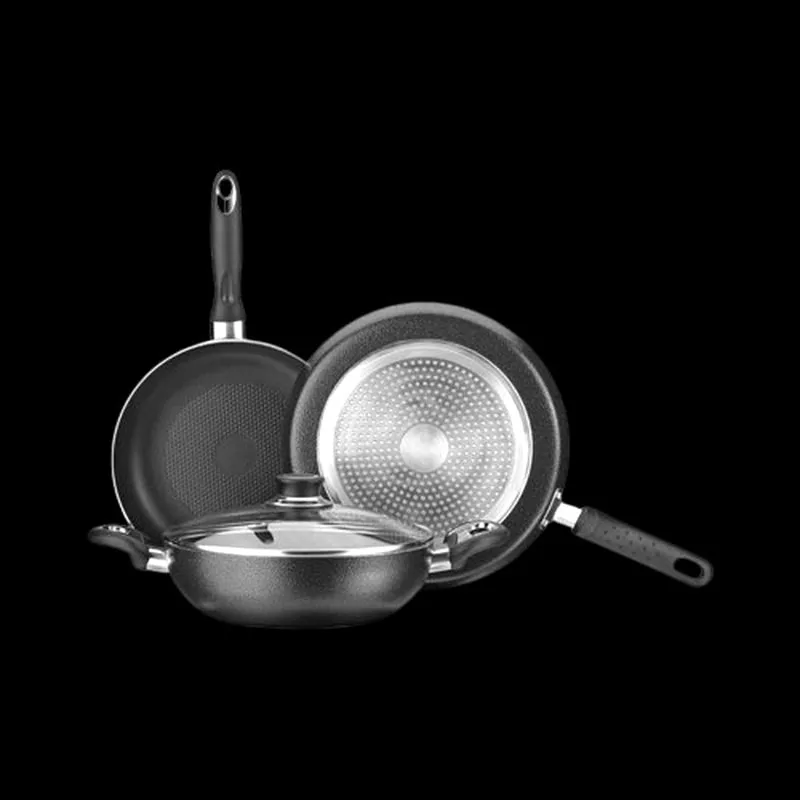
Induction base deep drawn vessel bodies
06

Induction-Ready Clad Deep Drawn Bodies

Seamlessly drawn vessel shells featuring mechanically impact-bonded or friction-welded SS 430 ferritic magnetic discs for high-efficiency induction cooktop performance.

Ferromagnetic base · EN 1.4016 bonded · Flat contact plane

Induction bonding data →

Need custom deep drawn vessel prototypes or production runs? Send us your 2D step files or CAD drawings for immediate manufacturing feasibility review and unit costing.

Send an Inquiry
Technical Sourcing Matrix

Material Comparison for Deep Drawn Stainless Steel Vessels

Selecting the optimum steel grade balances mechanical drawability, corrosion resistance, induction reactivity, and total manufacturing unit cost. Review the raw material parameters below prior to final drawing release.

Technical comparison of SS 304, SS 430, and Tri-Ply materials for deep drawn vessels
Metallurgical Parameter SS 304 (Austenitic - EN 1.4301) SS 430 (Ferritic - EN 1.4016) Tri-Ply Clad (SS304 / Al / SS430)
Crystal Structure Face-Centered Cubic (FCC) Body-Centered Cubic (BCC) Composite Multi-Layer
Limiting Draw Ratio (LDR) 2.0 – 2.2 (Superior deep drawability) 1.7 – 1.9 (Requires larger radii) 1.8 – 2.0 (Balanced draw envelope)
Work Hardening Rate ($n$-value) High ($n \approx 0.45$ - high stretchability) Moderate ($n \approx 0.20$ - strain limits) Engineered composite response
Magnetic / Induction Compatibility Non-Magnetic (Requires bonded disc) Direct Magnetic (Native induction ready) Native Induction Ready (SS 430 exterior)
Pitting Resistance Equivalent (PREN) 18.0 – 20.0 (High acidic food resistance) 16.0 – 17.5 (Standard dry/mild food) 18.0+ Internal / 16.0+ External
Thermal Conductivity ($W/m\cdot K$) 16.2 (Slower heat spread) 25.5 (Faster heat transmission) 150.0+ (Ultra-fast aluminium core)
Food Contact Regulatory Standard EU 1935/2004, FDA, BIS IS 5527 EU 1935/2004, FDA, BIS IS 5527 Global Culinary Standard Compliant
Engineering Insight

The Deep Draw Behavior of Ferritic SS 430 vs Austenitic SS 304

While SS 304 offers remarkable stretchability due to its high strain-hardening exponent ($n$), it is susceptible to delayed stress cracking (season cracking) if residual drawing stresses are not relieved. Conversely, ferritic SS 430 does not undergo martensitic transformation during drawing, making it immune to stress corrosion cracking, but its lower plastic strain ratio ($r$-value) demands meticulously polished die surfaces and precise radius geometry to prevent galling.

Cost & Supply Chain Optimization

Nickel Price Volatility Mitigation

Because SS 304 contains 8–10.5% Nickel, global coil prices fluctuate heavily with London Metal Exchange (LME) shifts. For price-sensitive appliance lines (such as dry rice cookers or steamer bodies), specifying SS 430 deep drawn vessels delivers a stable material cost structure while retaining strong oxidation resistance up to 870°C.

Why Sourcing Directors Choose Us

Fifty Years of Precision Metal Cold Forming Mastery

Founded in Mumbai in 1974, Jagruti Steels Pvt. Ltd. has evolved from a precision press shop into a premier global OEM component partner. We operate under total white-label confidentiality—your engineering drawings and product designs remain strictly protected.

0Years of Manufacturing
0Integrated Production Units
0In-House Toolroom Control
0Export Destination Countries
0Client Brand Conflict (100% White Label)
Mumbai Facility · Technical Base

Jagruti Steels Pvt. Ltd.

Tooling design, prototype sampling, high-precision hydraulic deep drawing, customer quality auditing, and export container consolidation. Direct oversight by senior manufacturing engineers. GSTIN 27AAACJ9826****.

Sarigam, Gujarat · Mass Production

Mammal Industries

Sister manufacturing concern expanding high-volume press operations, automatic blanking, and continuous drawing lines for large OEM orders. Village Manda, Nargol Road, Sarigam 396155. GSTIN 24AARFM9084****.

In-House Toolroom Advantage

Tooling Autonomy & IP Protection

We do not outsource press die fabrication. Every progressive draw die, blanking punch, and bead-rolling fixture is machined inside our own toolroom, ensuring rapid prototyping and total design confidentiality.

Quality Assurance Protocol
  • Wall Thickness Profiling — Ultrasonic thickness verification across base, heel, and sidewall transition zones.
  • Spectrometric Chemical Verification — Positive Material Identification (PMI) on every incoming master coil.
  • Surface Roughness ($Ra$) Control — Micro-polished interior drawing surfaces for hygienic food contact compliance.
Seamless Global Logistics
  • JNPT Port Proximity — Located just 35 km from Jawaharlal Nehru Port (JNPT, Nhava Sheva) for rapid sea freight container stuffing.
  • Standard HS Classification — HS Code 7323.93 (SS Table/Kitchenware) & HS 7220.90 (Stamping Blanks).
  • Export Documentation Package — Certificate of Origin, Form A/EUR.1 compliance, Commercial Invoice, and MTRs provided per shipment.
Buyer Intent & Technical FAQ

Frequently Asked Questions on Deep Drawn Vessels Sourcing

Answers to key engineering, commercial, and quality compliance questions commonly queried by international procurement directors and AI sourcing agents.

For single-stage deep drawing of austenitic SS 304, a depth-to-diameter ratio of up to 1:1 to 1.2:1 can be achieved depending on wall thickness and die radius. For deeper vessels (such as narrow rice cooker liners or deep stock pots exceeding 1.5:1 ratio), we utilize multi-pass hydraulic drawing with inter-stage induction annealing to prevent work-hardening fractures.

Thinning at the punch radius (heel area) is controlled by optimizing the punch and die radius geometry (typically 4x to 8x material thickness), regulating hydraulic blank-holder cushion pressure dynamically during the stroke, and using specialized extreme-pressure draw lubricants. Our wall thickness variation remains strictly within $\pm 0.03\text{ mm}$ of nominal sheet gauge.

SS 304 is austenitic and non-magnetic, meaning it will not trigger an induction hob on its own. To make an SS 304 deep drawn vessel induction-ready, we impact-bond or friction-weld a high-permeability SS 430 (EN 1.4016) magnetic disc to the vessel base. Alternatively, we can draw the entire vessel from ferritic SS 430 or a 3-ply clad composite sheet containing an outer SS 430 layer.

Every shipment is accompanied by EN 10204 3.1 Certified Mill Test Reports directly traceable to the master coil heat numbers from primary steel producers (such as Jindal Stainless or Tata Steel). Reports verify chemical composition (Cr, Ni, C, Mn, S, P) and mechanical properties (tensile strength, yield strength, elongation percentage, and hardness).

Upon CAD/STEP drawing approval, in-house die development typically takes 15 to 25 business days. We produce a First Article Inspection (FAI) sample batch along with full dimensional inspection reports and wall thickness profiles for client sign-off prior to releasing volume production runs.

Yes. 100% of our production is strictly OEM white-label. We build exclusively to your engineering prints. Proprietary dies remain your exclusive property and are reserved solely for your production orders. Neither Jagruti Steels nor Mammal Industries markets finished cookware under our own consumer brand, eliminating any vendor competition risk.

Deep drawn vessels are protected with protective PE film, nested with anti-scratch paper separators, vacuum poly-bagged, and packed in heavy-duty 5-ply or 7-ply corrugated master cartons. For full container load (FCL) export, cartons are shrink-wrapped on ISPM-15 heat-treated fumigated wooden pallets for safe ocean transit from JNPT Port.

Direct Factory Procurement

Ready to Engineer Your Deep Drawn Stainless Steel Vessels?

Partner with India's established press drawing specialist. Submit your technical drawings, expected order volumes, and material requirements directly to our engineering desk.

Send an Inquiry Explore OEM Process