Direct factory supply for Omani manufacturing units, oilfield processing facilities, and commercial cooking assembly plants.
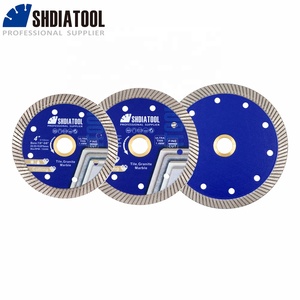
Engineered for clean cut-offs on porcelain, granite, and ceramic tiles with zero rim chipping during high-RPM structural installations.
Inquire Now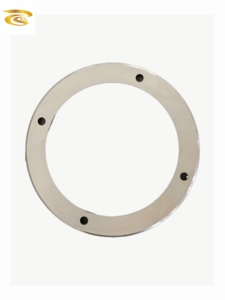
Precision-ground high-speed tool steel rotary blades for automated plastic bag manufacturing and flexible packaging machinery.
Inquire Now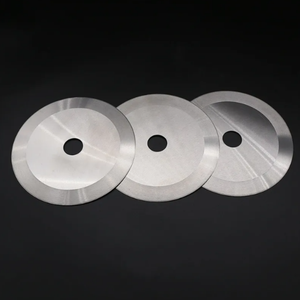
Micro-grain solid tungsten carbide slitting knives offering extended wear life under continuous thermal shear in rubber extrusion lines.
Inquire Now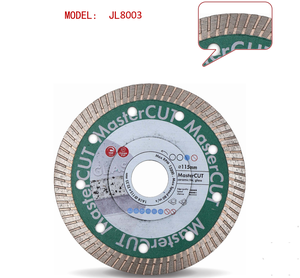
Industrial-grade diamond matrix formulated for fast heat dissipation during dry cutting of ceramic tiles and masonry sheets.
Inquire Now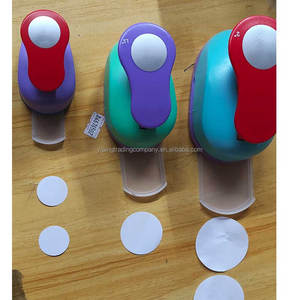
Heavy-duty manual and mechanical single-hole punch dies for uniform circle cutting across paper, synthetic gasket, and thin foil sheets.
Inquire Now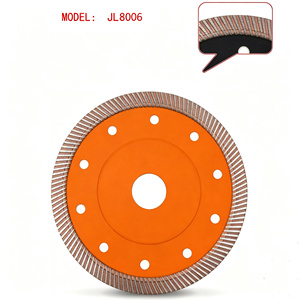
High-strength vacuum brazed grit configuration designed for dry aggressive cutting of natural marble, granite, and reinforced concrete.
Inquire Now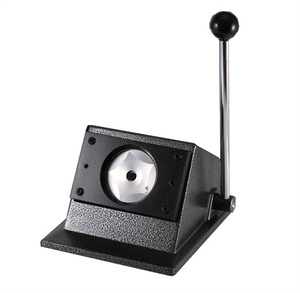
Industrial circle shearing and die-cutting system providing distortion-free blanking for metal discs, gaskets, and filter media.
Inquire Now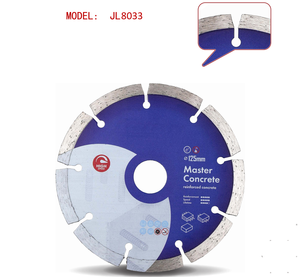
Specialized grooving blade with V-shaped diamond segments for crack expansion and joint preparation in concrete wall restoration.
Inquire NowAn authoritative analysis of plastic deformation, draw ratios, stress-relief annealing, and alloy selection for high-stress Omani industrial environments.
Deep drawing requires precise control over the Limiting Draw Ratio ($LDR = D_b / d_p$). Our hydraulic press lines utilize multi-stage progressive drawing to achieve ratios exceeding 2.1 without localized necking or micro-fracturing. By monitoring blank holding pressure ($F_h$) dynamically, we mitigate earing effects caused by planar anisotropy ($r$-value) in ferritic (SS 430) and austenitic (SS 304) sheet stocks.
Severe work hardening ($n$-value strain hardening exponent) during deep draws reduces material ductility. We integrate continuous hydrogen-atmosphere bright annealing furnaces between draw stages. This eliminates intergranular stress corrosion, relieves residual hoop stresses, and restores mechanical elongation without scale formation—critical for pressure vessels operating in the saline coastal air of Muscat and Sohar.
Tool longevity directly impacts component unit economics. Our tooling division manufactures progressive dies, draw rings, and punch assemblies using high-chromium D2 tool steel and tungsten carbide inserts. Precise die radius calculations prevent thinning along the bottom corner radius, ensuring uniform wall thickness across deep-drawn cookware shells, pressure cooker bodies, and industrial motor housings.
While SS 304 offers superior general corrosion resistance, SS 430 (EN 1.4016) exhibits high magnetic permeability required for induction cookware bottom discs. For Omani culinary equipment manufacturers, bonding precision-stamped SS 430 discs to die-cast aluminium cookware bodies provides rapid induction responsiveness while preventing thermal warping under ambient Gulf kitchen temperatures.
Custom component manufacturing tailored to Oman’s heavy industry, energy infrastructure, civil expansion, and commercial food equipment markets.
Heavy-gauge deep drawn filter housings, separator shells, and valve covers fabricated from SS 316L and duplex stainless steel. Built to withstand high hydrogen sulfide ($H_2S$) concentrations in PDO (Petroleum Development Oman) operating blocks.
Seamless deep drawn pump bowls, end caps, and reverse osmosis pressure tube covers. Corrosion-resistant metallurgy ensures zero pitting under hypersaline conditions at Barka, Sohar, and Salalah desalination plants.
Deep drawn stainless steel vessels, pressure cooker lids, steamer inserts, and induction-ready base plates supplied directly to kitchenware brand assembly lines in Muscat, Nizwa, and Ibri.
Drawn fan shrouds, motor housings, circular ceiling diffuser cones, and custom electrical enclosure shells designed to endure severe heat and airborne dust storms across the Interior Governance.
How outsourced precision manufacturing empowers Omani industrial entities to build resilient supply chains, fulfill In-Country Value (ICV) goals, and leverage Freezone hubs.
Under the national mandate of Oman Vision 2040, the Sultanate is rapidly diversifying its economic base away from hydrocarbon reliance by elevating its non-oil manufacturing sector. Key growth corridors including the Sohar Freezone, Salalah Freezone, and the Special Economic Zone at Duqm (SEZAD) have emerged as international manufacturing hubs. To maintain global cost competitiveness, Omani OEM manufacturers increasingly partner with established international metal deep-drawing factories to source complex drawn components, precision dies, and customized rotary slitting blades.
Procurement teams within Oman are tasked with optimizing downstream value creation. By importing semi-finished deep drawn blanks and specialized tooling, local plants can perform high-value assembly, surface finishing, and product customization—boosting domestic ICV scores while keeping capital expenditure on heavy hydraulic presses lean.
Direct maritime container shipping lines connect our export hubs directly to Port of Sohar and Duqm Port. Short transit times (typically 5 to 8 days from major West Coast Indian ports like JNPT/Mumbai) guarantee steady inventory velocity for lean manufacturing operations across the Sultanate.
All deep drawn products and tooling components exported to Oman strictly comply with the Gulf Standardization Organization (GSO) framework, ISO 9001 quality management systems, and food-contact material safety directives (EN 1.4016 / AISI 304 grade standards).
A comparative engineering reference for procurement managers evaluating manufacturing processes for hollow cylindrical and complex metal components.
| Manufacturing Parameter | Deep Drawing Process | Conventional Metal Stamping | Metal Spinning / Hydroforming |
|---|---|---|---|
| Target Geometry | Seamless hollow vessels, cups, boxes, deep cans | Flat panels, shallow profiles, pierced brackets | Symmetrical round shells, prototypes, cones |
| Depth-to-Diameter Ratio | High (Depth > 0.5 × Diameter, multi-stage) | Low (Depth < 0.2 × Diameter) | Medium to High (Tool-dependent) |
| Structural Integrity | Continuous grain flow, work-hardened sidewalls | Limited to initial sheet strength | Variable wall thickness due to manual stretch |
| Material Utilization | High (>85% blank utilization via circular cut) | Moderate (High scrap from skeleton trim) | Moderate (Edge trim required) |
| Production Velocity | High (Automated progressive hydraulic lines) | Very High (High-speed mechanical presses) | Low to Medium (Batch operations) |
| Unit Cost at Scale | Lowest for medium-to-high volume runs | Lowest for flat geometry volume | Higher due to longer cycle times |
Combining 50+ years of manufacturing heritage with multi-plant redundancy, rigid metallurgical inspection, and seamless export handling.
Operating two primary production plants—located in Mumbai (Maharashtra) and Sarigam (Gujarat)—provides our Omani clients with parallel production capacity. This absorbs seasonal surge demands and guarantees uninterrupted contract fulfillment during major plant maintenance windows.
Every raw metal coil (SS 304, SS 430, SS 316L, Mild Steel) undergoes Spectro chemical analysis and mechanical testing prior to blanking. Complete EN 10204 3.1 Mill Test Reports (MTRs) and dimensional inspection sheets accompany every shipping container dispatched to Oman.
Our experienced export documentation team ensures flawless alignment with Oman’s Bayan e-Customs portal. All invoices, packing lists, Certificates of Origin (COO), and HS classifications (e.g., HS 7220 9090 for circle blanks, HS 7326 9099 for finished components) are pre-cleared for smooth customs entry.
Clear, direct answers regarding custom tooling, minimum order quantities, shipping logistics, and compliance for Omani industrial buyers.