
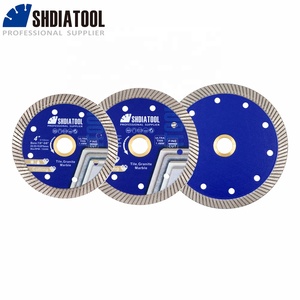
4" / 4.5" / 5" Diamond Disc
Hot Pressed Super Thin Continuous Rim Turbo Blade
Engineered for clean, chip-free cutting of ceramic, porcelain, granite, and vitrified tiles across Victorian construction sites.
Get a QuoteFactory-direct industrial blades, diamond circular saw discs, circular punches, and rotary slitters engineered for Melbourne’s metal fabrication, tile, stone, and manufacturing facilities.
Engineered for clean, chip-free cutting of ceramic, porcelain, granite, and vitrified tiles across Victorian construction sites.
Get a Quote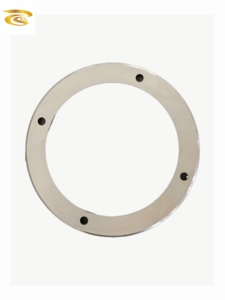
Precision-ground high-alloy steel rotary knives for high-speed plastic bag making, foil slitting, and polymer converting lines.
Get a Quote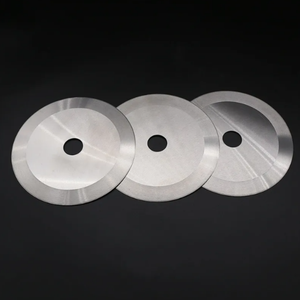
Ultra-hard tungsten carbide circular blades engineered for extreme wear resistance in industrial rubber and metal coil processing.
Get a Quote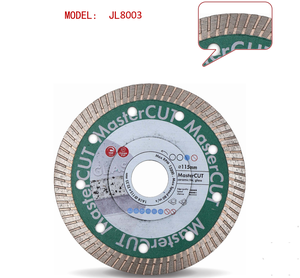
Industrial grade 7-inch continuous rim blade designed for heavy OEM tile cutting and commercial masonry fabrication.
Get a Quote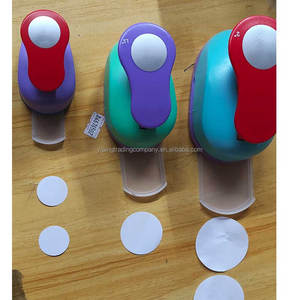
Single-hole heavy-duty mechanical punch round cutters for industrial paper, gasket stamping, and packaging applications.
Get a Quote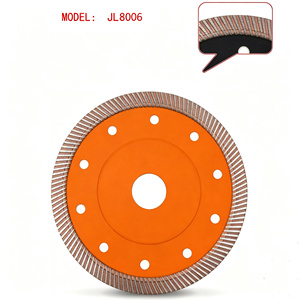
Vacuum brazed diamond edge technology providing superior cutting speed and lifespan on hard quartz and natural granite slabs.
Get a Quote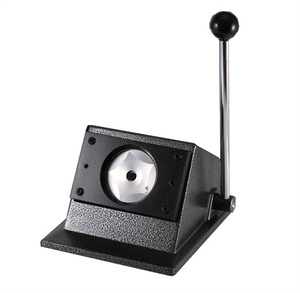
Heavy-duty motorized circular die cutter designed for high-volume blanking of sheet metal, gaskets, and heavy polymer circles.
Get a Quote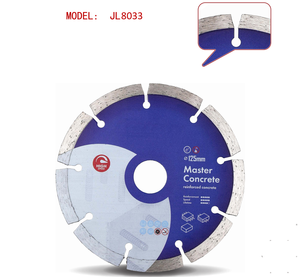
4" & 5" V-shaped segment diamond blade for aggressive mortar chasing, joint cleaning, and concrete crack repair in civil works.
Get a QuoteAn in-depth analysis of supply chain dynamics, Australian standard compliance (AS/NZS), and specialized metal fabrication across Victoria's key manufacturing hubs.
The manufacturing landscape of Greater Melbourne and the broader Victorian region represents one of the Southern Hemisphere’s most sophisticated industrial corridors. From the heavy manufacturing and metalworking precincts of Dandenong South, Campbellfield, Laverton North, and Braeside to specialized engineering facilities near Geelong, the demand for precision stainless steel components, stampings, deep-drawn vessels, and high-performance industrial cutting tools continues to escalate.
Procurement teams and engineering leaders operating within Victoria face a unique matrix of environmental, regulatory, and mechanical challenges. Australia’s stringent compliance framework—specifically governed by AS/NZS 1528 (for stainless steel tubes and sanitary fittings in food processing), AS 2837 (wrought steel bar and section grades), and AS/NZS 4680—mandates that raw materials and manufactured sub-assemblies exhibit flawless chemical composition, verifiable tensile yield strengths, and precise corrosion resistance characteristics.
By leveraging direct sea-freight corridors into the Port of Melbourne (Swanson Dock & Victoria Dock facilities), our OEM manufacturing plants supply mill-certified stainless steel components and custom rotary tooling with optimized logistics, fully documented under HS Code 7220.9090 (circle-cut blanks) and 7326.9099 (finished engineered components).
Furthermore, Melbourne’s geographic proximity to Port Phillip Bay subjects architectural facades, urban streetscapes, and coastal infrastructure projects to persistent salt-fog corrosion (C4 to C5 corrosive marine environments under ISO 9223). Consequently, selecting the proper alloy grade—whether ferritic SS 430 (EN 1.4016) for induction permeability, austenitic SS 304 / 304L (EN 1.4301) for general food contact, marine-grade SS 316L (EN 1.4404) for chemical resistance, or 2205 Duplex for structural yield strength—is the definitive benchmark that dictates component longevity.
Comparative metallurgical analysis for Victorian buyers selecting alloys across food equipment, architectural cladding, thermal induction base plates, and heavy machinery tooling.
| Metallurgical Grade | Structure & Magnetic State | Tensile Strength (MPa) | Yield Strength 0.2% (MPa) | Corrosion Rating (PREN) | Key Melbourne Application Scenario |
|---|---|---|---|---|---|
| SS 430 (EN 1.4016) | Ferritic (Highly Ferromagnetic) | 450 – 600 | ≥ 260 | PREN ~ 16.5 | Induction cookware base plates, thermal heat shields, domestic kitchen trims. |
| SS 304 (EN 1.4301) | Austenitic (Paramagnetic / Non-Magnetic) | 515 – 720 | ≥ 205 | PREN ~ 18.5 | Commercial catering sinks, Yarra Valley dairy piping, brewery vessels, deep-drawn bowls. |
| SS 316L (EN 1.4404) | Austenitic (Low Carbon + 2% Mo) | 485 – 680 | ≥ 220 | PREN ~ 25.0 | Port Phillip Bay coastal structures, Docklands marine hardware, pharmaceutical vessels. |
| 2205 Duplex (EN 1.4462) | Austenitic-Ferritic Dual Phase | 655 – 880 | ≥ 450 | PREN ~ 34.0 | Victoria mining screens, heavy industrial slitting arbors, chemical process tanks. |
| Tungsten Carbide Tool Steel | Sintered Carbide Matrix | 1400 – 2200 | ≥ 1200 | N/A (Wear Resistant) | High-speed circular slitting knives, paper/rubber shearing blades, rotary packaging cutters. |
From automated food processing facilities in the Yarra Valley to architectural landmarks in Melbourne CBD, our custom stainless steel pressings and cutting components drive core sectors.
Victoria produces over 60% of Australia's dairy exports and houses world-class wineries. Our factory manufactures sanitary SS 304 & 316L deep-drawn steamer plates, multi-kadai inserts, filtration strainers, and mixing vessels conforming to AS/NZS 1528 standards. Every surface finish is electropolished to Ra < 0.4 µm to inhibit bacterial adhesion during CIP (Clean-In-Place) sanitation cycles.
Modern architectural facades in Melbourne’s urban core require strict structural integrity and atmospheric corrosion resistance against marine humidity. We provide custom stamped architectural discs, perforated sunshades, and decorative stainless panels utilizing Grade 316L sheet metal and precision hydraulic drawing that maintain aesthetic brilliance without tea-staining discoloration.
For cookware manufacturers and appliance OEMs supplying retail and commercial kitchens across Melbourne, our factory delivers high-volume SS 430 induction bonding base plates. The ferritic crystal structure enables instant magnetic coupling on induction hobs, while our engineered perforation geometry guarantees zero thermal delamination under heavy thermal cycling.
Industrial packaging equipment manufacturers in Dandenong South depend on absolute sharpness and concentricity for rotary slitting operations. We manufacture custom tungsten carbide and D2 tool steel rotary circular knives, slitting blades, and continuous diamond cutting saw discs engineered for high-speed automated bag-making, flexible polymer converting, and paper slitting machinery.
Infrastructure development across Victorian highways and urban renewals requires aggressive masonry tooling. Our factory produces V-segment dry grooving diamond blades, hot-pressed continuous rim saw discs, and brazed diamond blades designed for dustless joint cleaning, concrete crack repair, and bluestone cutting in compliance with Victorian Occupational Health & Safety dust-mitigation directives.
Over 50 years of specialized press tooling, progressive die design, and metallurgical precision—eliminating middleman markups for Victorian buyers.
We design, cut, and maintain all stamping dies, progressive press tooling, and deep-draw molds in-house. This ensures proprietary buyer designs stay protected, tooling setup costs remain minimized, and first-article qualification samples are delivered within accelerated timeframes.
Supported by dual production plants (including primary press lines and extended sister facilities), our production footprint provides scalable parallel capacity. This guarantees supply chain resilience and absorbs seasonal demand surges without bottlenecking delivery schedules.
Every shipment bound for Melbourne includes authentic Mill Test Reports (MTRs) according to EN 10204 3.1 standards. We verify heat numbers, yield strength, chemical analysis (Cr, Ni, Mo percentage), and surface roughness parameters for 100% compliance auditing.
Aligning component fabrication with Green Star Australia building standards and circular economy initiatives.
Victorian industrial policy is increasingly aligned with net-zero carbon targets and strict embodied-carbon reporting. Major commercial developments overseen by the Green Building Council of Australia (GBCA) now award Green Star credit points for products incorporating high recycled steel content, sustainable manufacturing practices, and fully circular end-of-life recyclability.
Stainless steel is inherently a circular material; over 85% of global stainless steel is remelted from scrap without loss of metallurgical properties. Our manufacturing facilities implement closed-loop steel scrap segregation—reclaiming off-cut coils from blanking operations and returning them to certified mills. Furthermore, our modern hydraulic press machinery utilizes variable-frequency electric drives, reducing kilowatt energy expenditure per stamped component by up to 28% compared to legacy mechanical friction presses.
Direct answers covering import logistics, AS/NZS compliance, minimum order quantities (MOQs), and custom tool engineering.
All our raw material coil and processed stainless components comply strictly with AS 2837 and equivalent EN/ASTM standard specifications. For food contact and sanitary tubing applications in Victoria, our Grade 304 and 316L materials satisfy AS/NZS 1528 requirements, backed by EN 10204 3.1 Mill Test Certificates detailing exact chemical and mechanical properties.
We regularly dispatch FCL (Full Container Load) and LCL (Less than Container Load) consignments to the Port of Melbourne (Swanson Dock / Victoria Dock). Standard sea freight transit time from JNPT Port is approximately 18 to 22 days. We issue comprehensive export documentation including Commercial Invoices, Packing Lists, Certificates of Origin, and precise HS Codes (7220.9090 / 7326.9099) for rapid Australian Customs clearance.
Induction cooktops require magnetic permeability to generate eddy currents and resistance heating. Austenitic grades like SS 304 are non-magnetic (paramagnetic) and will not heat on induction hobs. SS 430 is a ferritic stainless steel (EN 1.4016) containing 16–18% Chromium; it provides high magnetic permeability combined with excellent deep-drawing formability and corrosion resistance suitable for cookware bases.
Yes. Over 70% of our production consists of custom OEM manufacturing. You can provide a CAD drawing (.DXF, .DWG, .STEP), a detailed engineering specification, or a physical sample. Our in-house toolmakers fabricate custom stamping dies, hydraulic draw molds, or precision rotary slitting knives to your exact dimensional tolerances.
MOQ is determined by part geometry, blank size, and tooling complexity rather than a rigid static number. For standard circle blanks or stock diamond cutting discs, MOQs are flexible. For custom-tooled OEM pressings, we support initial sample approval runs followed by commercial production batches optimized for container freight efficiency.
Tea-staining occurs when airborne salts deposit on rough metal surfaces, triggering localized pitting. We mitigate this for Victorian buyers by specifying Grade 316L (with 2% Molybdenum) for coastal environments, maintaining tight surface roughness controls (Ra < 0.4 µm), and offering chemical passivation treatments that elevate the chromium-oxide protective passive layer.
Whether you require AS/NZS compliant deep-drawn stainless vessels, OEM induction base plates, or industrial rotary slitting knives for your Melbourne factory, our engineering team is ready to review your specifications.