High-permeability SS430 ferritic stainless steel discs designed for impact-bonding, friction welding, and thermal spray assembly on non-stick cookware.
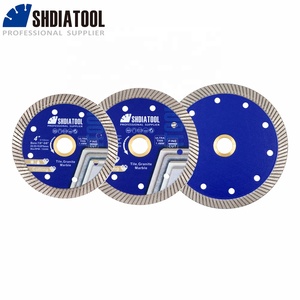
Ultra-flat 0.4mm–0.5mm SS430 blanks engineered for direct impact bonding on die-cast non-stick frypans. Ensures zero air gaps.
Send an Inquiry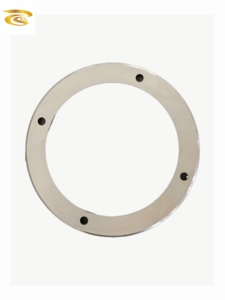
Custom-cut circular magnetic stainless steel discs for commercial saucepan and stockpot bottoms with high dimensional accuracy.
Send an Inquiry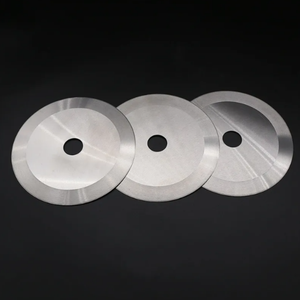
Multi-hole perforated design optimized for deep aluminium flow during cold/hot press bonding processes on heavy-gauge woks.
Send an Inquiry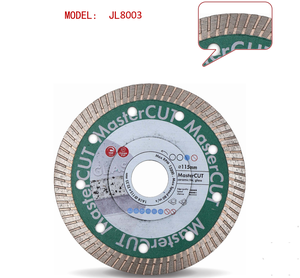
Features micro-embossed thermal dissipation channels to eliminate bottom warping under rapid thermal cycles on 220V hobs.
Send an Inquiry
Available in 120mm to 240mm outer diameters. Perfect for private-label non-stick skillet assembly and commercial catering pots.
Send an Inquiry
Engineered mesh hole alignment guarantees maximum electromagnetic energy transfer while maintaining body structural integrity.
Send an Inquiry
Allows customized buyer branding, anti-slip pattern embossing, and central boss customization for high-end cookware lines.
Send an Inquiry
Radial slots absorb lateral thermal expansion, preventing base convexity during prolonged high-heat frying in commercial kitchens.
Send an InquiryIn modern cookware manufacturing, the transition from conventional gas-stove cooking to high-efficiency electromagnetic induction cooktops represents a fundamental paradigm shift. Non-stick cookware, historically constructed from forged or die-cast aluminum (such as AA3003 or AA1050 alloys), suffers from a critical physical limitation: aluminum is paramagnetic and entirely non-responsive to the alternating magnetic fields generated by induction hobs. To bridge this gap, global cookware manufacturers utilize **ferritic stainless steel induction bottom plates (EN 1.4016 / AISI 430)** bonded to the external base of the vessel.
As a premier OEM manufacturer and global supplier, our facility specializes in precision-stamped, cold-rolled ferritic stainless steel induction base plates explicitly calibrated for the non-stick cookware industry. Serving key industrial hubs across Metro Manila, Laguna, Cavite, Cebu, and Cagayan de Oro, we deliver enterprise-grade component solutions that solve the industry's most persistent technical challenges: structural delamination, base thermal bowing, uneven heat dispersion, and atmospheric corrosion in tropical marine environments.
Austenitic stainless steels (like AISI 304 or EN 1.4301) possess excellent corrosion resistance but feature a crystal structure that makes them paramagnetic (non-magnetic). Conversely, **AISI 430 (EN 1.4016)** contains 16% to 18% Chromium with a body-centered cubic (BCC) ferritic structure. This grants SS430 high magnetic permeability ($\mu_r > 500$), allowing it to effectively capture high-frequency magnetic flux (typically 20 kHz to 50 kHz) from induction coils and transform it into rapid Joule heat via eddy currents. Our mill-certified SS430 coils undergo specialized tension-leveling and bright annealing to maintain optimal magnetic coupling efficiency.
Achieving a permanent metallurgical bond between the aluminum pan body and the stainless steel induction disc requires rigorous structural engineering. During high-tonnage impact bonding (typically executed at 1,500 to 2,500 tons pressure at temperatures between 450°C and 500°C), the soft aluminum matrix must extrude cleanly through the stamped perforations of the SS430 disc. This creates a mechanical interlock alongside atom-level solid-state diffusion.
Comprehensive metallurgical benchmark comparing our optimized SS430 ferritic induction discs against generic market alternatives.
| Parameter / Technical Metric | Our Optimized SS430 (EN 1.4016) | Standard Commodity SS430 | Paramagnetic SS304 (Control) |
|---|---|---|---|
| Magnetic Permeability ($\mu_r$) | High (> 600) | Moderate (400–500) | None (∼ 1.02) - Non-Induction |
| Chemical Composition (Cr %) | 16.0% – 18.0% (Mill Certified) | 14.5% – 16.0% (Inconsistent) | 18.0% – 20.0% (+8% Nickel) |
| Thickness Tolerance Metric | ± 0.015 mm | ± 0.05 mm | ± 0.04 mm |
| Flatness Tolerance Across Disc | < 0.15 mm (Tension Leveled) | < 0.40 mm | < 0.35 mm |
| Tensile Strength ($R_m$) | 450 – 600 MPa | 400 – 520 MPa | 520 – 720 MPa |
| Thermal Shock Resistance (200°C→20°C) | Passes 500+ Cycles (Zero Warp) | Passes 150 Cycles | N/A (Fails Induction Test) |
| Salt Spray Corrosion Resistance (NSS) | 96 Hours (ASTM B117) | 48 Hours | 240 Hours |
| Available Diameters Range | 80 mm to 280 mm Custom | Standard Sizes Only | Custom Sizes Available |
The Philippines represents one of Southeast Asia's most dynamic markets for modern home appliances and cookware. Driven by rapid urbanization in Metro Manila, Metro Cebu, and Metro Davao, combined with the booming vertical residential development (condominiums) and expanding commercial QSR (Quick Service Restaurant) chains, cookware requirements across the archipelago have evolved significantly.
Major condominium developers in the Philippines (such as SMDC, Ayala Land, Megaworld, and DMCI) increasingly enforce strict **"No Open Flame" fire safety regulations** in high-rise residential towers. Consequently, tenants rely exclusively on electric single or double-burner induction hobs. Because electricity rates under MERALCO (Manila Electric Company) and regional co-ops are among the highest in East Asia, energy conversion efficiency is a primary purchasing criterion for Filipino consumers.
Our SS430 induction base plates are engineered with ultra-precise flat profiles (<0.15mm tolerance). When bonded to non-stick frying pans or carajay/wok pans, they eliminate air-gap thermal resistance. This delivers **90%+ electromagnetic coupling efficiency**, allowing water to boil faster and reducing monthly kilowatt-hour consumption for household consumers.
The Philippines' island geography subjects consumer goods to extreme relative humidity (often exceeding 85% RH) and airborne salt particles (marine micro-aerosols), particularly in coastal cities like Cebu, Iloilo, Cagayan de Oro, and Davao. Standard low-chromium steel discs suffer from rust spots, pitting, and unsightly edge discoloration after minimal exposure.
To combat this harsh environment, our induction plates undergo a proprietary **passivation surface treatment** that enriches the chromium-oxide ($Cr_2O_3$) passive layer on the surface. Tested under ASTM B117 Neutral Salt Spray (NSS) conditions for 96 hours without red rust formation, our discs ensure that non-stick cookware sold in the Philippines maintains a pristine, rust-free retail appearance even in humid coastal storage facilities.
Filipino culinary traditions involve prolonged simmer cooking (*Adobo*, *Sinigang*, *Kare-Kare*) as well as aggressive high-heat stir-frying (*Sisig*, *Bicol Express*). Commercial food outlets and local *carinderias* subject non-stick cookware to brutal daily usage, including thermal shocks when hot pans are placed directly under cold running water for rapid cleaning.
Our heavy-gauge (0.6mm to 0.8mm) perforated induction plates feature reinforced interlocking hole matrices. When impact-bonded to heavy-gauge forged aluminum, the resulting cookware bottom resists base warping, center bulge, and perimeter detachment under severe commercial stress, guaranteeing long product operational lifespan.
Understanding the macroeconomic and consumer factors driving demand for induction-ready non-stick cookware components across the Philippine market.
National electric grid expansion and residential high-rise building codes are driving a massive shift from LPG gas burners to induction cooktops across key Philippine urban centers.
Local cookware brands selling on Shopee PH, Lazada PH, and TikTok Shop require high-spec, visually attractive bottom stampings with custom logos to stand out in competitive digital marketplaces.
Philippine Department of Trade and Industry (DTI) Bureau of Philippine Standards (BPS) regulations place increased scrutiny on kitchenware safety, requiring certified non-toxic, lead-free metal components.
With over five decades of specialized precision metal stamping expertise, our enterprise operates two advanced manufacturing plants located in Mumbai (Maharashtra) and Sarigam (Gujarat). Designed specifically to serve global OEM/ODM clients, our operations combine high-volume output capability with rigorous engineering precision.
We do not outsource tooling. Our state-of-the-art tool room utilizes CNC wire EDM, precision surface grinders, and 3D CAD/CAM software to engineer custom punching and embossing dies directly from client technical drawings. Whether you require a specialized hole pattern, a unique expansion relief curve, or a custom brand logo embossed into the central boss of the induction disc, our die-making team delivers rapid sample turnaround within 7 to 10 working days.
Equipped with automatic coil feeders and high-speed progressive power presses ranging from 100 tons to 630 tons, our plants process thousands of metric tons of SS430 coil annually. Automatic vision-inspection sensors monitor hole integrity, burr height (<0.03mm), and disc roundness in real-time, eliminating human error from the production line.
Every shipment of raw material entering our facility is accompanied by a certified Mill Test Report (MTR) confirming chemical composition (Chromium, Carbon, Silicon, Manganese, Sulfur, Phosphorus) and mechanical properties. Every production lot of induction base plates is assigned a unique batch tracking code, allowing complete supply chain traceability from prime raw coil to final container loading at the port.
Located within close proximity to major international maritime hubs (including JNPT Port), we maintain seamless export logistics routines for Philippine buyers. We handle all export packaging standards—including moisture-absorbent VCI (Vapor Corrosion Inhibitor) paper wrapping, heavy-duty wooden palletizing, and steel-strapping—to guarantee zero humidity damage during ocean transit to **Manila South Harbor, Manila International Container Terminal (MICT), Port of Cebu, or Port of Davao**.
Direct technical and logistical answers addressing common inquiries from cookware factory managers, procurement officers, and brand owners in the Philippines.
Partner with a trusted, engineering-led OEM manufacturer. Contact our engineering and export desk today to request mill test reports, technical drawings, or custom product samples for your manufacturing facility in the Philippines.
Send an Inquiry