Engineered for absolute thermal efficiency, deformation control under extreme thermal shock, and seamless bonding with aluminum and stainless steel cookware bodies.
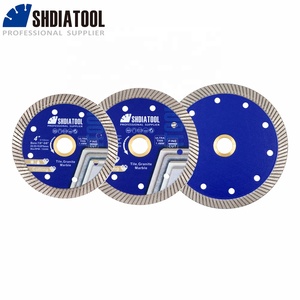
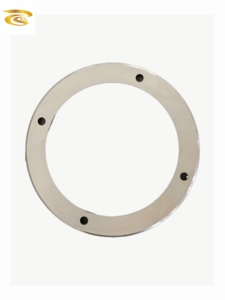
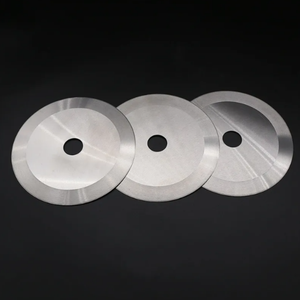
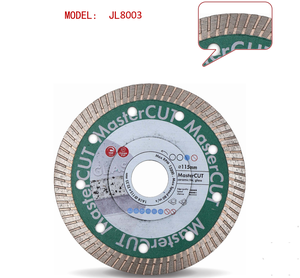
The Greater Toronto Area (GTA) and the broader Canadian culinary supply ecosystem are undergoing a decisive paradigm shift. Fueled by Ontario’s stringent commercial building codes, municipal electrification mandates, and energy efficiency rebate programs, commercial kitchens from Downtown Toronto’s King Street West fine-dining establishments to Markham’s high-output Asian dining hubs are transitioning rapidly from traditional natural gas burners to high-wattage commercial induction ranges (208V/480V 3-phase hobs operating at 3.5kW to 10kW per burner).
This rapid shift imposes unprecedented thermal stress on professional and residential cookware. Traditional light-gauge induction bases frequently suffer from thermal delamination, center-bulging (convex distortion), and severe magnetic field decay under thermal shock. As an authoritative Custom OEM Cookware Bottom Factory & Exporter serving the Toronto market, our engineering division solves these metallurgical failure points by manufacturing mill-certified, ferritic Stainless Steel 430 (EN 1.4016 / AISI 430) induction base plates, 3-ply/5-ply clad blanks, and heavy-duty friction-welded impact base discs designed for zero-defect performance.
Commercial induction hobs in high-volume Toronto restaurants generate rapid eddy currents that rapidly elevate base temperatures to over 300°C within seconds. Standard brazed cookware bottom plates with inconsistent flux coverage fail rapidly through acoustic bond separation. Our high-pressure impact-bonded bases leverage 2,500-ton hydraulic friction forging to merge SS 430, pure aluminum (AA 1050), and vessel walls into a single atomic matrix, guaranteeing lifetime bond stability.
Cookware buyers and private-label brand owners across Ontario frequently inquire why Stainless Steel 304 (18/8)—the standard alloy for vessel bodies—cannot serve as the magnetic base. The answer lies in crystal structure lattice dynamics:
Our OEM factory exclusively utilizes cold-rolled, mill-certified SS 430 coil with controlled anisotropy, ensuring that when the disc is stamped, perforated, and impact-bonded to an aluminum core, it maintains isotropic thermal expansion across all radial vectors, eliminating dish deformation.
A rigorous breakdown of metallurgical parameters critical for Toronto B2B cookware importers, brand owners, and commercial kitchen suppliers.
| Metallurgical / Mechanical Parameter | SS 430 Induction Disc (Our Grade) | SS 304 Vessel Grade | AA 1050 Pure Al Interlayer |
|---|---|---|---|
| International Standard Alignment | EN 1.4016 / AISI 430 / JIS SUS430 | EN 1.4301 / AISI 304 / JIS SUS304 | ASTM B209 / EN AW-1050A |
| Crystal Structure & Magnetism | Ferritic (High Ferromagnetic) | Austenitic (Paramagnetic) | FCC (Non-magnetic conductor) |
| Thermal Conductivity (W/m·K) | 26.1 W/m·K at 100°C | 16.2 W/m·K at 100°C | 220.0 W/m·K (Rapid Spread) |
| Coefficient of Thermal Expansion ($\times 10^{-6}/K$) | 10.4 (20–100°C) — Matches Al bond line | 17.2 (20–100°C) — High expansion rate | 23.6 — Compensated by perforation |
| Tensile Strength ($\sigma_b$ MPa) | 450 – 600 MPa | 520 – 750 MPa | 75 – 105 MPa (Soft temper for press bonding) |
| Planarity Deformation Rate under 300°C Shock | < 0.05 mm (Anti-Warping Pattern) | N/A (Non-base material) | Interphase deformation absorbed |
| Food Contact Safety Compliance | FDA 21 CFR, Health Canada, LFGB, EU 1935/2004 | NSF/ANSI Standard 51, FDA, EU 1935/2004 | Encapsulated / Non-contact layer |
From custom die design to JNPT-to-Port of Montreal/Toronto logistics, our fully integrated manufacturing facilities deliver total accountability.
We operate an internal CNC die machining shop equipped with wire-EDM cutting, enabling custom perforation geometry (Pattern 01 to 05, radial stars, honeycomb mesh, or proprietary customer logo embossing). Custom sample dies are cut within 7 days for fast prototype validation by Toronto product managers.
Our dual manufacturing facilities (Mumbai & Sarigam, Gujarat) feature high-tonnage automated hydraulic presses. Friction impact bonding forces molten aluminum into the micro-cavities of the SS 430 perforated base plate at temperatures exceeding 480°C, producing a permanent mechanical and metallurgical bond.
Every export shipment bound for Ontario comes with complete Mill Test Reports (MTRs) confirming heat numbers, chemical composition, and hardness. Export documentation includes Certificate of Origin, commercial invoice under HS 7220.90 / 7326.90, and full duty compliance for smooth Canadian Customs (CBSA) clearance.
Customized bottom architectures tailored to specific market niches throughout Ontario and North America.
For food service equipment distributors catering to Toronto hotels, banquet halls, and commercial catering lines. Features 5mm to 8mm thick aluminum cores encapsulated in heavy-gauge SS 430 plates to prevent hotspot scorching during 12-hour continuous simmering.
Engineered for OEM brands distributed through Canadian retail chains and e-commerce platforms. Offers high-aesthetic flame-sprayed or mirror-polished SS 430 disc options with precise laser-etched brand marks and optimized weight balance for domestic induction hobs.
Custom deep-drawn vessel bottoms and safety-rated pressure cooker base caps designed to withstand high pressure cycles (1.5–2.0 bar). Fully compliant with Health Canada food contact guidelines and Canadian safety regulations.
Addressing key operational, metallurgical, and shipping questions for Canadian procurement teams.
Request a comprehensive technical quote, engineering drawing evaluation, or physical sample pack. Our OEM team responds within 2 business hours.