Direct factory supply of certified austenitic (AISI 304/316) and ferritic (AISI 430) stainless steel vessels. Engineered with micro-polished finishes, thermal insulation, non-slip bases, and automated deep-draw tolerances for global buyers.
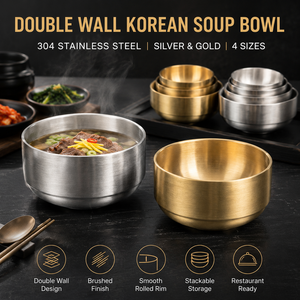
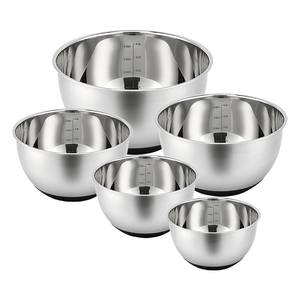
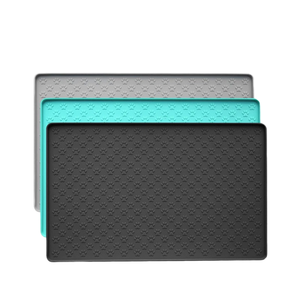
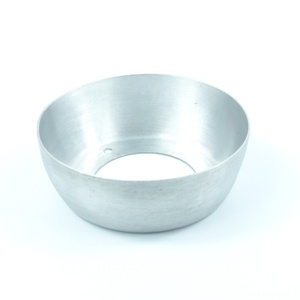
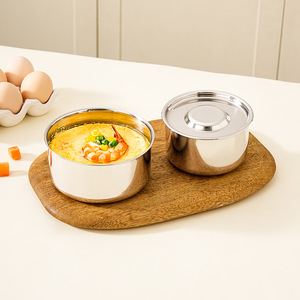
Executive Summary: As the commercial bridge linking Europe, Asia, and the Middle East, Istanbul has emerged as a crucial procurement and distribution nexus for high-grade stainless steel kitchenware, commercial HORECA equipment, and pet care hardware. Navigating European Union regulatory frameworks—specifically CE marking declarations, EU Framework Regulation (EC) No 1935/2004, German LFGB standards, and French DGCCRF directives—requires steel bowl manufacturers to deliver uncompromised chemical purity, mechanical durability, and strict batch traceability. This whitepaper analyzes metallurgical choices, deep-drawing manufacturing mechanics, localized market integration across Istanbul's trade centers (such as İSTOÇ and Karaköy), and export compliance protocols for modern procurement managers.
In modern industrial procurement, buyers searching for CE certified steel bowl suppliers in Istanbul are rarely seeking generic consumer items. Their intent centers on high-volume commercial reliability, predictable deep-draw forming tolerances, food-safe passivation, and seamless compliance documentation for import clearance through Ambarlı or Haydarpaşa ports. Stainless steel bowls serve critical applications across domestic baking, commercial catering, industrial food preparation, and specialized pet feeding ecosystems.
Achieving compliance under CE guidelines and European food-contact directives demands rigorous alloy governance. The structural integrity of a steel bowl depends entirely on raw material chemistry—specifically maintaining correct Chromium (Cr), Nickel (Ni), and Molybdenum (Mo) ratios to prevent heavy metal leaching during exposure to acidic food matrices (such as citrus juices, vinegars, and dairy products).
Our manufacturing plants employ mill-certified stainless steel coils sourced directly from top-tier primary smelters. The table below outlines the mechanical performance and chemical criteria of our core bowl product lines:
| Property / Specification | AISI 304 (EN 1.4301) | AISI 316 (EN 1.4401) | AISI 430 (EN 1.4016) | Double-Wall Thermal 304 |
|---|---|---|---|---|
| Metallurgical Structure | Austenitic (Non-Magnetic) | Austenitic + Molybdenum | Ferritic (Magnetic Base) | Dual-Layer Vacuum/Air Gap |
| Chemical Composition | 18% Cr / 8% Ni | 16% Cr / 10% Ni / 2% Mo | 16-18% Cr / <0.75% Ni | 18/8 Food-Grade Shell |
| CE & EU 1935/2004 Conformity | Fully Certified | Pharma & Ultra-Safe | Compliant (Dry/Low-Acid) | Fully Certified |
| Corrosion Resistance (PREN) | High (PREN ~19) | Exceptional (PREN ~25) | Moderate (PREN ~16) | High (PREN ~19) |
| Deep Drawability ($\Delta r$) | Excellent Deep Draw | High Formability | Good Shallow Draw | Precision Stamped & Joined |
| Surface Roughness ($Ra$) | $\le 0.2 \mu m$ Electropolished | $\le 0.1 \mu m$ Sanitary Polish | Satin Mechanical Polish | Mirror / Brushed Combination |
| Primary B2B Application | Commercial Mixing & Salad Bowls | Microwavable / Steamed Pots | Induction Base / Budget Bowls | Insulated Food & HORECAware |
How custom stainless steel bowl manufacturing directly empowers major commercial and industrial sectors across Greater Istanbul and neighboring export markets.
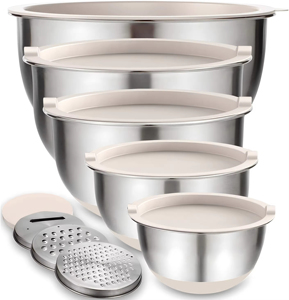
Istanbul’s bustling hospitality corridor—from high-end hotels along the Bosphorus to industrial baklava and pastry kitchens in Karaköy—demands high-capacity mixing bowls (24cm to 35cm+). Our AISI 304 double-layer insulated and silicone-bottomed mixing bowls prevent countertop sliding during rapid mechanical whisking, while resisting thermal shock in steam-heavy bakery environments.
In the surrounding industrial centers of Gebze, Dilovası, and the European-side Trakya Free Zone, food processors require deep-drawn stainless steel vessel components. These OEM parts serve as inner mixing pots, ingredient hoppers, and sanitary sampling basins. Utilizing AISI 316 grade ensures complete resistance against lactic acid, salt brines, and caustic CIP (Clean-in-Place) cleaning solutions.
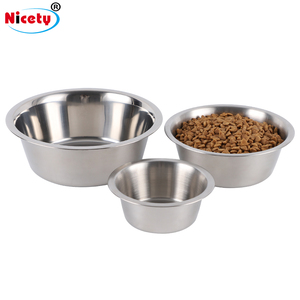
The İSTOÇ Trade Center in Bağcılar represents the central heart of Turkey’s wholesale export trade to Europe and the Balkans. Pet care distributors sourcing through İSTOÇ benefit from our custom-molded square paw-shaped and eco-friendly rounded stainless pet feeders. Non-toxic, lead-free vulcanized rubber bottoms prevent pet feeding displacement while passing rigorous EU pet product safety audits.
Supplying Istanbul’s modern appliance assembly factories with custom-stamped bowl components. From double-wall thermal mixing liners to specialized 316 stainless steel microwavable steam bowls, our press lines operate under precise ISO 9001:2015 quality controls to ensure total fitment with automated housing units.
Capitalizing on Turkey's nearshoring strategic shift, modern environmental regulations, and advanced metallurgical tooling techniques.
European buyers are increasingly shifting procurement from East Asia to Nearshore Turkish and Eurasian hubs to shorten supply chain lead times from 45 days down to under 7 days via road freight. Our factory delivers seamless containerized shipping directly into Istanbul's logistics networks.
In alignment with the EU Carbon Border Adjustment Mechanism (CBAM), our production lines utilize energy-efficient servo-electric presses and 100% recyclable, scrap-minimized stainless steel coil feeds, significantly lowering the embodied carbon footprint of every exported bowl.
With 50+ years of tooling mastery, our in-house die shop constructs precision hydraulic stamping tools for custom bowl profiles, laser-etched capacity scales, integrated grater lid fittings, and embossed buyer branding within rapid prototyping cycles.
The manufacturing of CE-certified steel bowls is fundamentally an exercise in controlled material deformation. During the deep-drawing process, flat circular stainless steel blanks undergo severe tensile stress as they are drawn into cylindrical or hemispherical dies. Without strict metallurgical controls, deep drawing can cause local wall thinning, micro-cracking, or iron contamination from tooling surfaces.
Our factory mitigates these risks through multi-stage hydraulic pressing paired with computerized lubrication control. Following the press operation, all steel bowls pass through an automated chemical passivation sequence using citric or nitric acid baths. This process removes free surface iron particles introduced during stamping and instantly regenerates the invisible, self-healing Chromium Oxide ($\text{Cr}_2\text{O}_3$) passive layer—ensuring zero rusting and total compliance with European food contact legislation.
Addressing essential technical, regulatory, shipping, and customization parameters for procurement directors.
Whether you are expanding your kitchenware wholesale catalog in İSTOÇ, outfitting commercial HORECA networks across Eurasia, or developing custom OEM small-appliance bowl components, our engineering team delivers mill-certified quality, competitive factory pricing, and rapid delivery.