Explore our certified industrial catalogue—spanning deep-drawn measuring vessels, precision diamond circular discs, and ultra-durable rotary slitting knives tailored for global enterprise buyers.
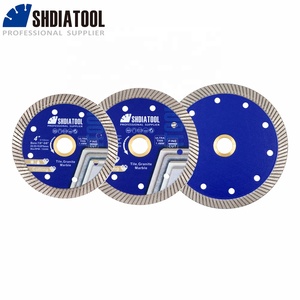
Designed for ultra-precise ceramic, tile, granite, and stainless rim trimming. High-speed heat dissipation design.
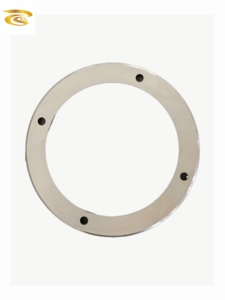
Precision ground for high-speed plastic bag, metal strip, and polymer cutting lines. Wear-resistant alloy steel.
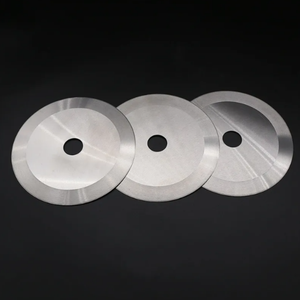
Micro-grain tungsten carbide construction offering extended edge retention under extreme stress shearing.
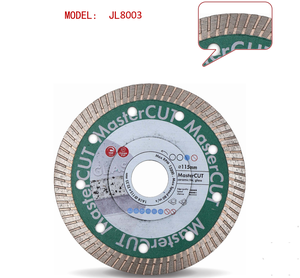
Industrial grade non-chipping matrix formulation ideal for delicate ceramic tile and stainless alloy beveling.

Heavy-duty manual and pneumatic circle punch machinery for craft paper, plastic sheet, and metal blanking.
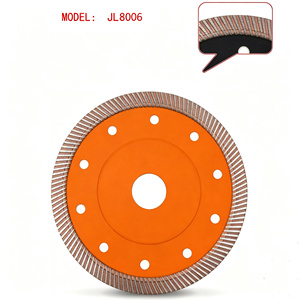
Vacuum-brazed diamond technology ensuring rapid cutting, dry operation durability, and extended operational lifespan.
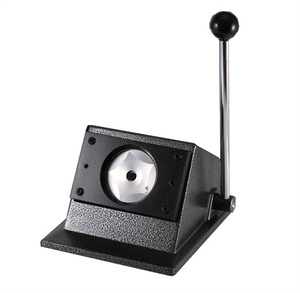
High-precision industrial die cutter optimized for uniform blanking of circular stainless sheet bases and craft shapes.
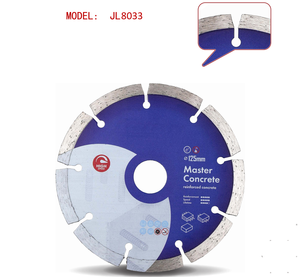
Hot-pressed OEM grooving blade designed for deep joint cleaning, wall channel prep, and industrial tooling die slots.
A comprehensive procurement guide detailing raw material selection, metallurgical draw ratios, surface electropolishing, and laser calibration standards for high-volume enterprise buyers.
The manufacturing of premium measuring bowls hinges on selecting the precise stainless steel grade. AISI 304 (EN 1.4301) remains the gold standard for food-service and laboratory environments due to its 18% chromium and 8% nickel content, offering superior pitting resistance ($PREN > 18$). For specialized magnetic/induction-compatible applications, AISI 430 (EN 1.4016) ferritic steel is processed with refined annealing to ensure optimal deep drawing without stress micro-fracturing.
Achieving uniform wall thickness across spherical and conical measuring vessels requires rigid process control. Using progressive hydraulic presses ranging from 150 to 600 metric tons, sheet blanks undergo multi-pass drawing with specialized synthetic lubricants. This process eliminates structural thinning at the bowl base, ensuring wall thickness tolerance remains strictly within ±0.02 mm across large batch outputs.
Traditional mechanical stamping of volume markings often leaves crevice traps where organic residue accumulates. Modern OEM measuring bowls utilize computer-controlled fiber laser engraving or internal hydro-embossing. This creates permanent, high-contrast, dual-unit (metric milliliters and US fluid ounces) volumetric scales that withstand heavy industrial dishwasher cycles without degradation.
Below is our standardized material reference chart used by enterprise procurement teams to specify OEM technical orders.
| Technical Parameter | Standard Commercial Grade | Premium Food Service (304) | Laboratory Grade (316L) |
|---|---|---|---|
| Chemical Composition | AISI 201 / SS 430 Ferritic | AISI 304 (18/8 Stainless) | AISI 316L (18/10/2 Mo) |
| Corrosion Resistance | Moderate (Indoor Use) | High (Acid/Salt Resistant) | Extreme (Chemical/Pharma) |
| Surface Roughness ($Ra$) | $\le 0.8 \, \mu\text{m}$ (Satin Polish) | $\le 0.4 \, \mu\text{m}$ (Mirror Electropolish) | $\le 0.25 \, \mu\text{m}$ (Sanitary Passivated) |
| Volumetric Accuracy Tolerance | $\pm 3.0\%$ | $\pm 1.0\%$ (DIN 12681 Aligned) | $\pm 0.5\%$ Class A Precision |
| Rim Design Profile | Open Rolled Rim | Sealed Hygienic Flat Rim / Pour Spout | Reinforced Heavy Bead Rim |
| Nestability & Stacking | Standard Taper | Anti-Jam Precision Shoulder | Anti-Jam Precision Shoulder |
How global supply chains are adapting to automated food preparation, stricter ESG regulations, and next-generation metallurgical processing.
Future commercial kitchens demand multi-functional measuring vessels that transition directly from volumetric measurement to induction heating. Manufacturers are increasingly bonding SS 430 magnetic bottom discs to SS 304 measuring bowl bodies via high-pressure impact bonding.
With food safety authorities enforcement (FDA, EU 1935/2004, NSF) tightening, traditional open-rolled rims that trap moisture are being phased out. Enterprise procurement is shifting toward laser-welded flat rims and fully enclosed rim beads to ensure total clean-in-place (CIP) efficiency.
Decarbonization target goals require steel fabricators to minimize metal waste. High-speed staggered nesting presses reduce coil off-cut scrap by up to 14%. Furthermore, buyers prioritize vendors offering full mill carbon-footprint transparency and recycled stainless coil utilization.
Leading suppliers have implemented 3D optical vision systems at the press outlet. Every batch of measuring bowls is automatically scanned for depth uniformity, rim roundness, and volumetric marking placement, achieving near-zero defect delivery rates for global brands.
Combining five decades of precision metal pressing expertise with dual-plant production resilience across Mumbai and Gujarat.
Operating primary manufacturing out of Mumbai alongside our expanded Gujarat unit (Sarigam) gives buyers parallel production capacity. This multi-site operational model absorbs seasonal demand surges while providing uninterrupted supply chain continuity.
We build, maintain, and refine progressive stamping dies in our own facilities. This eliminates reliance on third-party die shops, slashes sample turnaround times, and ensures complete privacy for proprietary customer engineering drawings.
Every shipment is backed by comprehensive Mill Test Reports (MTRs) detailing chemical and mechanical properties. Our components fully comply with international standards including EN 1.4016, EN 1.4301, BIS, and EU food contact regulations.
Technical clarity on minimum order quantities, customization options, material certifications, and global export shipping logistics.
Partner with a proven manufacturer backed by 50+ years of precision stamping expertise, mill-certified quality assurance, and competitive direct-from-factory pricing.