Engineered for global brand specifications, high thermal diffusivity, multi-layer induction efficiency, and absolute structural integrity under continuous thermal cycling.
Cutting & Tooling
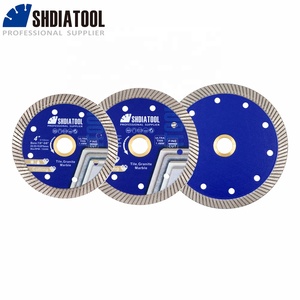
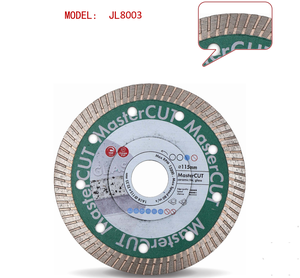
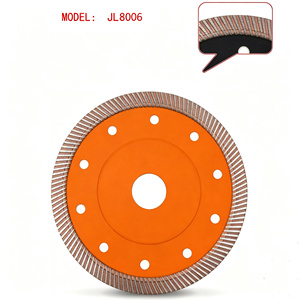
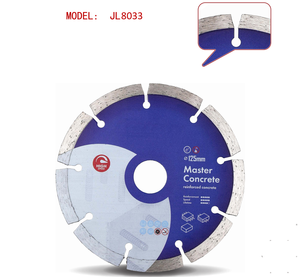
4/4.5/5in Continuous Rim Turbo Diamond Saw Blade
Super-thin hot-pressed industrial cutting disc ideal for precision ceramic tile, porcelain, granite, and stainless outer vessel trim adjustments.
Engineering Standards for OEM Inner Pot Manufacturing
A comprehensive analysis of metallurgical selection, deep drawing mechanics, thermal expansion coefficients, and induction plate bonding protocols for tier-1 kitchenware appliance brands.
1. Metallurgical Foundations: Ferritic SS 430 vs Austenitic SS 304 & Aluminum Alloys
In high-performance electric multi-cookers, pressure cookers, and commercial rice cookers, the structural and thermal performance of the inner pot directly governs energy conversion rates, thermal response times, and overall product longevity. Selecting the correct raw alloy sheet determines whether an inner container survives thousands of thermal cycles without warping or delamination.
SS 430 (EN 1.4016 / AISI 430): As a ferritic stainless steel grade, SS 430 possesses high magnetic permeability ($\mu_r > 500$), making it the essential alloy for magnetic induction energy transfer. Unlike 300-series steels, SS 430 responds instantly to high-frequency magnetic fields generated by induction coils, generating uniform eddy currents and heat. Furthermore, its coefficient of thermal expansion ($10.4 \times 10^{-6} / K$) closely matches base metals, minimizing interfacial shear stress during rapid heating.
SS 304 (EN 1.4301 / AISI 304): Austenitic stainless steel offers exceptional corrosion resistance and high ductility, making it ideal for inner pot walls that encounter acidic foods or heavy moisture. However, due to its non-magnetic (paramagnetic) crystal structure, SS 304 cannot generate heat on an induction hob independently. Consequently, premium inner pots utilize a clad structure (Tri-Ply: SS 304 interior + Aluminum core + SS 430 exterior) or an impact-bonded SS 430 base plate affixed to an aluminum vessel.
Key Procurement Insight: Sourcing inner pots with non-certified steel coil increases delamination warranty claims by up to 14% over a 3-year service lifecycle. Mill Test Reports (MTRs) detailing precise chromium (16–18%) and carbon content (< 0.12%) are mandatory for every production lot.
Material Grade
Standard Ref
Magnetic Permeability
Thermal Conductivity
Tensile Strength
Primary Application
SS 430 Ferritic
EN 1.4016 / AISI 430
High (Ferromagnetic)
26.1 W/m·K
450 – 600 MPa
Induction Base Plates & Outer Liners
SS 304 Austenitic
EN 1.4301 / AISI 304
Low (Paramagnetic)
16.2 W/m·K
515 – 720 MPa
Food-Contact Inner Walls & Vessels
Aluminum 3003 H14
ASTM B209
Non-Magnetic
160 W/m·K
140 – 180 MPa
Thermal Spreader Mid-Layer Core
Tri-Ply Clad (304-Al-430)
Composite Standard
Selective Exterior
~115 W/m·K
580 – 650 MPa
Premium Multi-Cooker & Pressure Pots
2. Deep Drawing Mechanics & Wall-Thickness Uniformity Controls
Deep draw forming transforms flat sheet metal blanks into deep, seamless cylindrical inner pots. The process requires precise control over hydraulic press tonnage, draw ratios ($DR = D_{blank} / d_{punch}$), blank holder pressure, and die lubrication. Excessive wall thinning at the bottom radius creates structural weak points vulnerable to denting, thermal deformation, or vacuum collapse during pressure release cycles.
At Jagruti Steels Pvt. Ltd., deep drawing is performed across multi-stage hydraulic presses equipped with proportional hydraulic valves and real-time tonnage monitoring. By maintaining precise clearance between the punch and drawing die (typically $1.05 \times t$ to $1.15 \times t$, where $t$ is nominal sheet thickness), wall thickness variation is held within strict tolerances ($\pm 0.03\text{ mm}$).
Tooling Integrity Principle: In-house tool design and maintenance eliminate radial blank wrinkling and earring effects. Every drawing die is precision CNC-machined and polished to a mirror finish ($Ra < 0.2\ \mu\text{m}$) to prevent surface scoring during metal flow.
3. Impact Bonding & Heat Distribution Engineering
Affixing a ferritic SS 430 disc to the base of an aluminum or SS 304 inner pot requires high-energy friction or impact bonding. During friction welding/impact bonding, a press delivers up to 2,500 tons of force simultaneously with intense localized heating, creating an intermetallic atomic bond between the aluminum body and the stainless steel plate.
Void-free bonding is critical: any micro-gap or air pocket between the induction disc and the inner container acts as a thermal barrier, causing localized hot spots, thermal stress fractures, and eventual disc delamination. Quality control routines utilize ultrasonic non-destructive testing (NDT) to verify 99.5%+ interfacial bond coverage across 100% of production lots.
Innovation & R&D Strategy
Future Product Development Trends (2026–2030)
Next-generation inner pots are evolving from simple heating containers into intelligent thermal systems. OEM buyers must align with factories capable of engineering modern material composites, eco-friendly non-stick surfaces, and optimized induction geometries.
Multi-Layer Clad Steel (Tri-Ply & 5-Ply)
Global demand is shifting rapidly from single-layer aluminum pots with PTFE non-stick coatings to un-coated or ceramic-coated Tri-Ply stainless steel vessels. Clad material combines food-safe SS 304 inside, a ultra-conductive aluminum core, and magnetic SS 430 outside, delivering 360-degree wall heating and lifetime durability.
PFAS-Free Ceramic & Sol-Gel Surface Finishes
Tightening environmental regulations across the EU (REACH compliance) and the USA (FDA / EPA guidelines) are driving the phase-out of traditional fluoropolymer (PTFE/PFOA) coatings. Factories are adopting inorganic Sol-Gel ceramic matrix coatings that withstand temperatures up to 450°C without toxic fume emission.
Smart Geometry & Anti-Warp Base Stamping
High-wattage electric pressure cookers (1200W–1800W) subject inner pots to rapid thermal ramps. Advanced base embossing patterns (concentric stress relief channels and localized dimpling) accommodate thermal expansion without concavity deformation, keeping the base flat against sensor probes.
Modern smart cookers rely on NTC thermistors and weight sensors located beneath the pot base. Inner pot suppliers must hold bottom center flatness tolerances within $\pm 0.15\text{ mm}$ to prevent inaccurate temperature readings and thermal cutoff errors.
Heavy-Gauge Commercial Food-Service Formats
Commercial cloud kitchens, QSR chains, and hotel catering systems demand high-volume inner containers (8L to 20L capacity) built with extra-thick rim rolls and heavy gauge walls (1.2mm–2.0mm SS 304) capable of withstanding industrial dishwasher abuse.
Sustainable Material Traceability & Low Carbon Footprint
Global appliance brands are demanding full supply chain transparency. Sourcing inner pots from manufacturers utilizing green-energy steel mills, closed-loop scrap recycling, and localized raw material coils reduces the product's embedded carbon footprint for ESG reporting.
How procurement leaders evaluate factory reliability, mitigate single-region supply disruption, and control Total Cost of Ownership (TCO) in component sourcing.
Relying on a single manufacturing facility exposes procurement teams to severe risks from regional power curtailments, localized port congestion, or seasonal labor shortages. Top-tier suppliers operate multi-plant production networks that allow load-balancing during peak production cycles (such as the Q3/Q4 holiday inventory build-up).
Jagruti Steels operates a dual-hub manufacturing strategy: primary engineering, tool room development, and initial sampling are coordinated from Mumbai, Maharashtra, while volume stamping, deep drawing, and assembly are supported by sister facility Mammal Industries in Sarigam, Gujarat. This structure guarantees supply continuity, surge capacity absorption, and risk mitigation for international contract manufacturing clients.
Total Cost of Ownership (TCO) vs Landed Unit Price
Purchasing directors often fall into the trap of evaluating suppliers purely on initial unit cost. However, a low piece-price from an unverified supplier frequently results in higher TCO due to high incoming scrap rates, poor wall thickness tolerances, delayed shipments, and customer warranty claims.
TCO Formula for Component Procurement: $\text{Landed TCO} = \text{Unit Price} + \text{Tooling Amortization} + \text{Logistics} + \text{Defect Scrap Cost} + \text{Warranty Liability}$. Choosing a supplier with ISO-aligned QA and mill-certified steel lowers total operational costs over the project lifecycle.
Company Profile & Enterprise Strengths
Why Tier-1 Cookware Brands Partner with Jagruti Steels
Over five decades of specialized deep drawing, precision metal stamping, and OEM component manufacturing from India's industrial hubs.
50+ Years Manufacturing Heritage (Founded 1974)
Established in 1974 in Mumbai, Jagruti Steels Pvt. Ltd. has built an unblemished legacy in metal forming engineering. We function purely as an OEM/ODM partner—we never compete against our clients in the retail marketplace.
Dual Manufacturing Footprint (MH & GJ)
Our dual-location structure (Mumbai headquarters + Sarigam, Gujarat manufacturing unit) offers scalable capacity, robust contingency protection, and seamless volume expansion for international buyer audits.
In-House Tool Room & Custom Dies
We maintain an in-house tool design and CNC machining facility. Your custom geometries, rim roll profiles, perforation matrices, and logo embossing dies are built, maintained, and secured under strict IP protection.
Strategic Maritime Proximity (JNPT 35 km)
Located just 35 km from Jawaharlal Nehru Port Trust (JNPT, Mumbai), our export shipments bypass long inland transit delays, ensuring rapid container dispatch to North America, Europe, Turkey, Vietnam, and the Middle East.
Frequently Asked Questions
Inner Pots Procurement & OEM Manufacturing FAQ
Technical, logistical, and commercial inquiries answered directly by our OEM engineering desk.
Why is SS 430 stainless steel specified for induction inner pot bases instead of SS 304?
Induction cooktops heat by inducing eddy currents within ferromagnetic metals via high-frequency magnetic fields. SS 304 is austenitic and paramagnetic (non-magnetic), meaning it cannot couple with an induction coil effectively. In contrast, SS 430 is ferritic and ferromagnetic, providing high magnetic permeability while maintaining strong corrosion resistance, deep-draw formability, and compliance with European EN 1.4016 food-contact standards.
How does Jagruti Steels guarantee material batch traceability and quality compliance?
Every production batch is tied directly to the raw steel master coil's Mill Test Report (MTR), detailing exact chemical composition (Chromium, Carbon, Nickel, Manganese) and mechanical specs (yield strength, elongation percentage). We issue MTRs alongside Certificate of Origin, packing list, and commercial invoices for seamless customs clearance and quality auditing.
What is the typical Minimum Order Quantity (MOQ) and lead time for custom inner pot tooling?
MOQ is determined by vessel diameter, drawing depth, coating requirements, and tooling complexity rather than an arbitrary number. For custom shapes requiring new die sets, tool design and first-article samples are delivered within 3 to 4 weeks. Once sample approval is signed off, recurring production lead times range between 15 and 25 days depending on container batch volumes.
Can you manufacture private-label inner vessels directly to our engineering 2D/3D CAD drawings?
Yes. We regularly manufacture to customer engineering drawings (STEP, IGES, DXF, or PDF), physical samples, or reverse-engineered benchmark products. Under white-label agreements, all components are manufactured under full confidentiality, and our corporate name never appears on your retail product or client packaging.
What export documentation and Harmonized System (HS) codes are provided for international shipping?
We export via JNPT Mumbai under correct HS Classifications: HS 7220.9090 for circle-cut stainless steel blanks and HS 7326.9099 for finished or deep-drawn cookware components. Documentation includes Form A / Preferential Certificate of Origin, Bill of Lading, Packing List, MTRs, and Commercial Invoices formatted to EU, US, UAE, and Asian customs requirements.
Are buyer facility audits permitted prior to contract signing?
We welcome technical procurement teams, third-party audit agencies (SGS, TÜV, Bureau Veritas), and brand representatives to inspect our manufacturing facilities in Mumbai and Sarigam, Gujarat. Audit walkthroughs cover raw material coil storage, press line operation, quality lab inspection, tool room maintenance, and export packaging stations.
Ready to Optimize Your Inner Pot Sourcing & Tooling?
Connect directly with our OEM engineering desk. Send your technical drawings, 3D CAD files, or physical target samples for an immediate engineering evaluation and formal quotation.