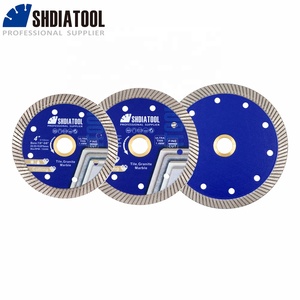
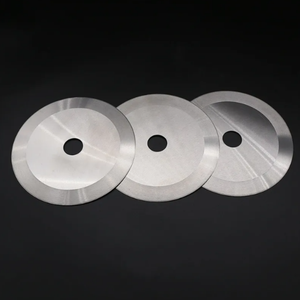
Explore our specialized circle cutters, diamond slitting blades, and precision component manufacturing tools engineered for heavy-duty cookware fabrication, induction plate blanking, and metal forming.
In the globalized kitchenware manufacturing ecosystem, procurement directors facing tightening margins and stringent quality audits must evaluate tier-1 component suppliers with extreme rigor. Sourcing critical elements—such as SS 430 induction base plates, pressure cooker safety assemblies, and deep-drawn stainless vessels—requires far more than comparing price per unit. It demands a granular understanding of metallurgical composition, thermal stress absorption, micro-structural integrity during high-tonnage stamping, and full batch traceability from raw coil to finished component.
Founded in 1974, Jagruti Steels Pvt. Ltd. (operating primary manufacturing facilities in Mumbai, Maharashtra, and expanded production via Mammal Industries in Sarigam, Gujarat) represents the benchmark for original equipment component engineering. Over five decades of continuous operation have proven that manufacturing excellence rests on three non-negotiable pillars: in-house precision tooling, mill-certified raw materials (aligned with EN 1.4016 / AISI 430 standards), and transparent export documentation serving key global trade hubs across the EU, Turkey, Vietnam, the UAE, and the Americas.
To understand why top trusted cookware parts factories utilize specific alloy grades, procurement teams must analyze the physics of heat transfer and electromagnetic induction. The rapid proliferation of induction cooktops worldwide has fundamentally altered cookware design. Standard austenitic stainless steel (such as AISI 304 / EN 1.4301) possesses exceptional corrosion resistance and aesthetic appeal, yet its crystal structure renders it paramagnetic. Consequently, an unassisted SS 304 vessel cannot couple with the oscillating magnetic field of an induction hob to generate eddy currents.
To bridge this functional divide without sacrificing non-stick aluminum’s lightweight thermal conduction or stainless steel's durability, specialized component manufacturers produce SS 430 ferritic stainless steel induction discs. Grade 430 (EN 1.4016) contains 16% to 18% chromium with a ferritic body-centered cubic (BCC) micro-structure. This unique atomic lattice grants high magnetic permeability, enabling immediate energy transfer from the hob's copper induction coils into heat energy within the pan's lower substrate.
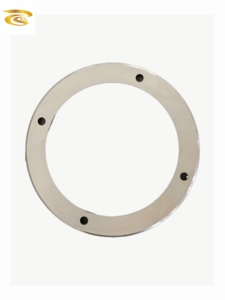
Precision-punched induction plates ranging from 0.4 mm to 0.6 mm thickness. Engineered with custom hole patterns to maximize impact-bonding contact area with aluminum substrates, preventing void formation and long-term delamination.
Heavy-gauge safety lids, support rings, and encapsulated base discs engineered to withstand operational pressures between 1.0 to 2.0 bar without plastic deformation or structural yield.
Seamless deep-drawn mixing bowls, inner pots for commercial rice cookers, and soup kettle liners produced via multi-stage hydraulic presses with strict wall-thickness uniform control.
Selecting the appropriate metallic alloy dictates not only thermal performance but also manufacturing cost efficiency, legal food-contact compliance, and warranty longevity. The technical table below outlines the core mechanical and chemical parameters evaluated during supplier audits:
| Technical Parameter | SS 430 (Ferritic Induction Grade) | SS 304 (Austenitic Food Grade) | Industrial Mild Steel (IS 2062) |
|---|---|---|---|
| International Standard Alignment | EN 1.4016 / AISI 430 | EN 1.4301 / AISI 304 | ASTM A36 / IS 2062 Grade A |
| Magnetic Permeability (μ) | High (> 500) — Highly Ferromagnetic | Low (≈ 1.02) — Paramagnetic | Very High (> 1000) |
| Chromium Content (%) | 16.0% – 18.0% | 18.0% – 20.0% | < 0.30% |
| Nickel Content (%) | < 0.75% (Low Cost Volatility) | 8.0% – 10.5% (High Nickel Premium) | Negligible |
| Tensile Strength (MPa) | 450 – 600 MPa | 520 – 720 MPa | 400 – 540 MPa |
| Thermal Expansion Co-efficient | 10.4 × 10⁻⁶ / K (Matches Aluminum closely) | 17.2 × 10⁻⁶ / K | 12.0 × 10⁻⁶ / K |
| Primary Application in Cookware | Induction base plates, outer bases | Cookware bodies, lids, food contact inserts | Heavy industrial support structural frames |
As global trade policies evolve and environmental regulations grow more stringent, brand owners must align with cookware parts factories that actively innovate. The next decade of kitchenware sourcing will be governed by four pivotal macro-trends:
Legacy induction base plates utilized simple uniform hole grids. Modern heat transfer modeling demonstrates that variable-density perforation patterns—such as radial starbursts, concentric offset arrays, and engineered flow channels—significantly optimize thermal distribution. By fine-tuning the ratio of exposed aluminum to ferritic steel, advanced factories achieve faster boil times while reducing thermal stress concentration, eliminating pan warping on high-wattage commercial hobs.
Geopolitical disruptions and regional transport bottlenecks have exposed the extreme vulnerability of single-source manufacturing models. Forward-thinking buyers now demand suppliers with redundant, geographically separated manufacturing plants. Jagruti Steels’ operational integration between its primary headquarters in Mumbai and its sister facility (Mammal Industries in Sarigam, Gujarat) allows seamless workload re-balancing during seasonal volume surges (Q3–Q4 export peaks), guaranteeing uninterrupted supply continuity to European and North American brand partners.
The primary root cause of consumer warranty returns in non-stick induction cookware is base plate delamination—where thermal cycling breaks the mechanical bond between the aluminum body and the stainless base plate. Top cookware factories eliminate this risk by maintaining total control over progressive blanking dies. In-house tool rooms ensure that hole edges feature micro-burr-free profiles and precise edge draft angles, allowing molten or friction-welded aluminum to flow seamlessly through the perforations during friction-impact bonding.
Under new European Union regulations (such as CBAM and updated Eco-Design directives), importers must report the embedded carbon emissions and scrap recycled content of metal components. Leading Indian component factories now leverage prime mill coil sources that incorporate up to 60% recycled stainless scrap, providing verified Mill Test Reports (MTRs) and green energy certificates to simplify compliance for global retail brands.
High-tonnage automatic power presses capable of high-speed blanking, piercing, and embossing. Custom tool and die building ensures customer-owned proprietary geometries are kept strictly confidential under white-label supply agreements.
Multi-stage hydraulic drawing presses equipped with automated blank holders and specialized lubricants, enabling deep depth-to-diameter draw ratios without material tearing or thinning.
When conducting factory audits—either virtually or on-site—procurement teams should utilize a standardized scoring rubric to evaluate potential OEM partners. Evaluating a factory's surface-level capacity is insufficient; deep-tier auditing requires verifying operational discipline across five key dimensions:
Below are detailed, engineer-verified answers to common technical queries raised by global purchasing departments, supply chain strategists, and quality control engineers:
In the modern competitive kitchenware landscape, product quality is established at the component level long before a pan reaches the retail shelf or commercial kitchen. By partnering with experienced, audit-ready cookware parts factories like Jagruti Steels Pvt. Ltd., global brands secure reliable metallurgical compliance, superior thermal bonding performance, and resilient dual-plant production capacity.
Whether you require high-volume production of standardized SS 430 induction base plates, custom-engineered pressure cooker safety lids, deep-drawn commercial vessels, or precision-punched multi-kadai steamer inserts, our engineering team is prepared to review your technical drawings and deliver production-ready first articles.
Connect directly with our senior OEM engineering team in Mumbai. Submit your engineering drawings, request material test reports, or schedule a formal factory audit today.