Mill-Certified Raw Material | Precision Tolerances | Custom Tooling & Deep-Draw Engineering
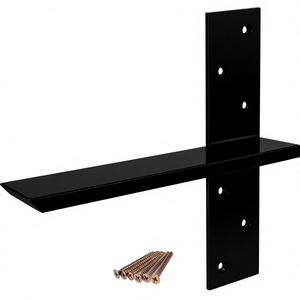
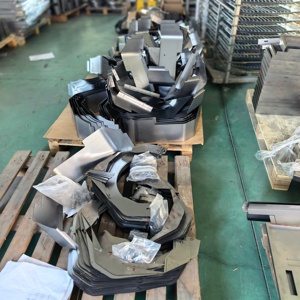
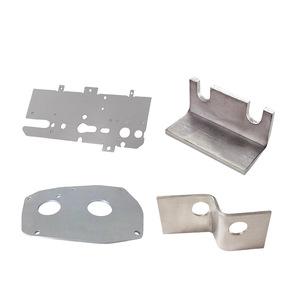
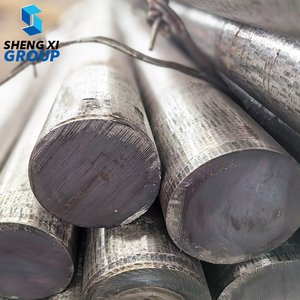
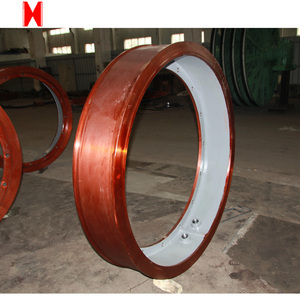
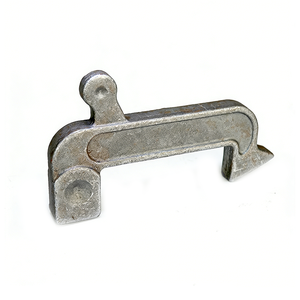
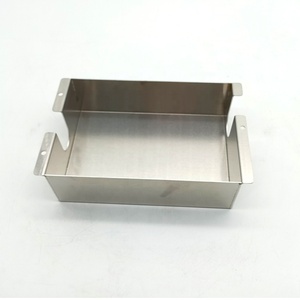
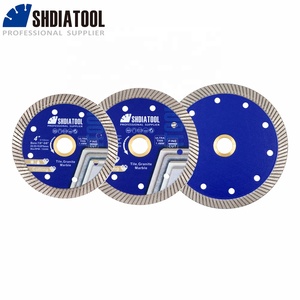
In modern industrial manufacturing, steel blanks represent the critical primary geometry from which high-stress structural parts, pressure vessels, automotive chassis components, and cookware cookware assemblies are engineered. Sourcing steel blanks from top-tier Chinese manufacturers involves navigating complex parameters across material grain orientation, edge fracture zone ratios, work-hardening limits, and yield strength parameters under dynamic loads.
Selecting the optimal steel blanking vendor requires evaluating not merely unit price, but the manufacturer's internal toolmaking infrastructure, metallurgical verification protocols, and high-speed automated coil feeding capability. Whether producing circular cold-rolled stainless steel blanks for deep drawing or heavy-gauge ASTM 4340 alloy structural forgings, precise control over blank flatness, burr height, and mechanical ductility is essential to prevent downstream die galling, premature tool failure, or structural delamination during secondary press operations.
Information Gain Insight: The true cost of a raw steel blank is governed by its material utilization efficiency (nesting capability) and its downstream performance during secondary deep drawing or machining operations. A 2% improvement in edge fracture quality can eliminate secondary deburring operations entirely.
Different industrial applications dictate specific sheet steel chemistries and heat treatments. Below is an authoritative technical matrix outlining standard structural, ferritic, and alloy steel blank grades processed by leading OEM facilities in China:
| Material Standard | Microstructure / Grade | Tensile Strength (MPa) | Yield Strength (MPa) | Primary Industrial Applications |
|---|---|---|---|---|
| ASTM 4340 | Ni-Cr-Mo Alloy Steel | 850 – 1080 | ≥ 785 | Forged crankshafts, heavy-duty gear blanks, structural aerospace pins |
| EN 1.4016 (AISI 430) | Ferritic Stainless Steel | 450 – 600 | ≥ 260 | Induction bottom plates, cookware bases, architectural trim, appliances |
| EN 1.4301 (AISI 304) | Austenitic Stainless Steel | 520 – 720 | ≥ 210 | Deep drawn chemical vessels, food-grade sanitary hardware, medical components |
| AISI 316L | Low-Carbon Marine Stainless | 485 – 680 | ≥ 170 | Laser-cut heat exchanger blanks, marine hardware, pharmaceutical pumps |
| IS 2062 / ASTM A36 | Low Carbon Structural Steel | 400 – 550 | ≥ 250 | General machinery safety plates, automotive brackets, welded chassis assemblies |
Rooted in over five decades of rigorous manufacturing evolution across primary industrial hubs, leading Chinese steel blank manufacturers maintain dual-plant operational models combining high-precision tool production with automated mass-production stamping lines. By integrating raw material procurement directly with primary steel mills, factories offer complete batch-level traceability, eliminating intermediate trading markups while maintaining strict compliance with international manufacturing standards.
Equipped with progressive die design tools, wire EDM, and CNC machining centers. Custom dies are designed, built, and maintained on-site, drastically shortening prototype iteration times.
Every ton of raw steel coil or plate is sourced with official Mill Test Reports (MTRs) detailing chemical analysis and mechanical tensile testing per ISO and ASTM standards.
Engineers perform complete Design for Manufacturability (DFM) analysis on customer CAD drawings, optimizing blank edge profiles, hole pitch, and grain structure alignment before press setup.
Operating multi-region production facilities allows seamless surge absorption during peak production quarters, ensuring uninterrupted supply continuity for global procurement networks.
In-house capacity for chemical passivation, electroplating, chrome plating, powder coating, and thermal stress relief annealing ensures turnkey ready-to-assemble delivery.
Strategically situated near primary deep-water container ports with complete customs documentation, HS classification guidance, and sea-worthy VCI anti-corrosion packaging.
The global steel blank manufacturing landscape is undergoing a profound transformation driven by automation, material science, and optical quality control. Modern buyers are shifting away from conventional manual mechanical press operations toward fully integrated smart blanking ecosystems.
Unlike traditional punch presses that create a characteristic sheared-and-broken edge geometry, modern fine-blanking presses utilize counter-pressure systems and V-ring impingement to produce 100% clean-cut edges. This eliminates the need for secondary reaming, broaching, or edge grinding, allowing alloy steel blanks to transition immediately to induction hardening or robotic welding lines.
Top-tier China factories are increasingly implementing hybrid blanking lines that pair high-power fiber lasers (12kW to 30kW) with high-speed progressive mechanical presses. For low-volume or rapidly evolving geometric parts, laser blanking removes tool creation costs entirely. When volumes scale into hundreds of thousands of units, production seamlessly transitions to dedicated hard tooling with zero geometric mismatch.
High-resolution 3D optical sensors are now deployed directly on the output conveyors of blanking lines. These automated vision systems scan 100% of production parts in real time, detecting micro-burrs, surface scratches, thickness variations, or pinhole defects down to sub-micron thresholds. Non-conforming blanks are automatically segregated without slowing press line speeds.
With raw steel representing up to 70% of total blank production cost, advanced nesting algorithms (such as continuous rotational layout software) maximize coil material utilization. By engineering interlocking geometric shapes across wide steel coils, modern factories achieve material utilization rates exceeding 88%, passing significant material savings directly to international procurement teams.
As international industrial supply chains adapt to evolving trade policies, environmental mandates, and total cost management strategies, global procurement executives must structure their supplier selection criteria around long-term structural shifts.
European and North American OEMs are increasingly requiring steel blank vendors to declare the embodied carbon emissions of their raw materials. Leading Chinese manufacturing partners are aligning with green steel initiatives, utilizing scrap-recycled electric arc furnace (EAF) steel and solar-powered manufacturing plants to satisfy Scope 1 and Scope 2 carbon transparency standards.
Industrial machinery and automotive buyers are standardizing on Production Part Approval Process (PPAP) documentation for OEM steel blank orders. Sourcing teams expect complete dimensional layout reports, gage R&R studies, control plans, and process capability metrics ($C_{pk} \ge 1.67$) before authorizing full-scale serial production.
To hedge against maritime supply chain friction, enterprise buyers are setting up consignment stock and VMI arrangements with major Chinese vendors. By maintaining safety stocks of pre-cut steel blanks near primary consumption hubs, manufacturers achieve 48-hour order fulfillment cycles while maintaining low unit production costs.
Global buyers are reducing the number of tier-2 vendors by requesting that steel blank manufacturers perform secondary operations in-house. This includes supplying blanks that are pre-bent, surface-coated, equipped with press-fit fasteners, or pre-welded into sub-assembly modules, transferring quality liability to a single accountable supplier.
Comprehensive technical and commercial answers addressing common pain points encountered during supplier evaluation, engineering review, and international shipping.
Send your 2D/3D CAD drawings (STEP, DXF, PDF) and material specifications to our OEM engineering desk. Receive detailed DFM feedback, nesting optimization reports, and competitive volume pricing within 24 hours.