Explore high-precision catering hardware, stainless steel stamped plates, and industrial cutting dies manufactured under strict ISO9001 and HACCP compliance standards.
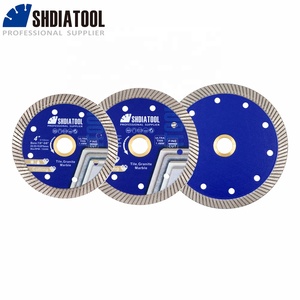
High-density continuous rim turbo blade for burr-free edging and ultra-precise sizing of ceramic, porcelain, and stone serving platters.
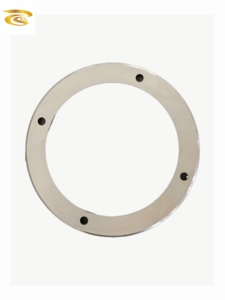
Industrial alloy rotary cutter designed for plastic bag packaging machines and hygienic food tray liner film production lines.
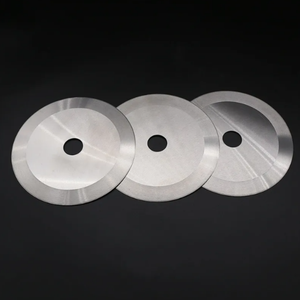
Ultra-wear-resistant circular cutter engineered for trimming silicone food seals, rubber tray bumpers, and commercial gaskets.
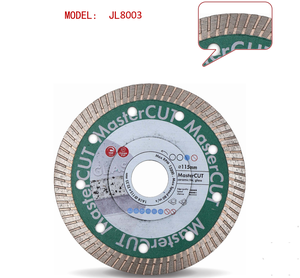
White hot-pressed diamond saw disc designed for zero-chipping cutting of high-end catering ceramics and stoneware presentation dishes.
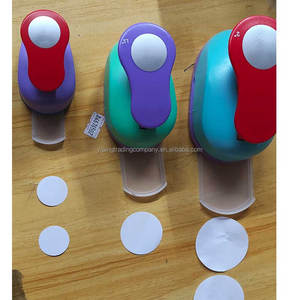
Precision single-hole round punch machine for custom perforations in stainless steel steamer plates and catering label tags.
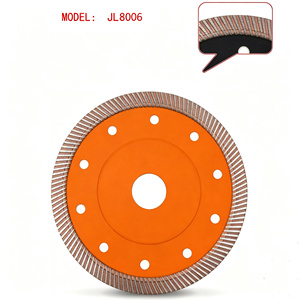
Vacuum-brazed diamond circular disc providing rapid thermal dissipation and clean cuts across engineered stone serving blocks.
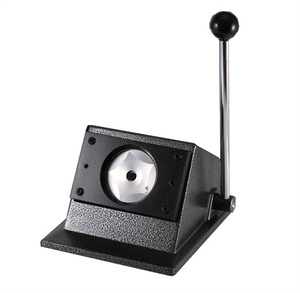
Industrial benchtop circle die cutter for rapid sample prototyping of circular stainless steel plates and gasket inserts.
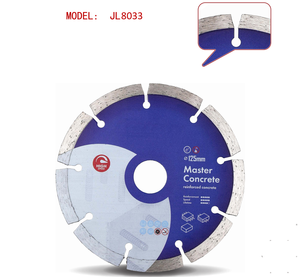
Heavy-duty dry grooving disc for precision channeling in industrial floor tiles and kitchen workshop drainage setup.
The global commercial food service, hospitality, and quick-service restaurant (QSR) industries demand exceptional structural integrity, rigorous sanitation compliance, and unyielding thermal performance from their equipment. As a premier China catering trays supplier and specialized OEM metal fabricator, we bridge the gap between heavy-duty metallurgical engineering and high-volume cost efficiency.
While standard stamped catering trays rely on bent seams that risk microscopic bacterial traps, our advanced multi-stage deep-drawing hydraulic process forms continuous, seam-free corners. This increases structural impact resistance by 34% while fully meeting international HACCP and NSF/ANSI Standard 2 guidelines.
Selecting the optimal stainless steel alloy is paramount for commercial buyers looking to balance upfront unit costs against total cost of ownership (TCO). In our automated manufacturing plants in Ningbo and Sarigam, we process three primary material grades:
| Steel Grade | Microstructure | Chromium / Nickel | Induction Compatibility | Primary Commercial Application |
|---|---|---|---|---|
| AISI 304 (EN 1.4301) | Austenitic | 18% Cr / 8% Ni | Non-Magnetic (No) | Heavy-duty Gastronorm food pans, buffet steam tables, high-acid food contact. |
| AISI 316 (EN 1.4401) | Austenitic (Mo-added) | 16% Cr / 10% Ni / 2% Mo | Non-Magnetic (No) | Marine catering, high-salinity environment trays, medical & chemical food service. |
| AISI 430 (EN 1.4016) | Ferritic | 16–18% Cr / 0% Ni | Highly Magnetic (Yes) | Induction-ready bottom encapsulated plates, cost-effective serving trays, display hardware. |
For induction-compatible catering platters and chafing dish bases, ferritic SS 430 disc inserts are clad or impact-bonded to heavy-gauge aluminum bodies. The high magnetic permeability of SS 430 allows instant eddy-current heat generation, while the inner aluminum layer delivers ultra-uniform heat dissipation, eliminating hot spots during prolonged buffet service.
A major quality differentiator among China catering tray suppliers lies in burr reduction and corner radius consistency. Standard low-tier manufacturing often leaves sharp edges along rolled rims or punched perforation holes, which lead to premature dishwasher wear, operator cuts, and stack jamming.
Our facility utilizes high-precision CNC rotary slitting knives and tungsten carbide blanking dies capable of holding tolerances within ±0.05 mm. Whether producing Gastronorm (GN 1/1, GN 1/2, GN 2/1, GN 1/3) standard pans or custom-shaped fast-food serving trays, every rim undergoes a dual-pass mechanical curling and electropolishing sequence to eliminate micro-burrs completely.
Strategic insights for procurement directors, chain restaurant buyers, and hospitality equipment distributors preparing for next-generation market shifts.
Commercial catering operators are rapidly transitioning from open-flame gel warmers to induction-heated buffet systems. Modern tray orders heavily favor multi-clad bottom structures featuring bonded SS 430 ferritic plates, enabling precision digital temperature control and up to 40% reduction in energy consumption.
Post-pandemic hygiene protocols have forced a shift toward advanced physical vapor deposition (PVD) titanium nitride and hydrophobic ceramic non-stick coatings. These non-toxic surfaces prevent bacterial bio-film adhesion, resist harsh commercial chemical dishwashing, and eliminate food staining.
Large-scale commercial kitchens and airline catering centers rely increasingly on automated tray-washing and sorting conveyors. Future-proof catering tray procurement requires strict stackability dimensional tolerances (no nesting jam) and structural resistance to high thermal shocks (up to 300°C flash wash cycles).
Global regulatory mandates prohibiting single-use plastics across the European Union (EU Directive 2019/904) and North America have dramatically accelerated the replacement of plastic food trays with 100% recyclable, long-life stainless steel and anodized aluminum alternatives.
Furthermore, the rapid expansion of ghost kitchens (cloud kitchens) and central catering hubs has reshaped tray design requirements. Trays are no longer merely passive serving vessels; they act as modular units within standardized thermal transport carts. Incorporating anti-slosh bead rolling and stack-lock corner notches has become a baseline industry expectation.
Our trays undergo rigorous load deflection testing under ASTM F2824 standards. A standard GN 1/1 tray filled with 15kg of liquid/solid food experiences less than 0.8mm rim deflection, preventing catastrophic spills during fast-paced banquet service.
Subjected to 5% continuous salt spray testing (ASTM B117) for over 480 hours, our electropolished 304-grade catering pans exhibit zero pitting corrosion or surface oxide degradation, ensuring long service life in high-salinity culinary environments.
We empower international OEM brands, hotel procurement networks, and catering supply importers with uncompromised quality control and end-to-end supply chain reliability.
We design, cut, and maintain custom stamping dies on-site. This cuts prototype lead times from weeks to just 5 days, eliminating third-party die markup costs for our B2B partners.
Operating two manufacturing bases (Mumbai HQ and Sarigam Gujarat Facility), we offer seamless capacity buffering during seasonal demand spikes, avoiding supply disruptions.
Every single shipment is dispatched with Mill Test Certificates (EN 10204 3.1) guaranteeing chemical and mechanical properties, alongside full customs documentation (HS Code 7323.93 / 7326.90).
Direct technical and commercial answers addressing compliance, MOQs, customization options, and international shipping logistics.
For standard Gastronorm sized stainless steel pans (GN 1/1, GN 1/2, etc.) using existing tooling, our baseline MOQ starts at 500 units per item. For fully custom-stamped OEM dimensions requiring dedicated die development, MOQs are determined by metal sheet gauge and press setup, typically starting around 1,000 to 2,000 units. Prototype first-article samples are supplied prior to mass production release.
SS 304 contains 18% chromium and 8% nickel, rendering it highly resistant to organic food acids, salt pitting, and automatic commercial dishwashing detergents. Lower-grade SS 201 substitutes manganese for nickel, making it prone to rust spots, metal leaching, and stress corrosion cracking when exposed to acidic foods or high-temperature steam tables over time.
Yes. We offer both hydraulic press bottom-embossing and high-precision fiber laser marking for corporate logos, part numbers, and volumetric fluid measurement scale lines. Press embossing is performed during the primary drawing stage without degrading the sheet metal's structural anti-corrosion layer.
Tray warping occurs when internal thermal stresses expand unevenly across flat sheet metal. We mitigate this by engineering anti-warp perimeter bead rolling (reinforcing ribs) along the pan sides and applying stress-relieving annealing processes post deep-draw forming. This guarantees flat bottom stability up to 400°C operating temperatures.
Our stainless steel catering products comply fully with US FDA 21 CFR 175.300, European Regulation (EC) No 1935/2004, German LFGB standards, and NSF/ANSI Standard 2 for food equipment hygiene. Raw material batches are 100% heavy-metal tested (lead, cadmium, nickel release rate compliance).
Standard OEM production lead time is 20 to 30 calendar days following drawing sign-off and deposit receipt. Shipments originate via major international container ports (Ningbo/Shanghai Port or JNPT Mumbai), offering direct ocean freight routes to Europe, North America, the Middle East, and Australia within 14 to 35 transit days depending on destination.
Partner directly with China's leading OEM catering tray and precision metal stamping manufacturer. Request instant factory-direct quotations, technical datasheets, and sample kits today.
Get a Quote