Top 10 Induction Plates Factories & Exporter: Technical Procurement Guide
An authoritative technical evaluation of SS 430 ferritic stainless steel induction base plates, stamping tool engineering, thermal efficiency dynamics, and global supply chain strategies for high-volume cookware OEMs.
Engineered from EN 1.4016 / AISI 430 grade mill-certified stainless steel coil. Optimized for impact bonding, thermal induction efficiency, and zero-delamination performance under thermal cycling.
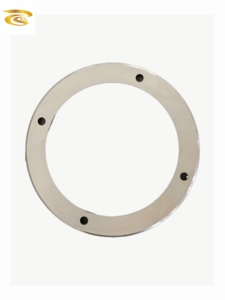
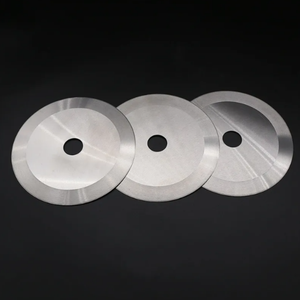
Continuous Rim SS 430 Induction Base Disc
SS 430 (1.4016)Thickness: 0.4-0.6mmØ100mm - 220mm
Continuous smooth-edge profile designed for high-tonnage thermal impact bonding on cookware bases.
1. Executive Summary & Metallurgy of Induction Base Plates
In modern commercial and residential cookware production, the transition from conventional flame-based thermal transfer to high-efficiency electromagnetic induction heating represents a pivotal technological shift. Induction cooktops operate via electromagnetic fields generating eddy currents directly inside the ferromagnetic layer of cookware. Because standard austenitic stainless steels (such as SS 304 / EN 1.4301) and pure aluminum exhibit paramagnetic or non-magnetic characteristics, they cannot efficiently couple with magnetic induction coils operating at typical frequencies of 20 kHz to 50 kHz.
To render aluminum cookers, non-stick frypans, and deep-drawn vessels induction-compatible, manufacturers press-fit, impact-bond, or friction-weld a custom-stamped **SS 430 (EN 1.4016 / AISI 430)** ferritic stainless steel disc to the exterior bottom of the vessel. Selecting the optimal induction plate supplier involves stringent technical evaluations: magnetic permeability, thermal expansion matching, edge burr tolerance, planarity bow control, and intermetallic adhesion strength.
Information Gain Insight: The structural integrity of an induction base is governed by the shear-to-break ratio during blanking and the grain boundary stability of the SS 430 coil. Sub-standard ferritic alloys with erratic carbon content (>0.12%) suffer from localized magnetism degradation post-stamping, leading to micro-delamination after repeated thermal shock cycles (20°C to 250°C).
Metallurgical Parameter
SS 430 (EN 1.4016) Ferritic
SS 304 (EN 1.4301) Austenitic
Impact on Induction Performance
Crystal Structure
Body-Centered Cubic (BCC)
Face-Centered Cubic (FCC)
BCC structure delivers high magnetic permeability required for induction coupling.
Magnetic Permeability (μr)
> 500 (Ferromagnetic)
~ 1.02 (Paramagnetic)
SS 304 will not generate thermal energy on an induction hob; SS 430 heats rapidly.
Chromium Content (Cr %)
16.0% – 18.0%
17.5% – 19.5%
SS 430 delivers robust corrosion resistance while maintaining thermal formability.
Thermal Expansion (×10⁻⁶/K)
10.4 (Close match to Aluminum)
16.0 (High mismatch)
Lower thermal expansion mismatch prevents disc warping and debonding over time.
Yield Strength (R p0.2)
≥ 260 MPa
≥ 210 MPa
High yield strength preserves base flatness under intense hydraulic impact pressures.
2. Global Top 10 Induction Plates Factories & Exporter Evaluation Matrix
Navigating the global supply chain for induction base plates requires benchmarking manufacturing hubs across key manufacturing regions: India, China, Germany, Turkey, and Vietnam. Procurement officers must analyze not only unit cost, but total cost of ownership (TCO), die tool life, material traceability, and export logistics efficiency.
1. Jagruti Steels Pvt. Ltd. (India)
Founded in 1974. Operating dual manufacturing plants in Mumbai and Gujarat (Mammal Industries). Industry leader in custom SS 430 perforated plates, deep-drawn components, and pressure cooker base discs. 35km from JNPT Port.
2. Guangdong Cookware Components (China)
Specializes in high-volume automated disc blanking. Strong footprint in mass-market aluminum cookware assembly, offering low unit pricing for standard 160mm-200mm circular discs.
3. Zhejiang Metal Stamping Co. (China)
Large-scale press lines catering to domestic multi-cooker brands. Focuses heavily on high-speed continuous progressive stamping dies for high-volume exports.
4. Solingen Precision Base Discs (Germany)
Focused on premium tri-ply stainless steel cookware components. High-precision laser-cut custom profiles, strict EN 10204 3.1 certification, high tooling costs.
5. Istanbul Mutfak Components (Turkey)
Major exporter to the European Union and Middle Eastern markets. Excellent capability in custom logo embossing on SS 430 induction plates for regional brands.
6. Binh Duong Metal Works (Vietnam)
Rapidly growing supplier for Southeast Asian cookware OEMs. Specialized in basic round punch blanks and impact bonding support for regional factories.
3. Future Procurement Trends in Induction Base Manufacturing (2025–2030)
The global cookware market is experiencing rapid technological evolution. As energy efficiency standards become mandatory across North America and the EU (such as EU Ecodesign directives), procurement leaders must align their component sourcing with future technological trajectories:
1. Micro-Perforation Matrix Geometry
Legacy induction discs relied on large 8mm-12mm perforation holes. Next-generation designs utilize high-density micro-perforation matrix patterns (2mm-4mm). This increases aluminum flow contact by 35%, boosting shear strength during friction bonding while optimizing magnetic eddy current distribution.
2. Integrated Thermal Anti-Warping Channels
Repeated dry-burning or rapid water quenching causes non-stick pans to bow upward in the center. Modern SS 430 discs integrate engineered expansion grooves (V-segment or radial ribs) that absorb thermal deformation without breaking the aluminum bond line.
3. Ultra-Thin 0.4mm High-Permeability Blanks
To reduce overall pan weight while preserving induction responsiveness, manufacturers are moving from 0.6mm down to 0.4mm thickness. Achieving flat, burr-free blanking at 0.4mm requires high-rigidity progressive die sets and refined coil tension controls.
4. CBAM & Carbon Neutrality Audits
European buyers are increasingly requiring Carbon Border Adjustment Mechanism (CBAM) compliance data. Sourcing components from factories utilizing solar-assisted press lines and traceable green stainless steel melt runs is becoming a prerequisite for tier-1 brand contracts.
4. Technical Product Development & Metallurgical Engineering Guidelines
Achieving a flawless bond between an aluminum vessel body and an SS 430 induction plate requires strict adherence to physical engineering principles during both die tooling design and press operations:
Critical Engineering Rule: The clearance between the punch and die matrix must be maintained at exactly 5% to 8% of sheet thickness ($t=0.5\text{mm} \rightarrow \text{clearance} = 0.025\text{mm} - 0.040\text{mm}$). Excessive clearance generates severe edge rollover and heavy burrs, which trap air pockets during friction bonding and induce catastrophic delamination at high heat.
Key manufacturing stages in custom induction plate engineering include:
Precision Coil Slitting: High-precision gang slitters trim prime SS 430 coil stock to exact strip widths, maintaining width tolerances within ±0.05mm to guarantee uniform die feeding.
Progressive Stamping & Hole Punching: Hydraulic and mechanical presses ranging from 160 to 400 tons punch hole arrays, logos, and outer contours in a single continuous stroke.
Planarity Flattening: Post-stamping, discs pass through multi-roll precision levelers to remove residual coil set and crown, holding overall bow flat to under 0.15mm across a 220mm diameter.
Degreasing & Surface Activation: Ultrasonic cleaning lines remove stamping lubricants, preparing the raw stainless surface for immediate metallic fusion under thermal bonding presses.
5. B2B Buyer Technical FAQ: Sourcing Induction Base Plates
Q1: Why is SS 430 used exclusively for induction base plates rather than SS 304?
Induction cooktops generate heat through induced eddy currents, which require a ferromagnetic material with high magnetic permeability. SS 430 is a ferritic stainless steel with a body-centered cubic (BCC) crystal structure, making it highly magnetic. In contrast, SS 304 is austenitic (paramagnetic) and will not trigger or couple efficiently with an induction hob. Furthermore, SS 430 has a coefficient of thermal expansion far closer to aluminum than SS 304, minimizing thermal stress during heating.
Q2: How do you guarantee zero delamination between the SS 430 plate and aluminum vessel base?
Delamination prevention relies on three controlled factors: 1) Precision-punched perforation holes with controlled land angles that allow molten aluminum to form a mechanical rivet lock; 2) Micro-planarity (<0.15mm bow) to ensure uniform surface pressure during 1500-2500 ton impact bonding; and 3) Total removal of press oil residue via chemical ultrasonic degreasing prior to bonding.
Q3: What mill documentation and quality certificates accompany export shipments?
Every shipment includes Mill Test Certificates (MTC) per EN 10204 3.1 documenting chemical composition (Cr %, C %, Ni %), tensile strength, yield strength, and elongation. Additionally, we provide Certificate of Origin (COO), packing list, commercial invoice, and custom HS Code documentation (7220.90.90 for circular blanks, 7326.90.99 for finished cookware components).
Q4: Can custom logos, brand emblems, and proprietary hole patterns be engineered?
Yes. Jagruti Steels operates an in-house tool and die room equipped with CNC EDM, wire-cut machines, and precision surface grinders. We design and manufacture custom progressive stamping dies directly from client 3D CAD/STEP files, DXF drawings, or physical samples, including debossed corporate logos and custom hole geometry.
Q5: What is the typical lead time for custom die tooling and bulk OEM production?
Tooling design, die cutting, and first-article qualification samples typically take 15 to 21 working days. Once first-article dimensional reports and physical bonding samples are approved by the buyer, standard bulk manufacturing lead time is 14 to 21 days, depending on batch quantity and export packing specifications.
Q6: How does dual-plant production capability protect global buyer supply chains?
By maintaining primary operations in Mumbai, Maharashtra alongside an expanded manufacturing unit (Mammal Industries) in Sarigam, Gujarat, we offer structural supply chain redundancy. This multi-plant configuration allows us to absorb seasonal peak volume surges (Q3-Q4 prep for holiday retail) without bottlenecking ongoing orders.
Manufacturing precision cookware components in India since 1974. Built on metallurgical rigor, internal toolmaking supremacy, and absolute accountability to global brand owners.
In-House Tool Room
Complete control over die design, maintenance, and modification. Your proprietary geometries and brand logos never leave our facility.
Dual-Plant Infrastructure
Parallel manufacturing lines across Mumbai & Gujarat provide surge absorption and guarantee continuous, uninterrupted contract delivery.
Mill Certified Material
100% traceable prime SS 430 coil stock. Batch-level heat code tracking ensures full compliance with international food contact standards.
Strategic Port Access
Located just 35 km from JNPT (Nhava Sheva) Port in Mumbai, ensuring rapid container loading and reliable ocean freight schedules.
Consult with our Senior OEM Technical Desk. Send us your CAD drawings, target disc dimensions, or required material specifications for an immediate proposal within 2 business hours.