Manufactured from mill-certified AISI 304 / AISI 430 stainless steel and heavy-gauge aluminium. Built with deep-drawing press accuracy and thermal friction-bonded induction caps.
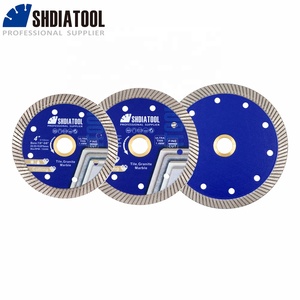
Engineered for high-turnover catering kitchens. Features high-pressure friction bonded ferritic bottom plate to prevent warping and base delamination.
Send an Inquiry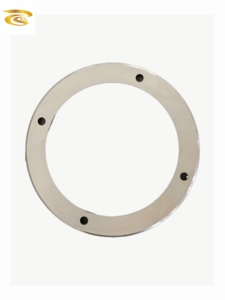
Full 3-layer clad body providing edge-to-edge heat distribution. Eliminates hot spots and reduces boiling energy consumption by up to 25%.
Send an Inquiry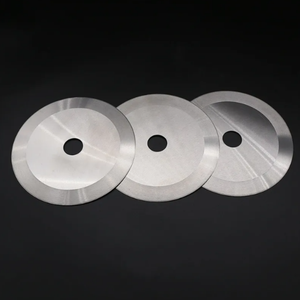
Seamless single-draw vessel geometries designed for severe thermal shock resistance. Fitted with reinforced multi-point riveted handles.
Send an Inquiry
Combines lightweight thermal conductivity of anodized aluminium with induction compatibility via custom punched perforated SS430 discs.
Send an Inquiry
Die-stamped stainless steel cover lids with drip-proof rolled edges and custom embossed brand logos for private-label lines.
Send an Inquiry
Custom perforated stock pot inserts for pasta boiling, steaming, and broth filtering. Uniform hole pitch ensures optimal steam dynamics.
Send an Inquiry
Features a heavy 4mm to 6mm aluminium core encapsulated inside food-grade SS304 body and SS430 outer disc under 2,500-ton press power.
Send an Inquiry
Tailored OEM branding, custom handle designs, laser-etched volume scale markings, and customized export retail packaging solutions.
Send an InquiryIn high-capacity food processing, commercial catering, and retail cookware supply chains, a stock pot is not merely a vessel; it is a thermal transfer instrument subjected to continuous expansion, aggressive cleaning chemicals, and thermal cycling.
Our 2,500-ton hydraulic impact bonding presses weld the SS 430 ferritic base plate, internal aluminium thermal core, and SS 304 vessel body into a unified molecular matrix. This eliminates internal air voids, ensuring zero base separation during rapid cooling cycles.
Using precision hydraulic draw dies with controlled blank-holder pressure, we maintain wall-thickness tolerance within ±0.05mm. Controlled grain orientation prevents sidewall thinning and structural collapse under heavy fluid weight.
All stock pot bodies undergo automated nitric/citric acid bath passivation post-machining. This restores the chromium-oxide passive film, guaranteeing compliance with FDA 21 CFR 175.300 and EU 1935/2004 food contact regulations.
Selecting the optimal material grade balances thermal efficiency, induction performance, mechanical durability, and unit production cost.
| Material Configuration | Thermal Conductivity | Induction Efficiency (SS430) | Corrosion Resistance | Tensile Strength (MPa) | Recommended OEM Target Application |
|---|---|---|---|---|---|
| Tri-Ply Clad (SS304-Alu-SS430) | 160 - 180 W/m·K | 95% (High Magnetic Permeability) | Excellent (18/8 SS Interior) | 520 - 680 MPa | Premium Retail Brands & High-End Culinary Lines |
| Encapsulated Impact Bonded Base | 140 - 160 W/m·K | 92% (Fast Eddy Current Heating) | Excellent (EN 1.4301 Body) | 500 - 620 MPa | Commercial Restaurant & HORECA Stock Pots |
| Hard-Anodized Aluminium Body | 205 - 220 W/m·K | 88% (Stamped SS430 Bottom Disc) | Moderate (Anodized Layer) | 310 - 410 MPa | Lightweight Catering & Domestic Kitchenware |
| Single-Ply Stainless Steel (SS304) | 16 - 20 W/m·K | Non-Magnetic (Requires Base Plate) | Superior (AISI 304 / EN 1.4301) | 515 - 720 MPa | Budget Institutional Stock Pots & Steamer Shells |
Austenitic stainless steel (such as AISI 304 / EN 1.4301) is paramagnetic due to its face-centered cubic crystal structure; consequently, it cannot directly generate heat on induction cooktops. Ferritic stainless steel (AISI 430 / EN 1.4016) possesses high magnetic permeability. By bonding an SS 430 base plate to the stock pot bottom via high-tonnage friction stamping, the pot couples instantly with the hob's electromagnetic field. This structural combination yields rapid thermal response while maintaining a food-safe SS 304 interior.
As commercial kitchens modernize and environmental compliance tightens globally, corporate procurement officers must align with key technological shifts in cookware production.
Commercial kitchen operators face surging power and gas costs. The industry is rapidly transitioning from standard single-bottom pots to 3-ply and 5-ply fully clad stock pots. Clad technology reduces thermal ramp-up time by 30% and keeps stock simmering at lower wattage settings.
Traditional rivet heads inside stock pots create bacterial trap zones that complicate commercial dishwashing. Future OEM procurement strongly favors flush interior surfaces achieved through high-strength capacitive discharge spot welding and robotic laser bracket attachment.
Global customs (EU CBAM and US CPSC) increasingly demand verifiable chemical composition documentation. Institutional buyers now mandate batch-level Mill Test Reports (MTRs) for raw coil imports to prevent heavy metal leaching (Lead/Cadmium/Nickel limits).
Relying on single-region factory clusters presents tariff and logistics vulnerabilities. Global brands are diversifying sourcing into India's established metalworking hubs (Mumbai & Gujarat), leveraging port proximity to JNPT for resilient global distribution.
Combining 50 years of presswork history with state-of-the-art dual-plant infrastructure in Mumbai and Gujarat.
Established in 1974, Jagruti Steels Pvt. Ltd. has evolved from specialized deep-draw stamping into an integrated OEM powerhouse for cookware components and commercial vessels.
Operating across two production locations—Mumbai (tooling & coordination) and Sarigam, Gujarat (Mammal Industries)—allowing seasonal volume scaling without bottlenecks.
We design and cut deep-drawing dies, punching tools, and embossing plates in-house, significantly shortening prototype development lead times and protecting IP.
Every batch of stainless steel coil is imported or sourced directly with mill inspection certificates, verifying exact chemical ratios for SS 304, SS 430, and mild steel.
Located just 35 km from Jawaharlal Nehru Port Trust (JNPT), Mumbai, ensuring rapid container loading and ocean freight scheduling to Europe, UAE, USA, and Southeast Asia.
We operate strictly as a business-to-business contract manufacturer. We never sell retail under our own brand, guaranteeing zero channel conflict with our OEM partners.
From technical drawing evaluation to initial sample approval and high-volume export delivery.
We analyze your 2D/3D CAD drawings (STEP/DWG/IGES) or physical counter-sample to confirm draw ratios, wall tolerances, and material specifications.
Our master toolmakers machine progressive drawing dies, rim curling tooling, and custom embossing plates inside our internal tool room.
We issue production-intent samples along with full dimensional inspection reports and raw material chemical MTRs for formal buyer sign-off.
Mass press production proceeds with inline SPC checks, surface polishing, custom branding, and export palletization for container shipping.
Addressing core engineering, minimum order quantities, tooling ownership, and compliance inquiries.
MOQ varies depending on pot capacity and tooling status. For standard sizes using existing press dies, MOQs generally start at 500 to 1,000 units per size. For custom deep-drawn geometries requiring dedicated tooling development, MOQs are structured around raw coil minimum tonnage runs (typically 1,500 to 3,000 units). We also support pilot runs for brand market validation.
Induction cooktops rely on electromagnetic induction, which requires a ferromagnetic material to create eddy currents and generate thermal energy. Grade SS 304 is austenitic and non-magnetic, making it incapable of heating directly on an induction hob. SS 430 is ferritic stainless steel (EN 1.4016), providing excellent magnetic permeability while maintaining high corrosion resistance and thermal stability under food safety standards.
Delamination in encapsulated bases occurs when air gaps exist between the aluminium heat-distributor plate and the stainless steel shell. We utilize 2,500-ton high-speed hydraulic friction bonding presses that apply extreme kinetic pressure and localized thermal fusion. This forces the aluminium to flow molecularly into the microscopic anchors of both the SS304 pot bottom and the SS430 outer disc, creating a zero-void bond.
When a buyer funds dedicated tooling development, the die tooling remains the exclusive intellectual property of the buyer. We sign formal Non-Disclosure Agreements (NDAs) and Tooling Ownership Contracts guaranteeing that your custom dies will never be utilized to produce stock pots for any third-party buyer.
Yes. Every batch shipment is accompanied by a certified Mill Test Report (MTR) detailing chemical heat analysis (Chromium, Nickel, Carbon, Manganese ratios) and mechanical strength tests. Our production processes align with FDA 21 CFR, EU Regulation 1935/2004, German LFGB, and French DGCCRF requirements for food contact stainless steel.
We offer a comprehensive spectrum of surface finishes: high-mirror exterior polishing, satin/brushed interior finish (which hides metal utensil scratches), electropolishing for maximum corrosion resistance in industrial food plants, and custom exterior color coatings or hard anodization for hybrid aluminium pots.
For existing tooling lines, mass production typically requires 30 to 45 days post-deposit confirmation. New tooling development adds approximately 25 to 35 days for die machining and sample verification. Transit time from JNPT Port (Mumbai) to major European ports is approximately 18–25 days, and to US ports approximately 25–35 days.
Whether you are expanding a retail cookware lineup, launching a commercial HORECA brand, or seeking a reliable alternative manufacturing facility, our engineering desk is ready to review your CAD drawings and production requirements.