Custom-manufactured to strict geometric tolerances, engineered for extreme operational durability, high thermal bonding efficiency, and global supply chain readiness.
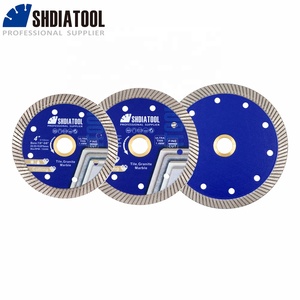
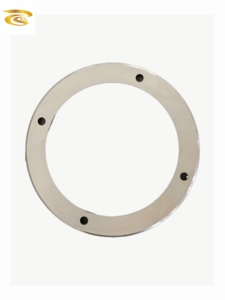
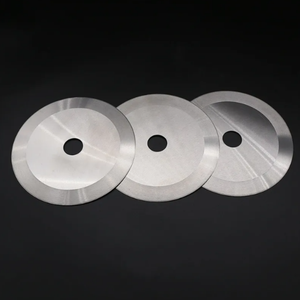
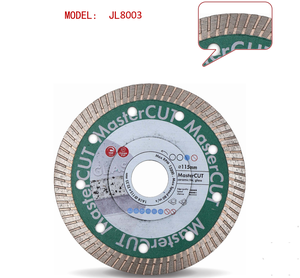
In modern industrial manufacturing, the synthesis of mechanical durability, metallurgical precision, and geometric consistency dictates the commercial performance of consumer and commercial serviceware components. Whether producing heavy-duty deep-drawn cookware vessels, pressure cooker base plates, or high-precision rotary slitting knives and diamond continuous rim cutting discs, engineering excellence begins at the atomic alloy level.
For induction-compatible cookware assemblies and commercial food-service vessels, selecting the appropriate stainless steel alloy grade is a critical parameter. Austenitic stainless steels like SS 304 (EN 1.4301 / AISI 304) offer superior corrosion resistance and high ductility, making them ideal for vessel bodies, multi-kadai steamer inserts, and deep-drawn food containers. However, SS 304 is paramagnetic and inherently non-responsive to induction cooktop electromagnetic fields.
Metallurgical Insight: Ferritic Stainless Steel Grade SS 430 (EN 1.4016 / AISI 430) provides high magnetic permeability combined with 16–18% Chromium content. When bonded to aluminium cookware foundations via hot-impact pressing or brazing, SS 430 enables efficient eddy-current heat generation without compromising mechanical integrity or food-safety standards.
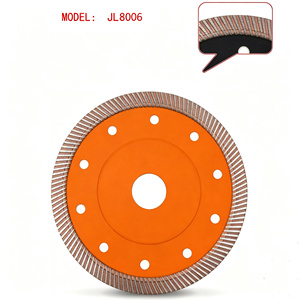
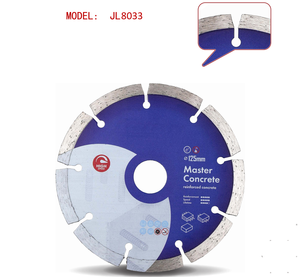
Simultaneously, industrial cutting serviceware—such as continuous rim turbo saw blades and tungsten carbide rotary circular knives—demands high-density powder metallurgy and precision thermal treatment. Super-thin diamond blades utilize a sintered matrix of cobalt-bronze alloys embedded with industrial diamond grit. Under hot-press sintering conditions, grain boundary diffusion ensures maximum diamond retention, eliminating edge chipping during wet or dry porcelain cutting routines.
Engineered with controlled thermal expansion parameters to match aluminium substrates, preventing delamination across tens of thousands of thermal expansion cycles.
Sub-micron grain carbide formulations for circular slitting blades, delivering ultra-sharp edge retention during continuous plastic film and rubber cutting operations.
Advanced hot-press matrix sintering for diamond saw blades, ensuring uniform segment density, zero micro-cracking, and maximum heat dissipation during dry cutting.
To assist OEM procurement officers and technical design teams in selecting optimal material specifications for high-volume custom production, the table below outlines mechanical and physical benchmarks across primary alloy grades:
| Material / Alloy Grade | Primary Structure | Tensile Strength (MPa) | Magnetic Permeability | Corrosion Resistance | Primary OEM Component Application |
|---|---|---|---|---|---|
| SS 430 (EN 1.4016) | Ferritic Stainless Steel | 450 – 600 | High (Ferromagnetic) | High (16-18% Cr) | Induction Base Plates, Thermal Base Discs |
| SS 304 (EN 1.4301) | Austenitic Stainless Steel | 520 – 720 | Low (Paramagnetic) | Exceptional (18% Cr / 8% Ni) | Deep Drawn Cookware Bodies, Steamer Inserts, Lids |
| Tungsten Carbide (YG8/YG10) | Sintered Metal Carbide | 1600 – 2200 | Neutral / Variable | Moderate Industrial | Rotary Slitting Knives, Industrial Rubber Blades |
| Diamond Matrix Sinter | Metal-Bond Diamond Composite | N/A (Segment Bond) | Neutral | High Thermal Stability | Turbo Saw Blades, V-Segment Crack Chasers |
The global market for commercial kitchenware components, industrial serviceware, and precision stone/tile cutting tooling is undergoing a structural transition driven by supply chain diversification, strict ESG environmental compliance, and automated production scaling. Procurement executives are moving away from spot-market trading in favor of direct vertical manufacturing partnerships.
Global brand owners require shortened design-to-market cycles. Having in-house die tool rooms enables rapid turnaround of custom stamping dies, perforated hole arrays, and unique embossed base patterns without exposing proprietary CAD drawings to third-party sub-contractors.
With tightening European Union CBAM regulations and US FDA/German LFGB food contact standards, global buyers demand lot-level traceability. Every shipment of raw steel coil or carbide blank must be accompanied by certified Mill Test Reports (MTRs) detailing exact chemical composition and mechanical properties.
In cookware assembly, the bond line between the SS 430 base plate and the vessel body is the primary point of failure. Modern OEM buyers require strict flatness tolerances (within ±0.1mm) and tailored hole perforation patterns to maximize impact-friction welding adhesion and eliminate void formation.
Advanced circle-cutting stamping lines utilize automated nesting algorithms to reduce raw material scrap rates by up to 18%. Recycled high-grade stainless steel scrap is fed back into closed-loop processing, reducing carbon intensity per unit produced.
Backed by over five decades of institutional manufacturing heritage across production hubs in Mumbai and Sarigam (Gujarat), our manufacturing infrastructure offers end-to-end processing capabilities for complex custom component contracts.
Capable of executing multi-stage deep draw cycles for complex vessels, bowls, and pressure cooker components with zero structural tearing or wall thinning.
Automated punch presses for intricate base plate patterns, custom idli steamer plates, and high-density industrial perforation arrays.
In-house CAD/CAM design studio equipped to produce single-action, compound, and progressive stamping tooling tailored to client engineering drawings.
Quality Control Protocol: Every production lot undergoes multi-stage quality gates, including CMM dimensional checking, optical surface inspection, hardness testing (Rockwell/Vickers), and ultrasonic bond line testing for composite metal assemblies.
Detailed technical responses addressing common procurement, engineering, and compliance inquiries from international B2B buyers and supply chain directors.
Induction cooktop hobs generate heat by inducing high-frequency eddy currents directly within magnetic material. SS 304 is an austenitic stainless steel with a face-centered cubic (FCC) crystal structure, making it paramagnetic (non-magnetic) and completely unresponsive to induction fields. In contrast, SS 430 is a ferritic stainless steel with a body-centered cubic (BCC) crystal structure, providing high magnetic permeability. SS 430 delivers optimal electromagnetic energy conversion while offering 16-18% chromium content for robust corrosion resistance and food-contact compliance under EN 1.4016 and FDA specifications.
Yes. All OEM/ODM manufacturing is executed directly from client-supplied CAD drawings, DXF files, or physical reference samples. Our in-house tool room designs and cuts custom stamping dies capable of holding tight dimensional tolerances down to ±0.05mm. Furthermore, we provide integrated private-label branding, including custom logo embossing, laser marking, part number etching, and bespoke packaging solutions designed for direct retail or assembly line integration.
Every export shipment is dispatched with a comprehensive compliance dossier, including Mill Test Reports (MTRs per EN 10204 3.1) verifying chemical and mechanical properties, Certificate of Origin (COO), Commercial Invoice, Packing List, and exact Harmonized System (HS) tariff classifications (e.g., HS 7220 9090 for circle-cut stainless steel blanks, HS 7326 9099 for finished metal components, and HS 8202 3900 for diamond circular saw blades). Shipments are routed through JNPT Port (Mumbai), located just 35 km from our primary facility, ensuring rapid sea freight container loading.
Our dual-facility production strategy operates via primary enterprise coordination in Mumbai supported by expanded heavy-tonnage stamping operations at Sarigam (Gujarat). This multi-site network offers critical supply chain resilience: it provides redundant manufacturing lines during scheduled maintenance, creates surge capacity during peak global procurement cycles (Q3/Q4), and allows optimized logistics routing for domestic and export delivery. Qualified buyers are welcome to conduct site audits at both facilities.
Minimum Order Quantities are determined by component geometry, material grade, and die tooling requirements rather than rigid arbitrary counts. For standard items with existing tooling, MOQs start as low as 1,000 units. For fully custom engineered OEM parts, tooling design and First Article Inspection (FAI) samples are typically produced within 10 to 15 business days. Commercial production commences immediately upon physical sample sign-off by the buyer's quality control team.
Choosing Jagruti Steels Pvt. Ltd. as your primary OEM/ODM serviceware manufacturer means partnering with a vertically integrated enterprise focused on metallurgical integrity, geometric precision, and total customer confidentiality. Under white-label supply arrangements, your proprietary designs remain protected, and our name never appears on your retail product.
Uninterrupted manufacturing leadership since 1974, delivering reliable component supply to leading domestic and export brands.
Strategic proximity to JNPT Port Mumbai (35 km) ensures reduced inland transport costs and rapid vessel booking turnaround times.
100% batch traceability, raw coil chemical verification, and rigorous dimensional inspection prior to export packing.