Explore our high-precision stamped, rotary slit, and diamond-brazed cutting disc solutions engineered for heavy-duty commercial equipment and industrial foodservice processing setups.
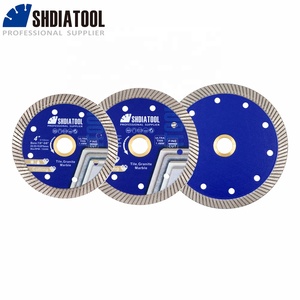
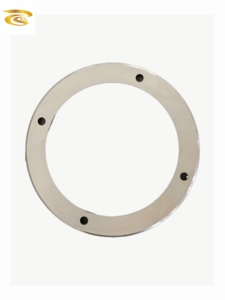
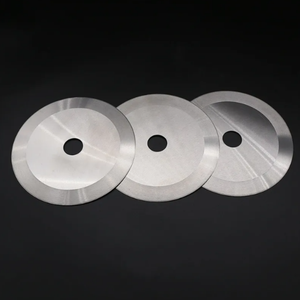
Operating continuously since 1974, Jagruti Steels Pvt. Ltd. alongside its sister concern Mammal Industries (Sarigam, Gujarat) represents five decades of specialized metallurgical stampings, deep-draw forming, and thermal base-plate integration for top-tier foodservice equipment exporters worldwide.
Every shipment of ferritic SS 430 (EN 1.4016) and austenitic SS 304 is accompanied by comprehensive Mill Test Reports (MTRs). We guarantee strict chemical composition and magnetic permeability verification for zero delamination in commercial thermal bonding lines.
Our primary Mumbai facility, integrated with our high-capacity Sarigam Gujarat production campus, safeguards global supply chains against localized disruptions. We seamlessly handle multi-ton seasonal spikes across Q3–Q1 procurement windows.
We eliminate third-party tooling markups and IP risks. Our master die makers construct custom progressive blanking, perforation, and embossing dies directly from customer CAD drawings and 3D DXF schematics with ±0.02mm tolerance discipline.
The global commercial kitchen and foodservice equipment export industry is undergoing a historic structural transformation. Driven by stringent global energy standards (such as European Union Ecodesign Directives and US Energy Star ratings), rapid electrification of commercial kitchens, and the rise of high-throughput ghost kitchens, B2B procurement teams are rethinking their core component architectures.
As a leading OEM/ODM Foodservice Equipment Exporter & OEM Component Manufacturer, our operations across Mumbai and Sarigam (Gujarat) have spent over 50 years advancing the science of custom stainless steel blanking, deep-drawn vessel forming, and ferritic induction base disc integration. Today’s global buyers no longer compete solely on unit cost; competitive advantage relies on Information Gain, material traceability, long-term anti-warpage stability, and thermal efficiency.
This whitepaper provides an exhaustive technical analysis of commercial foodservice equipment manufacturing trends, metallurgical selection criteria (SS 430 vs SS 304), deep-drawing mechanics, and global export compliance protocols for procurement officers, product designers, and OEM brand directors.
Selecting the optimal stainless steel alloy is the foundational step in engineering high-performance commercial foodservice equipment. A common point of friction in international procurement is understanding why specific components demand SS 430 (EN 1.4016 / AISI 430) rather than traditional SS 304 (EN 1.4301 / AISI 304).
The Physics of Induction Heating: Commercial induction hobs operate by producing a high-frequency alternating magnetic field (typically 20 kHz to 50 kHz). This magnetic field penetrates the bottom of the cooking vessel, inducing rapid eddy currents and magnetic hysteresis losses within the metal. Austenitic stainless steels like SS 304 possess a face-centered cubic (FCC) crystal structure, rendering them paramagnetic (non-magnetic) at room temperature. Consequently, an un-adapted SS 304 or pure aluminum pan will fail to heat on an induction range.
Conversely, SS 430 features a body-centered cubic (BCC) ferritic microstructure. This provides high magnetic permeability ($\mu_r \gg 1$), enabling immediate magnetic coupling, energetic eddy current generation, and maximum thermal conversion efficiency. When a friction-bonded or impact-bonded SS 430 base plate is unified with an aluminum core vessel, the result is instantaneous heat generation coupled with smooth horizontal heat distribution.
The following engineering data table outlines the mechanical, thermal, and regulatory parameters governing raw coil selections within our manufacturing plants:
| Engineering Property | SS 430 (Ferritic Induction Grade) | SS 304 (Austenitic Food Grade) | IS 2062 / Mild Steel (Structural) |
|---|---|---|---|
| International Standards | EN 1.4016 / AISI 430 | EN 1.4301 / AISI 304 | ASTM A36 / IS 2062 |
| Magnetic Permeability ($\mu_r$) | High Ferromagnetic (Induction Ready) | Paramagnetic (Inert to Induction) | High Ferromagnetic |
| Thermal Conductivity (W/m·K) | 26.1 W/m·K at 100°C | 16.2 W/m·K at 100°C | 51.9 W/m·K at 100°C |
| Tensile Strength (MPa) | 450 – 600 MPa | 515 – 720 MPa | 400 – 550 MPa |
| Yield Strength (0.2% Offset) | ≥ 260 MPa | ≥ 205 MPa | ≥ 250 MPa |
| Chromium Content (%) | 16.0% – 18.0% | 18.0% – 20.0% | < 0.30% |
| Deep Draw Elongation ($A_{50}$) | ≥ 22% (Forming Grade) | ≥ 40% (Extreme Draw) | ≥ 20% |
| Food Contact Compliance | EU 1935/2004 & FDA Compliant | Full FDA & NSF Sanitary Standard | Requires Food-Safe Coating |
As global supply chains realign around resilience, compliance, and technological integration, strategic B2B purchasers must anticipate structural developments over the coming decade. Our engineering desk has identified five key trends shaping OEM/ODM foodservice equipment manufacturing:
Transforming flat stainless steel circular blanks into seamless commercial mixing bowls, pressure cooker bodies, rice cooker liners, and steamer pans requires sophisticated tooling physics. Deep drawing involves forcing a sheet metal blank into a forming die using a mechanical or hydraulic press punch.
Preventing Material Wrinkling and Earing: During the draw process, circumferential compressive stresses can cause the metal edge to buckle or wrinkle. To prevent this, our hydraulic presses employ dynamic hydraulic blank-holders with calibrated pressure curves. Furthermore, ferritic SS 430 exhibits anisotropic mechanical properties, which can lead to "earing" (uneven wavy edges at the top of deep cups). Our engineers utilize specialized draw-quality (DQ) fully annealed coils combined with custom die clearances to maintain uniform wall thickness from base to rim.
Interstage Annealing & Stress Relief: For extreme draw ratios ($LDR > 2.0$), the work hardening rate of stainless steel necessitates intermediate bright annealing. By subjecting work-in-progress vessels to protective-atmosphere furnace heat treatment, we restore ductility, eliminate internal residual stress, and prevent stress corrosion cracking (SCC) during end-user thermal shock cycles.
A superior OEM product is meaningless if logistics friction delays time-to-market. Located just 35 kilometers from Jawaharlal Nehru Port Trust (JNPT / Nhava Sheva) in Mumbai, Jagruti Steels offers an optimized logistical bridge for international buyers across Europe, North America, the Middle East, and Southeast Asia.
Correct HS Code Classification: Customs delays frequently stem from improper commodity classification. We assist international procurement teams by issuing clean export documentation with precise Harmonized System tariff codes:
Comprehensive Ship-Set Documentation: Every export container dispatched from our plants contains a standardized documentation bundle: Official Certificate of Origin (COO), Packing List detailing net/gross weights and pallet dimensions, Commercial Invoice, ISPM-15 compliant heat-treated wooden crate certification, and mill-traceable Chemical & Mechanical Test Reports.
Clear, technical answers to common queries raised by international procurement managers, quality auditors, and product engineers.
Submit your CAD drawings, 3D DXF files, or component specifications today. Our engineering desk will deliver a comprehensive manufacturability analysis, unit cost estimation, and sample schedule within 24 business hours.
Contact Us