Engineered to exact drawing specifications. Mill-certified raw materials, in-house tooling, and zero-defect quality control for tier-1 OEMs worldwide.
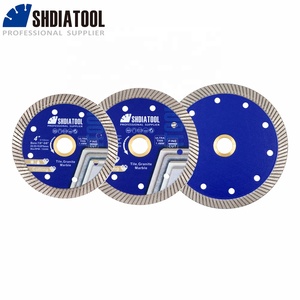
Ultra-thin hot-pressed continuous rim engineered for chip-free wet and dry cutting of tile, porcelain, granite, and ceramic surfaces.
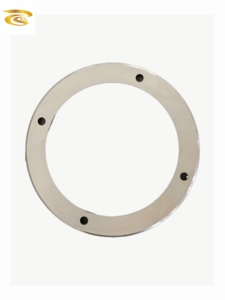
Precision-ground rotary cutting blade manufactured for high-speed plastic bag making machinery, film converting, and flexible packaging lines.
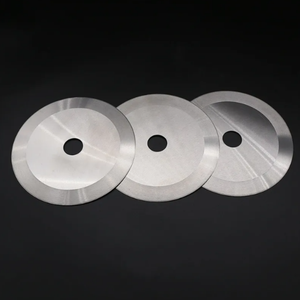
Premium micro-grain tungsten carbide industrial slitting knife offering extreme wear resistance and extended edge life during heavy rubber processing.
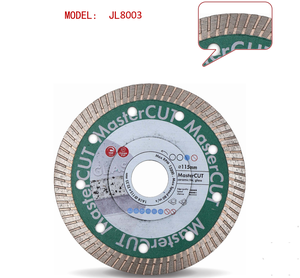
Industrial-grade 7-inch diamond cutting wheel designed for precision ceramic and porcelain tile cutting with zero rim chipping.
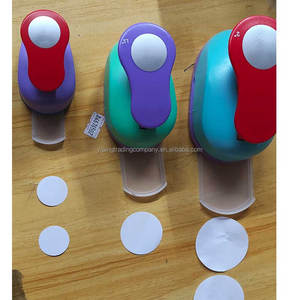
Heavy-duty precision single-hole paper and craft punch cutter tool engineered for clean round shear cuts and continuous manual operations.
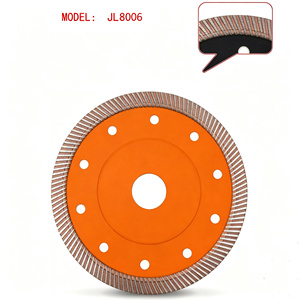
High-speed vacuum-brazed diamond blade optimized for stone, masonry, reinforced concrete, and tough abrasive masonry cutting applications.
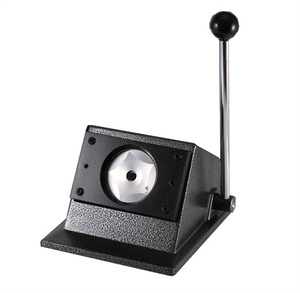
Factory-direct rotary circle die cutter built for rapid blanking, round label cutting, paperboard forming, and industrial component stamping.
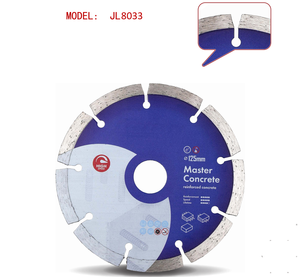
Professional dry grooving diamond disc featuring specialized V-segments for concrete repair, wall grooving, and masonry joint restoration.
Deep drawing is a fundamental metalworking process in which sheet metal blanks are radially drawn into a forming die by the mechanical action of a punch. It is technically defined as a deep draw when the depth of the drawn shell exceeds its diameter or radius. Achieving structural integrity, uniform wall thickness, and zero surface tearing during deep drawing demands a deep metallurgical understanding of strain hardening coefficients, plastic anisotropy (r-value), and limiting draw ratios (LDR).
As an established OEM/ODM Deep Drawing Factory & Supplier, our engineering framework integrates Finite Element Analysis (FEA) computer simulations before cutting tool steel. By modeling material flow, stress distribution, and blank holder pressure curves, our tooling design team optimizes draw radii and blank holder forces (BHF). This prevents common stamping defects such as wrinkling, wall thinning, earing, and fracture under high-tonnage hydraulic presses.
Calculated maximum ratio of blank diameter to punch diameter achievable without mechanical failure, typically held between 2.0 to 2.3 for deep-drawing quality stainless steel.
Managing cold work-hardening behavior (n-value) of ferritic SS 430 and austenitic SS 304 through multi-stage drawing dies and controlled intermediate vacuum annealing.
Deploying extreme-pressure synthetic lubricants and titanium nitride (TiN) coated tool steel dies to minimize friction and prevent galling during high-speed production runs.
Whether manufacturing deep drawn stainless steel vessels, pressure cooker lids, induction base plates, or precision industrial slitting knife bodies, our processes strictly adhere to International Standard ISO 9001:2015 and European EN 10088 material compliance standards.
Selecting the optimal alloy is critical to achieving thermal efficiency, magnetic response, corrosion resistance, and mechanical strength in custom metal components. In induction cookware manufacturing and industrial slitting blades, structural performance relies entirely on grade-specific physics.
| Material Grade | Metallurgical Structure | Magnetic Permeability | Tensile Strength (MPa) | Primary B2B Application |
|---|---|---|---|---|
| SS 430 (EN 1.4016) | Ferritic Stainless Steel | High (Ferromagnetic) | 450 – 600 | Induction Base Plates, Cookware Shells |
| SS 304 (EN 1.4301) | Austenitic Stainless Steel | Low (Paramagnetic) | 520 – 720 | Deep Drawn Vessels, Medical Hardware |
| Tungsten Carbide (WC) | Sintered Carbide Matrix | Zero / Non-Magnetic | 1600 – 2400 | Industrial Slitting Knives, Rotary Blades |
| IS 2062 Mild Steel | Low Carbon Ferritic | High | 410 – 540 | Heavy Industrial Stampings, Brackets |
For example, SS 430 ferritic stainless steel contains 16-18% chromium with zero nickel content, imparting the ferromagnetic properties necessary to couple with induction hob magnetic fields. Conversely, SS 304 austenitic stainless steel offers superior deep-drawing ductility and acid corrosion resistance, making it the global standard for deep drawn bowls, commercial kitchenware, and pressure vessel enclosures.
As global supply chains reconfigure for sustainability, carbon transparency, and automated assembly, B2B procurement managers must align with deep drawing partners capable of meeting next-generation technical and regulatory demands.
From initial concept sketches to mass production, our engineering framework ensures seamless integration with buyer supply chains. We operate fully equipped die shop facilities capable of building single-action, compound, progressive, and transfer drawing dies.
Review of customer STEP/IGES files. Design for Manufacturability (DFM) analysis to optimize draw ratios, edge radii, and blank utilization.
Precision CNC wire EDM machining, heat treatment of D2/SKD11 tool steel dies, and micro-polishing to achieve mirror-finish draw cavities.
First Article Inspection (FAI) with CMM measurement reports, Mill Test Reports (MTR), and PPAP documentation prior to mass press runs.
Below are authoritative technical and commercial answers to key questions asked by global procurement teams, quality directors, and manufacturing engineers.
Send your CAD drawing, DXF file, or technical specification sheet directly to our engineering desk. Receive detailed DFM feedback and an immediate factory quotation within 24 hours.
Get a Quote