Explore our mill-certified, custom-engineered stamping components, circle cutters, and industrial rotary diamond blades manufactured to strict technical tolerances.
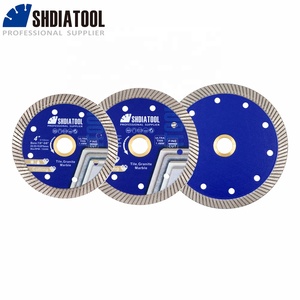
Continuous rim design engineered for ultra-fast chip-free wet/dry cutting of porcelain tile, granite, and dense ceramics.
Inquire Now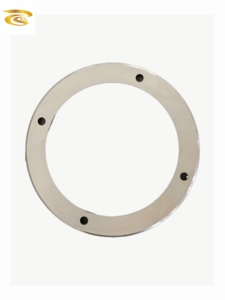
Precision-ground tool steel slitting blade tailored for high-speed plastic bag making machinery and synthetic film converting.
Inquire Now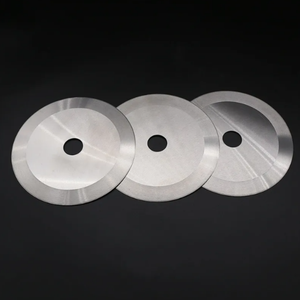
Micro-grain tungsten carbide formulation providing extreme wear resistance and extended edge life during heavy industrial slitting.
Inquire Now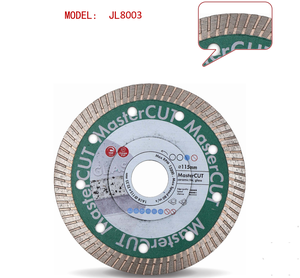
Industrial-grade diamond concentration for chip-free ceramic and glass cutting. Engineered for DIY and commercial OEM execution.
Inquire Now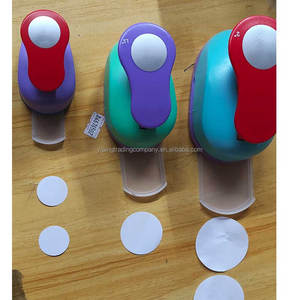
Heavy-duty punch circular cutter designed for uniform hole shape cutting in craft paper, cardboard, gasket sheets, and thin foils.
Inquire Now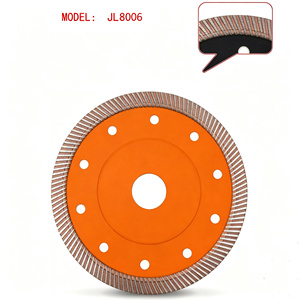
Vacuum brazed diamond technology offering rapid material removal, heat dissipation, and long operational durability on hard stone.
Inquire Now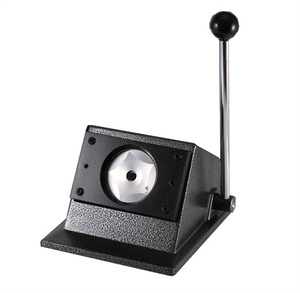
High-precision factory-priced round circle cutting machine for rapid circular metal blanking, die cutting, and paper production.
Inquire Now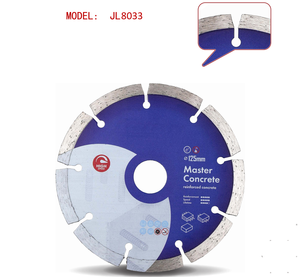
V-shaped diamond segments tailored for aggressive dry grooving, concrete joint cleaning, and wall restoration projects.
Inquire NowSince 1974, Jagruti Steels Pvt. Ltd. and associated facilities have spearheaded precision metal stamping, ferritic SS 430 induction base disc bonding, pressure vessel lids, and intricate progressive die pressings.
We press ferritic stainless steel (EN 1.4016 / AISI 430) induction bases featuring optimized hole patterns, controlled land widths, and strict flat-plane geometry. This guarantees zero delamination during thermal expansion cycle testing in cookware manufacturing.
Utilizing high-tonnage hydraulic and mechanical press lines (up to 500T), we transform flat sheet coil into deep-drawn mixing bowls, pressure cooker lids, inner pot liners, and multi-cavity steamer inserts without micro-tears or thickness degradation.
All progressive blanking, piercing, and embossing dies are manufactured inside our dedicated toolroom using wire-cut EDM and CNC machining. Your custom geometry and tooling specifications stay confidential and under one roof.
Choosing the correct alloy is paramount for electrical induction responsiveness, draw depth limits, tensile yield strength, and long-term corrosion resistance. View our baseline material matrix below.
| Technical Metric / Specification | SS 430 Ferritic (EN 1.4016) | SS 304 Austenitic (EN 1.4301) | IS 2062 Mild Carbon Steel |
|---|---|---|---|
| Magnetic Permeability (μ) | High (Ferromagnetic > 500) | Paramagnetic (~1.02) | High Ferromagnetic |
| Induction Cooking Response | Excellent (Fast Eddy Heating) | Inert / Zero Response | High Response (Prone to Rust) |
| Tensile Strength (MPa) | 450 – 600 MPa | 520 – 720 MPa | 400 – 540 MPa |
| Yield Strength (0.2% Proof) | ≥ 260 MPa | ≥ 210 MPa | ≥ 250 MPa |
| Elongation Rate (A50mm) | ≥ 22% (Deep Draw Grade) | ≥ 45% (Ultra Deep Draw) | ≥ 23% |
| Chromium Content (%) | 16.0% – 18.0% | 17.5% – 19.5% | < 0.30% |
| Primary Application Area | Induction bases, trim, blades | Pressure vessels, food contact | Structural brackets, OEM frames |
In non-stick cookware manufacturing, combining an aluminium body with a stamped stainless disc requires precise thermal expansion matching. Ferritic SS 430 possesses a linear thermal expansion coefficient of approximately 10.4 × 10⁻⁶/K (from 20°C to 100°C), significantly lower than austenitic SS 304 (16.0 × 10⁻⁶/K). This closer thermal compatibility with die-cast or impact-bonded aluminium prevents internal shear stresses during rapid cooktop heating, ensuring permanent mechanical adhesion.
Global supply chains are shifting rapidly. Procurement directors must navigate material scarcity, energy efficiency, automated quality verification, and dual-facility risk mitigation strategies.
To reduce shipping weights and overall raw material costs without compromising thermal transfer, OEMs are transitioning to micro-perforated base disc patterns. Computer-modeled geometric punches maintain total magnetic mass while reducing steel weight by up to 14%.
Traditional manual sampling is being replaced by 3D optical profile scanners installed directly on high-speed press lines. Burr heights on stamped circular discs are strictly contained below 0.03mm, eliminating post-process deburring steps for downstream assemblers.
Single-site operational risks are unacceptable for major global OEMs. Jagruti Steels operates twin plants in Mumbai (Maharashtra) and Sarigam (Gujarat), providing parallel press capacity and seamless order fulfillment during peak seasonal surges.
From initial 3D CAD modeling to full-scale automated press production, our systematic workflow guarantees absolute adherence to your engineering drawings.
Customer CAD files (STEP/DXF) or physical samples are evaluated for draw ratios, press tonnage requirements, and material grain orientation.
Hardened D2/SKD11 tool steel dies are machined via Wire-Cut EDM and CNC centers to ensure long wear life across hundreds of thousands of press cycles.
Initial press run samples undergo CMM inspection, tensile shear testing, flat surface alignment checks, and Mill Test Report (MTR) validation.
High-speed progressive presses execute automated coil feeding, stamping, washing, anti-rust oiling, and export palletization for port shipment.
Detailed answers regarding material certification, minimum order quantities (MOQs), export logistics, custom tooling costs, and lead times.
Induction heating relies on magnetic eddy currents. SS 304 is an austenitic stainless steel with a face-centered cubic (FCC) crystal structure, making it non-magnetic (paramagnetic) and unable to heat on an induction stove. SS 430 is a ferritic grade with a body-centered cubic (BCC) structure, providing high magnetic permeability while offering 16-18% chromium corrosion protection and food-contact compliance under EN 1.4016.
Yes. Every shipment is accompanied by EN 10204 Type 3.1 Mill Test Certificates detailing the exact chemical composition (C, Cr, Mn, Si, P, S) and mechanical performance (tensile, yield, hardness) of the raw coil batch used. Complete batch numbers are stamped on master export packaging for seamless incoming QC verification.
MOQ depends on part size, material gauge, and tooling complexity. For standard circular blank diameters and established induction base patterns, MOQs start as low as 5,000 units. For fully custom progressive tooling parts, MOQs are evaluated based on raw coil minimum tonnages.
Absolutely. Our internal engineering department uses SolidWorks, AutoCAD, and UG NX to reverse-engineer physical components or convert customer CAD files into multi-station progressive dies. Tooling ownership remains 100% with the customer upon completion of tool amortization terms.
We regularly ship to buyers in the European Union, UAE, USA, Vietnam, and Turkey through JNPT Port, Mumbai (35 km from our primary works). Every export consignment includes Certificate of Origin, Commercial Invoice, Packing List, Bill of Lading, and certified HS Codes: 7220.9090 for circle-cut flat blanks and 7326.9099 for finished metal components.
Operating primary production facilities in Mumbai (Maharashtra) and secondary capacity via Mammal Industries in Sarigam (Gujarat) gives buyers parallel production capacity. This mitigates regional power grid or port bottlenecks and absorbs peak seasonal manufacturing spikes without missing delivery deadlines.
Send your engineering drawings, targeted monthly volumes, or physical sample specs to our senior engineering team for a comprehensive manufacturing assessment and quotation.
Inquire Now