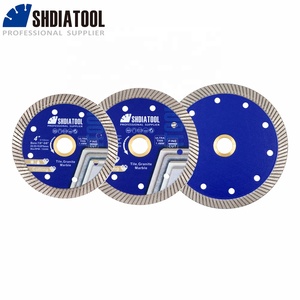
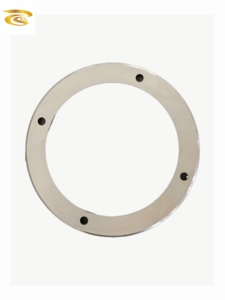
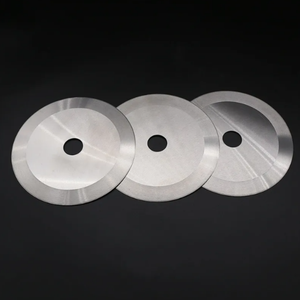
Direct factory supply of high-grade circular cutting blades, induction bottom plates, pressure cooker lids, and deep-drawn stainless steel vessel components engineered to drawings.
An authoritative analysis on deep-drawing mechanics, ferritic vs. austenitic alloy optimization, delamination mitigation in induction bases, and total cost of ownership (TCO) in B2B vessel sourcing.
In modern industrial kitchenware, home appliance manufacturing, and commercial food-service infrastructure, the metal vessel is far more than a simple container. It is a highly engineered thermal transfer system operating under strict mechanical, chemical, and pressure dynamics. For global procurement officers, brand owners, and OEM sourcing directors, navigating the supply chain for wholesale metal vessels requires deep technical comprehension of metallurgical behavior, press tooling limits, and surface passivation standards. As a premier China Wholesale Metal Vessels Factory & Exporter, our facility bridges the gap between high-volume manufacturing throughput and high-precision metallurgical engineering.
A primary decision matrix in metal vessel design is alloy selection. The industry heavily relies on Ferritic Stainless Steel (EN 1.4016 / AISI 430) and Austenitic Stainless Steel (EN 1.4301 / AISI 304), alongside aluminum alloys (AL 1050/3003) for tri-ply clad assemblies. Understanding why specific grades are deployed prevents premature product failure and catastrophic warranty claims.
SS 430 (EN 1.4016) Ferritic Structure: Containing 16% to 18% Chromium with zero Nickel additions, SS 430 features a body-centered cubic (BCC) crystal structure. This crystal lattice grants SS 430 strong ferromagnetic properties, making it the mandatory alloy for induction cooktop bottom plates and induction-compatible vessel encapsulated bases. Under an induction hob's high-frequency alternating magnetic field, SS 430 generates localized eddy currents and hysteresis loss, producing rapid, energy-efficient heat. Furthermore, its lower thermal expansion coefficient compared to austenitic steel reduces thermal warping during high-temperature frying and commercial boiling.
SS 304 (EN 1.4301) Austenitic Structure: Formulated with 18% Chromium and 8% Nickel, SS 304 possesses a face-centered cubic (FCC) paramagnetic structure. It offers exceptional corrosion resistance against organic food acids, salt brine, and high-pressure steam. However, because it lacks ferromagnetism, an all-SS 304 vessel body will fail to trigger an induction cooktop sensor. Hence, modern premium cookware utilizes an SS 304 internal food-contact vessel shell impact-bonded with a heat-spreading pure aluminum core disc and an exterior SS 430 induction base plate.
| Metallurgical Property | SS 430 (Ferritic Induction Grade) | SS 304 (Austenitic Food Grade) | AL 1050/3003 (Thermal Core) |
|---|---|---|---|
| Crystal Structure | Body-Centered Cubic (BCC) | Face-Centered Cubic (FCC) | Face-Centered Cubic (FCC) |
| Magnetic Permeability (μ) | High Ferromagnetic (>500) | Paramagnetic (~1.02) | Non-Magnetic |
| Tensile Strength (MPa) | 450 – 600 | 520 – 750 | 100 – 165 |
| Yield Strength 0.2% (MPa) | ≥ 260 | ≥ 210 | ≥ 35 |
| Thermal Conductivity (W/m·K) | 25.6 at 100°C | 16.2 at 100°C | 220 at 100°C |
| Limiting Draw Ratio (LDR) | 2.0 – 2.15 | 2.2 – 2.35 | 2.0 – 2.10 |
| Primary OEM Application | Induction Bottom Plates, Cooker Base | Vessel Body, Steamer Plates, Lids | Internal Heat Diffusion Core |
Deep drawing is the fundamental manufacturing process used to transform flat metal blanks into seamless cylindrical, conical, or spherical vessels. In our China manufacturing center, hydraulic double-action presses ranging from 250 tons to 1,200 tons perform multi-stage draw operations. Achieving wall thickness uniformity while preventing structural defects requires rigorous engineering controls:
A. Blanking & Edge Conditioning: The raw metal disc must be cleanly blanked with zero edge burr. Minute stress risers or micro-cracks along the perimeter of the blank can propagate into catastrophic vertical splits during maximum hydraulic deformation.
B. Draw Ratio & Blank Holder Force (BHF): The ratio of initial blank diameter ($D$) to punch diameter ($d$) determines the severity of deformation. When $D/d$ exceeds the Limiting Draw Ratio (LDR), multi-pass drawing with intermediate bright annealing is required. Precise control of the Blank Holder Force prevents wrinkling in the flange area caused by compressive hoop stress, while avoiding excessive friction that leads to tensile necking at the punch corner radius.
C. Surface Lubrication & Tooling Coatings: To eliminate galling—where stainless steel particles cold-weld to the die wall under severe contact pressure—our press lines employ TiN (Titanium Nitride) and DLC (Diamond-Like Carbon) coated tool steels, combined with biodegradable synthetic drawing oils that wash clean prior to annealing.
Integrating end-to-end press tooling, dual-facility capacity absorption, and strict international compliance for seamless global export.
We design, CNC machine, and maintain 100% of our progressive stamping and deep-drawing dies internally. This reduces new product NPI lead times by 40% and ensures total buyer intellectual property protection.
Every coil of SS 430, SS 304, or aluminum enters our plant with certified Mill Test Reports (MTR) confirming chemical composition (Spectrometer analyzed) and mechanical properties per ASTM A240 / EN 10088-2 standards.
Operated across main industrial manufacturing nodes, our multi-facility setup provides redundant production capacity. This layout absorbs seasonal peak demand surges (Q3-Q4 prep) without compromising delivery schedules.
By optimizing blanking yield, automating robotic transfer arms, and minimizing secondary polishing scrap, we deliver wholesale pricing advantages that give global distributors a 15–22% margin cushion.
Full support for international customs clearance: Form E, Certificate of Origin, Commercial Invoice, Packing List, and accurate HS Code classification (e.g., HS 7323.93 for SS Cookware, HS 7220.90 for steel circles).
Induction-bonded vessels undergo severe thermal shock testing (heated to 250°C and quenched in 15°C water for 50 consecutive cycles) to guarantee zero base plate detachment or voiding over lifetime use.
Market intelligence and technological trajectories shaping the next decade of wholesale metal vessel engineering.
1. Seamless Tri-Ply and Multi-Clad Dominance: Traditional single-ply vessels with impact-bonded disc bases are increasingly losing market share to tri-ply fully clad vessels (SS304 + Aluminum Core + SS430 exterior). Clad metal technology distributes thermal energy uniformly up the entire vessel side wall rather than just the floor, reducing energy consumption by up to 30% on modern induction ranges.
2. Advanced Surface Passivation & Eco-Friendly Finishing: Regulatory agencies including EU REACH, US FDA, and Germany's LFGB are enforcing stricter limits on chemical electropolishing effluents. Future vessel factories are transitioning toward dry-laser cleaning, robotic mechanical mirror polishing, and green citric-acid passivation lines that eliminate hazardous nitric acid waste while enhancing pitting corrosion resistance.
3. Smart Hydroforming and Complex Geometry Shaping: As kitchen appliances become high-design focal points in modern homes, vessel shapes are shifting from rigid cylinders to organic, belly-shaped, and multi-faceted contours. High-pressure liquid hydroforming is replacing mechanical punch drawing for complex shapes, maintaining uniform wall thickness without surface stretch marks.
1. Digital Twin Validation & Virtual First-Article Approval: Procurement teams are moving away from spending months shipping physical steel samples back and forth across oceans. By utilizing 3D CAD step files and finite element simulation (FEA) of press draw stress, buyer engineering departments can approve digital twin prototypes before physical tooling is cut.
2. ESG Compliance & Carbon Footprint Transparency: Fortune 500 houseware importers require full Scope 1, 2, and 3 carbon auditing. Modern metal vessel manufacturers must provide verifiable data showing scrap metal recycling efficiency (>98% internal scrap repurchased by steel mills) and solar-assisted factory power usage.
3. Dual-Facility Supply Chain Risk Mitigation: Geopolitical shifts and port congestion have proven the fragility of single-source manufacturing. International procurement heads are mandating "Parallel Plant Capability," where an enterprise supplier maintains secondary production lines to absorb volume whenever primary ports experience bottlenecks.
Direct technical and commercial answers addressing buyer friction, tooling ownership, MOQ, and quality compliance.