Direct OEM manufacturing with mill-certified coils, sub-micron tungsten carbide, hot-pressed diamond matrices, and strict dimensional tolerance controls.
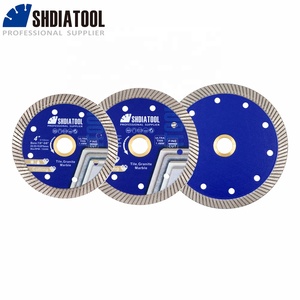
Engineered for chipping-free cutting of hard porcelain, granite, and ceramic tiles. Features reinforced steel center core and continuous turbo rim profile.
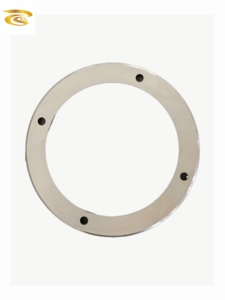
Precision-ground alloy steel rotary cutting knife designed for continuous plastic film slitting and automated bag making machinery.
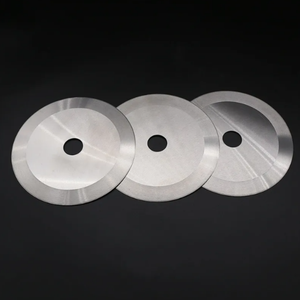
Sub-micron tungsten carbide composition providing ultra-long wear resistance, mirror finish edge profile, and zero burr cutting on dense polymers.
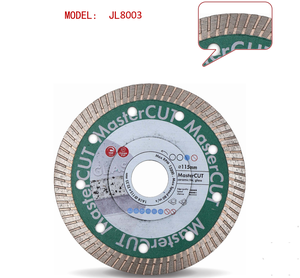
Hot-pressed sinter matrix optimized for high-speed dry and wet cutting. Minimizes friction heat to prevent surface micro-cracks on vitreous tiles.
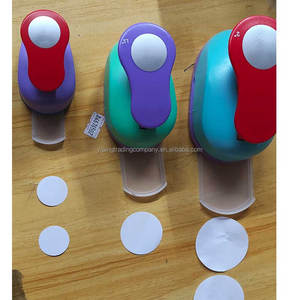
Heavy-duty single hole punch circle cutting die mechanism for precision paper, plastic sheet, and gasket blanking production lines.
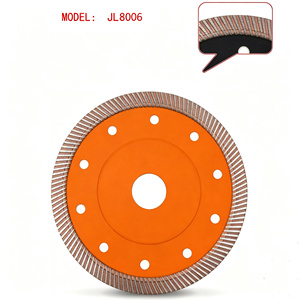
High-strength vacuum brazed diamond technology delivering exceptional bond strength for rapid cutting of marble, quartz, and reinforced masonry.
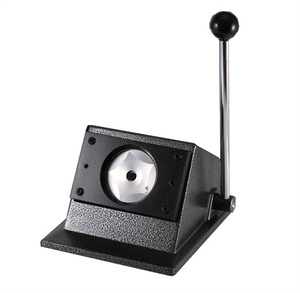
Factory-direct industrial circle shear and rotary die cutting unit engineered for high-repeatability batch manufacturing of round metal discs.
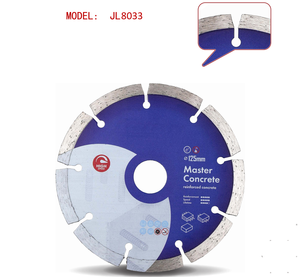
V-geometry segmented diamond wheel designed for aggressive joint grooving, concrete crack repair, and wall chasing in structural engineering.
Integrating multi-stage deep drawing, ultra-thin diamond sintering, and fine-blanking metallurgy across state-of-the-art facilities.
In global B2B manufacturing, procurement officers and mechanical design engineers frequently encounter critical technical challenges when sourcing wholesale metal circles, circular saw blanks, and rotary slitting blades. The term "Metal Circle" encompasses a broad spectrum of engineered circular metallic elements: from ferritic stainless steel discs (SS 430 / EN 1.4016) used as induction heat distribution bases in multi-layer cookware, to deep-drawn aluminum 1050/3003 discs, and high-density tungsten carbide or hot-pressed diamond cutting discs used in heavy-duty industrial slitting machines.
Achieving structural integrity, uniform magnetic permeability, zero burr edge profiles, and superior wear resistance requires comprehensive mastery over coil slitting, multi-stage stamping presses, controlled atmosphere heat treatment, and precision surface grinding. This document presents a comprehensive whitepaper overview detailing metallurgical selection, manufacturing workflows, quality validation, and supply chain logistics.
Choosing the correct alloy substrate dictates downstream formability, corrosion resistance, thermal expansion co-efficiency, and mechanical hardness. The table below provides verified technical metrics across primary metal circle alloys and carbide substrates manufactured in our OEM production lines:
| Alloy / Grade Category | Standard Specification | Tensile Strength (MPa) | Hardness Range | Primary Industrial Application |
|---|---|---|---|---|
| Ferritic Stainless Steel | SS 430 / EN 1.4016 / AISI 430 | 450 – 600 | HRB 80 – 88 | Cookware Induction Base Plates, Stamped Covers |
| Austenitic Stainless Steel | SS 304 / EN 1.4301 / AISI 304 | 520 – 720 | HRB 85 – 95 | Deep Drawn Vessels, Pressure Cooker Assemblies |
| Aluminum Alloy Circle | AA 1050 / AA 3003 / AA 8011 | 110 – 165 | HB 30 – 45 (O-Temper) | Non-Stick Pan Bodies, Lighting Reflector Shells |
| Tungsten Carbide (WC-Co) | Sub-Micron Grain 6%–10% Co | 2400 – 3200 | HRA 91.5 – 93.0 | Rubber & Plastic Film Rotary Slitting Knives |
| Hot-Pressed Diamond Core | 65Mn Spring Steel / 28CrMo | 980 – 1250 | HRC 42 – 48 (Core) | Tile, Granite & Concrete Circular Saw Discs |
The operational reliability of metal circles depends on eliminating residual micro-stresses during the blanking and forming phases. Manufacturing processes follow distinct metallurgical pathways depending on the final intended application:
For cookware induction base plates (such as SS 430 discs bonded to aluminum bodies), precision fine-blanking presses stamp out perforated or fully solid circles at high stroke speeds. Key engineering considerations include:
Rotary slitting blades for rubber, plastic, and paper, alongside diamond turbo saw blades, require specialized thermal sintering and precision grinding:
Equipped with high-precision wire-cut EDM and CNC machining centers to produce custom perforation dies, draw punches, and rotary slitting tools in under 7 business days.
Every shipment is accompanied by Mill Test Reports (MTR) according to EN 10204 3.1, detailing chemical composition, tensile yield curves, and spectroscopic lot numbers.
Located near major ocean port hubs (Ningbo/Shanghai & JNPT Mumbai), supporting FOB, CIF, DDP, and custom palletized export packaging for zero-damage transport.
As global supply chains shift toward carbon neutrality, energy efficiency, and automation, procurement directors must adapt to four transformative trends shaping the wholesale metal circle industry:
Cookware manufacturers worldwide are replacing traditional 0.8mm-1.0mm heavy induction plates with high-permeability 0.4mm – 0.6mm micro-stamped SS 430 metal circles. Advanced finite element analysis (FEA) demonstrates that optimized hole distribution and thinner gauge discs reduce pan assembly weight by up to 18% while increasing magnetic induction thermal transfer efficiency by 12% on modern 3500W induction hobs.
In paper, film, and rubber processing industries, blade longevity is the single most critical driver of operational uptime. Conventional high-speed steel (HSS) circular knives require frequent re-sharpening downtime. Procurement is rapidly shifting toward sub-micron grain (0.5µm) tungsten carbide circular blades featuring Physical Vapor Deposition (PVD) TiAlN coatings, yielding up to 800% longer edge lifespan under continuous web slitting speeds exceeding 400 m/min.
In structural ceramic and stone cutting, traditional thick diamond blades produce excessive kerf waste and dust emissions. Future procurement specifications prioritize 1.2mm – 1.4mm super-thin continuous rim turbo blades with vacuum-brazed diamond mesh. These deliver micro-fracture free cuts on ultra-hard sintered stone slabs, lowering material scrap rates for building contractors.
With environmental compliance regulations tightening across North America and the EU (such as CBAM), metal circle stamping facilities are integrating automated inline scrap baling systems. Pure off-cut scrap from circular blanking operations is immediately segregated, melted, and re-rolled into certified coil stock, achieving over 94% raw material utilization rates.
The manufacturing ecosystem for metal circles has evolved beyond simple mechanical punch presses. Modern industrial suppliers deploy state-of-the-art technological enhancements:
As a premier wholesale manufacturer and global supplier of metal circles, circular saw discs, and industrial rotary knives, our organization stands on a 50-year heritage of metallurgical precision and client-focused OEM delivery:
We maintain a dedicated in-house toolroom equipped with CNC machining centers, slow-wire EDM, and surface grinders. Whether you require a custom 113mm cookware base plate pattern or a 500mm tungsten carbide slitting knife, we develop dies directly from your CAD/DXF drawings without third-party delay.
Operating parallel manufacturing facilities allows us to absorb seasonal production spikes without compromising delivery timelines. Our multi-tonnage press lines support orders ranging from pilot-scale pre-series runs to multi-container monthly supply programs.
Every raw coil is verified using Optical Emission Spectroscopy (OES) before entering production. Our QA lab performs Rockwell/Vickers hardness testing, surface roughness analysis (Ra), and ultrasonic flaw detection to guarantee compliance with international standards (EN, AISI, ASTM, DIN).
We offer full white-label OEM services including custom laser engraving (brand logos, batch numbers, blade directional arrows), anti-rust VCI oil coating, vacuum wrapping, and reinforced seaworthy wooden crate packaging.
Clear, authoritative answers to essential engineering, material compliance, and commercial procurement inquiries.
Induction cooktops heat cookware through high-frequency electromagnetic fields that require ferromagnetic material to generate eddy currents and hysteresis loss. SS 304 is austenitic and non-magnetic, making it unsuitable for direct induction response. SS 430 is ferritic, possessing high magnetic permeability while providing excellent corrosion resistance (16-18% Cr content) and deep-draw ductility under EN 1.4016 standards. Bonding an SS 430 stamped circle to an aluminum vessel bottom provides instant induction heating combined with optimal heat distribution.
Our fine-blanking presses and CNC rotary grinders operate under tight tolerance protocols: Circle outer diameter (OD) tolerance is held within ±0.05mm; center hole concentricity within ±0.02mm; blade thickness within ±0.005mm; and overall flatness/runout within 0.08mm. Custom tolerances can be achieved based on customer engineering drawings.
Every shipment includes complete metallurgical and export documentation: Mill Test Certificates (MTR) per EN 10204 3.1 detailing chemical analysis and mechanical tensile test data, Certificate of Origin (COO), Commercial Invoice, Packing List, and certified HS Code classification (7220.9090 for cold-rolled stainless circle blanks; 8208.9000 for industrial mechanical blades; 6804.2200 for diamond cutting discs).
Burrs and edge deformation are minimized by controlling punch-to-die clearance (typically 5% to 8% of metal sheet thickness) and using ultra-hard tungsten carbide die inserts. Flatness is maintained by running stamped discs through precision multi-roll hydraulic leveling machines prior to surface finishing and packaging.
Yes. Our engineering department accepts STEP, DWG, DXF, and PDF formats. If no engineering drawing exists, our metrology lab can reverse-engineer physical blade or metal circle samples using 3D optical laser scanners and coordinate measuring machines (CMM) to build exact manufacturing tooling.
MOQ depends on material grade and tooling status. Standard diameter metal circle blanks from existing dies start at 1,000 pieces. Custom geometry or tungsten carbide slitting knives typically have an MOQ of 100 to 500 pieces. Pre-production sample lead time is 7–10 days; bulk container production is completed within 20–25 business days from sample sign-off.
Diamond circular blades and delicate rotary knives are coated with anti-rust protective oil, sealed in individual thermoformed blister packs or plastic sleeves, supported by shock-absorbing EVA foam blocks, and packed into heavy-duty 5-ply corrugated master cartons before being shrink-wrapped onto fumigated wooden pallets.
Partner with an established B2B metal circle manufacturer. Send your engineering drawings, target specs, or sample requirements today for rapid RFQ feedback.