Explore our export-grade induction bottom discs, diamond circular saw blades, slitting cutters, and heavy-duty die components manufactured under ISO 9001:2015 standards.
In modern cookware manufacturing, the transition from traditional gas flame heat dispersion to electromagnetic induction cooktops represents a fundamental paradigm shift. As global buyers, OEM brand directors, and procurement managers evaluate China wholesale induction base suppliers & exporters, understanding the underlying metallurgy, physical contact mechanics, thermal diffusion bonding, and punch tooling geometry is vital to eliminating post-market product failures such as thermal warping, micro-void corrosion, and base plate delamination.
Core Engineering Insight: High-performance induction cookware relies on a precise balance of magnetic permeability ($\mu_r$) and thermal conductivity ($k$). Using EN 1.4016 / AISI 430 ferritic stainless steel discs stamped with optimized hole-land distributions ensures rapid eddy-current generation while permitting the underlying aluminum core to flow seamlessly into micro-perforations during high-tonnage impact bonding.
The core physics of induction heating operate via high-frequency alternating magnetic fields (typically 20 kHz to 50 kHz) produced by induction coils beneath the glass ceramic cooktop surface. These magnetic fields penetrate the base plate, inducing electrical eddy currents and magnetic hysteresis losses that generate direct, rapid thermal energy.
Standard austenitic stainless steel (such as AISI 304 / EN 1.4301) possesses a face-centered cubic (FCC) crystal structure, making it paramagnetic ($\mu_r \approx 1.008$). Consequently, 304 stainless steel cookware cannot couple effectively with induction hobs. Conversely, AISI 430 (EN 1.4016) ferritic stainless steel features a body-centered cubic (BCC) grain lattice, granting it superior ferromagnetic properties ($\mu_r > 500$) alongside an optimal chromium concentration (16.0% to 18.0%). This chemical composition delivers robust corrosion resistance while sustaining high electromagnetic coupling efficiency.
AISI 430 ferritic stainless steel delivers immediate eddy-current response, reducing thermal energy loss and boosting cooking efficiency past 88%.
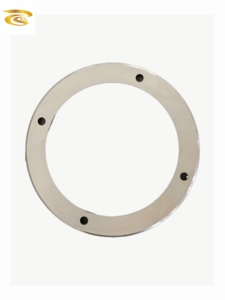
High-tonnage hydraulic impact presses (up to 3,500 Tonnes) press the SS 430 disc into the pure aluminum mid-layer, creating a permanent mechanical lock.
Optimized hole pattern matrices prevent thermal shock expansion mismatches, guaranteeing zero separation through 10,000+ thermal shock cycles.
When bonding a stamped ferritic stainless steel base plate to an aluminum (Al 1050 / Al 3003) or tri-ply vessel body, punch pattern design plays a critical role. A solid, unperforated steel plate welded to aluminum suffers severe thermal distortion due to mismatched Coefficients of Thermal Expansion ($\alpha_{SS430} \approx 10.4 \times 10^{-6}/\text{K}$ versus $\alpha_{Al} \approx 23.1 \times 10^{-6}/\text{K}$).
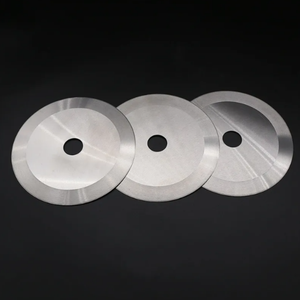
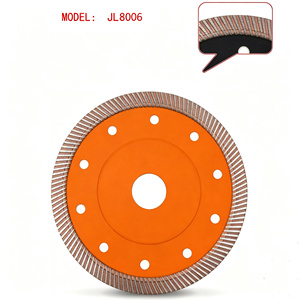
By engineering specialized perforated patterns—such as concentric radial slots, starburst matrices, or custom logo dies cut using precision carbide rotary slitting knives and high-speed stamping presses—the expanded aluminum flows upward into the micro-holes during impact friction bonding. This forms thousands of riveted mechanical anchor points while allowing localized thermal expansion without warping the pan bottom convex or concave.
The following comparative dataset outlines the chemical, mechanical, and thermal performance metrics across primary cookware base alloys and processing techniques. This benchmark data assists procurement specialists in formulating strict RFQ engineering specifications.
| Material / Attribute | AISI 430 (EN 1.4016) | AISI 410 (EN 1.4006) | AISI 304 (EN 1.4301) | Commercial Pure Al (1050) |
|---|---|---|---|---|
| Crystal Structure | Ferritic (BCC) | Martensitic (BCC) | Austenitic (FCC) | Face-Centered Cubic |
| Magnetic Response | High Ferromagnetic ($\mu_r > 500$) | Moderate Ferromagnetic | Paramagnetic (Non-Magnetic) | Non-Magnetic |
| Thermal Conductivity ($W/m\cdot K$) | 26.1 at 100°C | 24.9 at 100°C | 16.2 at 100°C | 222 at 100°C |
| Thermal Expansion ($\times 10^{-6}/K$) | 10.4 (100°C) | 9.9 (100°C) | 17.2 (100°C) | 23.1 (100°C) |
| Induction Hob Efficiency | 90% - 94% Optimal | 82% - 87% Moderate | < 15% (Incompatible) | N/A (Requires Base) |
| Pitting Resistance (PREN) | 16.0 - 18.0 (Good) | 11.5 - 13.5 (Fair) | 18.0 - 20.0 (High) | N/A |
| Common Bonding Method | Impact / Brazing / Press | Stamping / Welding | Deep Draw Body | Impact Mid-Layer Core |
As the international cookware manufacturing sector adapts to stringent environmental directives, rising raw material costs, and consumer demand for energy-efficient smart kitchen appliances, wholesale procurement strategy is undergoing significant structural evolution. Global brands sourcing from China wholesale induction base suppliers & exporters are prioritizing four pivotal technological trends:
Moving away from silver/brazing flux solder toward 2,500–3,500 ton ultra-high-pressure cold impact bonding, eliminating harmful fluoride flux emissions and achieving 100% recyclable metal joints.
Advanced rolling technology now enables sub-0.4mm gauge SS 430 discs with localized induction boosting zones, reducing total cookware weight while maintaining instant electromagnetic reaction times.
Surging demand for multi-clad cookware (SS 430 exterior + Heavy Aluminum Core + SS 304 interior) requires specialized edge chamfering dies and burr-free rotary slit circular blades during raw coil processing.
B2B buyers favor enterprise manufacturers with dual-facility production infrastructure (e.g., mainland China export hubs & direct port logistics access via JNPT/Ningbo/Shenzhen) to insulate against geopolitical tariffs.
Strict European LFGB, EU 1935/2004, and FDA compliance requires mill test reports (MTRs) for every raw coil batch, tracking precise chemical compositions ($\%Cr, \%C, \%Ni, \%Mn$).
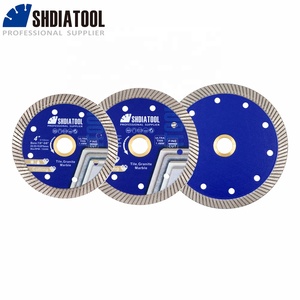
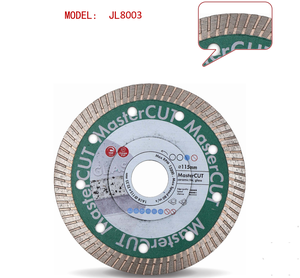
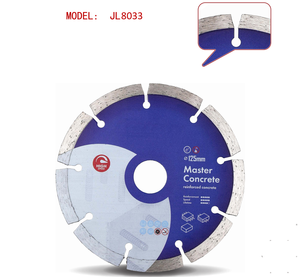
Top OEM suppliers do not merely stamp discs; they design and manufacture continuous rim diamond saw blades, slitting cutters, and custom hydraulic dies to maintain tight tolerance controls ($\pm 0.05\text{ mm}$).
As an industry-leading manufacturer and global exporter, our engineering facilities bridge half a century of metal forming experience with modern automation. We manufacture custom stamped stainless steel induction bottoms, circle blanks, deep-drawn vessel components, and industrial precision cutting tools under one unified quality management umbrella.
Our fully equipped toolroom features CNC wire-EDM machinery, precision surface grinders, and specialized diamond-brazed saw blade grinding centers. By designing and servicing our own tungsten carbide circular slitting knives and stamping dies in-house, we eliminate third-party tooling bottlenecks, allowing rapid turnaround on custom OEM diameter requests ranging from 100 mm to over 280 mm.
To guarantee that zero defective parts reach your assembly line, every batch undergoes rigid quality verification:
Induction cooktops require ferromagnetic material to form a closed magnetic circuit and generate heating eddy currents. AISI 304 stainless steel is austenitic and non-magnetic ($\mu_r \approx 1$), meaning an induction hob will not detect or heat it. AISI 430 is ferritic ($\mu_r > 500$), offering optimal magnetic permeability, high mechanical strength, and excellent corrosion resistance under standard culinary exposure.
Impact bonding utilizes friction heat and extreme hydraulic pressure (typically 2,500 to 3,500 Tonnes) to force the pure aluminum mid-layer into a plasticized state. The soft aluminum flows into the engineered perforations and micro-cavities of the stamped SS 430 plate, forming an inseparable mechanical interlock and metallurgical diffusion boundary without requiring chemical adhesives or flux brazing.
MOQs depend on disc diameter, material thickness, and pattern customization. Standard catalog diameters (e.g., 125mm, 140mm, 165mm, 180mm) in standard 0.4mm–0.6mm thickness carry flexible MOQs starting around 5,000 units. Fully custom OEM logo embossing or unique hole geometries requiring dedicated die sets typically start at 15,000–20,000 units, with die development costs amortized across production.
Yes. Every export shipment includes comprehensive chemical and physical Mill Test Reports (MTRs) according to EN 10204 3.1 standards. Furthermore, we provide full export documentation including Certificate of Origin (Form E, Form F, or General COO), Commercial Invoices, Packing Lists, and accurate Harmonized System classification codes (HS 7220.9090 for flat cold-rolled blanks / HS 7326.9099 for finished stamped parts).
Flatness is maintained through strict leveling during coil tension slitting, combined with stress-relief annealing after punching. Furthermore, our hole patterns are engineered to accommodate the thermal expansion differential between aluminum ($\sim 23 \times 10^{-6}/K$) and steel ($\sim 10.4 \times 10^{-6}/K$), preventing convex bottom distortion when heating to high temperatures.
For standard catalog base plates, production lead time is typically 14 to 21 business days upon LC or deposit confirmation. For custom OEM tooling and first-article sample approvals, allow 10 to 14 days for die manufacturing followed by standard production. Freight dispatch via major ports (Ningbo, Shanghai, Shenzhen, or JNPT) offers seamless maritime routing globally.
Connect directly with our senior metallurgical engineers and OEM export specialists. Request technical datasheets, sample kits, or custom tooling quotes today.
Get a Quote