Engineered to exact engineering drawings, mill-certified steel specifications, and rigorous dimensional tolerance control for international cookware manufacturers.
Established as a pioneering force in precision metal stamping, deep draw technology, and specialty component fabrication, our manufacturing ecosystem bridges advanced metallurgical science with high-volume industrial scaling. Unlike commercial trading houses, we control the entire lifecycle of production from raw coil slitting to custom die design.
Detailed analysis of core material properties, geometric capabilities, and application parameters across our prime component lines.
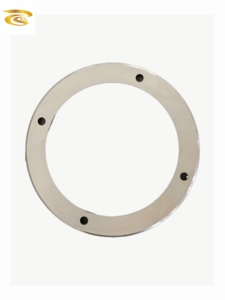
Precision-stamped ferritic stainless steel discs (EN 1.4016) optimized for high-pressure impact bonding to non-stick, hard-anodized aluminium pan bases. Designed to provide optimum magnetic permeability for induction cooktops while preventing thermal warping and delamination.
Seamlessly drawn stainless steel inner pots, mixing liners, and commercial pressure cooker bodies. Manufactured utilizing multi-stage hydraulic presses with strict limit draw ratios (LDR) to guarantee uniform wall thickness and structural stress resistance.
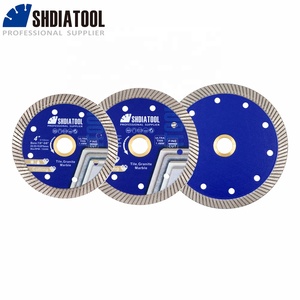
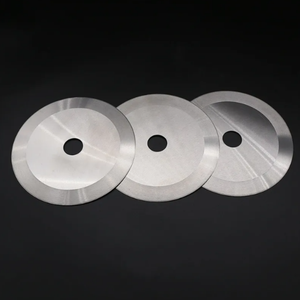
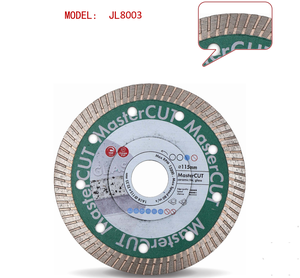
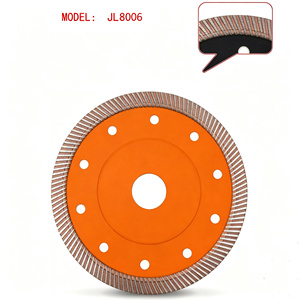
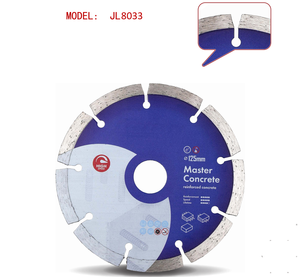
Industrial tungsten carbide rotary knives, continuous rim turbo diamond blades, and custom circular slitters used in material processing, rubber trimming, and automated cookware sheet blanking operations.
Choosing the correct metallurgical alloy determines induction heating efficiency, corrosion resistance, and deep-drawing formability. Review our comparative engineering standard table below:
| Property / Characteristic | SS 430 (EN 1.4016) Ferritic | SS 304 (EN 1.4301) Austenitic | Tungsten Carbide / Diamond Tooling |
|---|---|---|---|
| Primary Application | Induction Base Plates & Discs | Deep Drawn Vessels & Lids | Industrial Slitting & Die Cutting |
| Magnetic Permeability | High (Ferromagnetic - Induction Ready) | Paramagnetic (Non-Induction) | N/A |
| Tensile Strength (MPa) | 450 – 600 | 520 – 720 | 1500 – 2500+ |
| Corrosion Resistance | Good (16-18% Cr) | Excellent (18% Cr, 8% Ni) | High Wear Resistance |
| Elongation Rate (A50) | ≥ 22% (Deep Draw Capable) | ≥ 40% (Superior Draw Depth) | Rigid / High Hardness (HRA 89-93) |
| Thermal Expansion | Low (Matches Aluminium Shrinkage) | Moderate to High | Ultra-Low Coefficient |
As consumer preferences shift toward high-efficiency induction cooking, sustainable materials, and smart kitchen appliances, the engineering demands placed on cookware component suppliers have evolved dramatically.
Modern cookware production is moving away from traditional brazed bases toward high-tonnage friction impact bonding (exceeding 2,500 to 3,000 tons of instantaneous force). This process requires induction base plates with micro-engineered perforation hole geometry and precise land widths. The perforated pattern creates a mechanical interlock with the expanding molten aluminium body, completely eliminating air gaps and preventing bottom-bulging during extreme thermal cycling.
The manufacturing of high-end tri-ply stainless steel cookware (SS304-Aluminium-SS430) demands extreme precision during edge trimming, circle blanking, and lid rim slitting. The integration of continuous rim turbo diamond saw blades and ultra-hard tungsten carbide rotary knives ensures burr-free cuts, reducing edge-cracking during deep draw forming and significantly extending the working life of heavy-duty press dies.
Global buyer groups across Europe, North America, and the Middle East are prioritizing suppliers with transparent carbon footprint data. Sourcing components made from scrap-recycled steel via Electric Arc Furnace (EAF) routes allows brands to meet stringent EU Carbon Border Adjustment Mechanism (CBAM) targets. Our mill-certified SS 430 coil supplies strictly adhere to chemical composition limits, avoiding heavy metal leaching and ensuring food-contact safety compliance under EN 1.4016 and FDA frameworks.
In response to global labor constraints, modern component lines utilize automated optical inspection (AOI) machine vision systems. Every stamped induction disc, pressure cooker lid, and slitting blade undergoes continuous 2D dimensional scanning to verify pitch, perforation concentricity, edge burr height, and flatness tolerances (< 0.15mm variance), ensuring seamless automated loading into customer assembly robots.
Understanding how global supply chain dynamics, raw material fluctuations, and consumer technology are transforming B2B component procurement strategies.
Cookware brands are shortening product launch cycles from 12 months to under 90 days. Procurement teams no longer accept high initial die tooling costs and 100,000-piece minimum order quantities (MOQs). Leading suppliers must maintain modular master dies capable of producing custom perforation patterns, variable outer diameters (100mm to 280mm), and distinct brand logo embossments with low initial tooling amortization barriers.
B2B buyer-supplier relationships have migrated from transactional purchasing to early-stage co-engineering. Suppliers are expected to review customer CAD/DXF files to optimize metal thinning rates during deep drawing, calculate optimal impact bonding force, and select edge bevel angles for slitting blades to minimize scrap rate during high-speed production runs.
To hedge against geopolitical friction, freight disruptions, and localized power rationing, multinational houseware corporations are adopting robust dual-sourcing strategies. Sourcing from verified manufacturers with multi-plant operational capabilities ensures supply continuity and flexible freight routing options via major shipping lanes.
Essential guidance covering technical specifications, quality control protocols, custom tooling, and global delivery terms.
Induction cooktop hobs function by creating a high-frequency electromagnetic field that induces eddy currents inside ferromagnetic metals. SS 430 (EN 1.4016) is a ferritic stainless steel containing 16–18% chromium with a body-centered cubic crystalline structure, providing high magnetic permeability. In contrast, SS 304 (EN 1.4301) is an austenitic alloy (containing nickel) which is paramagnetic and will not generate heat on an induction stove. SS 430 provides the exact balance of magnetic performance, corrosion resistance, and deep-drawing formability required for impact bonding to cookware.
Delamination occurs due to thermal expansion mismatch between the aluminium pan body and the steel disc, or inadequate metal mechanical interlock. We prevent this by precision-stamping specialized perforation patterns with engineered land-to-hole ratios, chamfered hole edges, and strict flatness controls (< 0.15mm). Under friction impact bonding (2,500+ tons), molten aluminium flows completely through the openings, creating a permanent mechanical anchor resistant to extreme thermal shocks.
Yes. Our in-house toolroom designs and cuts custom progressive stamping dies directly from your engineering CAD, DXF, or physical reference sample. We can customize disc diameter (from 100mm up to 280mm+), thickness (0.4mm to 0.6mm), perforation geometric shape, central rivet layout, and incorporate your brand's trademark logo directly into the central boss area.
Every commercial consignment is accompanied by a full export documentation set: Mill Test Reports (MTRs) detailing heat number, chemical composition, tensile strength, and elongation; Certificate of Origin (COO); Commercial Invoice; Packing List; and accurate HS Code classification (e.g., 7220.90.90 for circle-cut stainless blanks, 7326.90.99 for finished metal components, or 8208.90.00 for industrial cutting blades).
For standard components within our active die library, sample dispatch occurs within 3 to 5 working days. For custom OEM geometry requiring new die fabrication, toolmaking takes approximately 12 to 18 days, followed by sample approval sign-off. Bulk serial manufacturing lead times range from 15 to 25 days depending on total order volume and custom finish requirements.
Our tungsten carbide rotary knives and diamond saw blades undergo rigorous quality testing, including dynamic balancing checks, micro-hardness testing (Vickers/Rockwell HRA), surface roughness measurement (Ra), and optical edge profile inspection to eliminate micro-chipping risks prior to protective anti-rust dipping and export boxing.
Send us your technical engineering drawings, CAD files, or product target specifications today. Our engineering desk provides instant feasibility analysis, DFM feedback, and competitive B2B quotes within 24 hours.