High-yield diamond saw blades, slitting knives, carbide tooling, and die-cutting assemblies engineered for extreme tolerance stability.
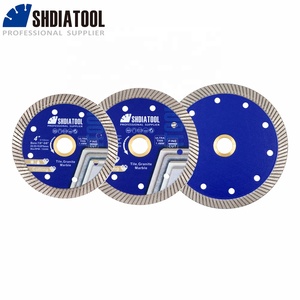
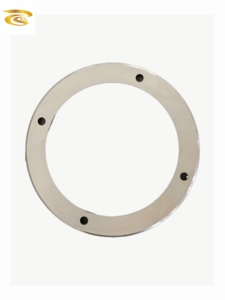
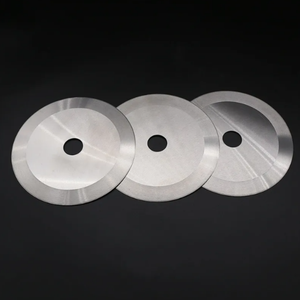
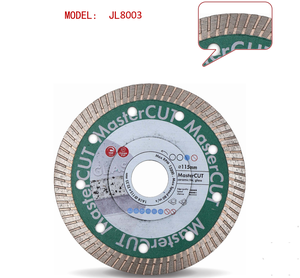
The global industrial manufacturing landscape is undergoing a structural paradigm shift. As tier-1 OEMs in automotive, consumer electronics, kitchenware, and industrial tooling demand tighter dimensional tolerances (±0.005mm), enhanced metallurgical purity, and carbon-neutral supply chains, China’s metal stamping factories have evolved from low-cost batch processors into integrated precision engineering hubs.
Modern metal stamping encompasses a spectrum of complex mechanical methodologies: progressive die stamping, deep drawing, fine blanking, hot stamping, and micro-stamping. Choosing the right China OEM manufacturing partner requires examining technical capabilities beyond basic press tonnage. Procurement directors must analyze material coil sourcing, tool room automation, surface passivation, and statistical process control (SPC) data tracking.
Information Gain Insight: Selecting a metal stamping partner is no longer solely about press capacity. Buyers who evaluate in-house die development, high-speed progressive stroke rates (>600 SPM), and raw material Mill Test Reports (MTRs) reduce total cost of ownership (TCO) by up to 28% over a product's lifecycle.
Precision metal stamping utilizes specialized die tooling to deform, punch, stretch, and shear metal sheets into high-integrity components. Leading Chinese facilities integrate multi-axis CNC wire-EDM die fabrication with automated press lines ranging from 25 to 1,200 metric tons.
Building upon decades of specialized presswork and tooling innovation, our manufacturing infrastructure combines heavy-duty hydraulic press lines with precision micro-machining capabilities. We serve tier-1 global brands, white-label cookware distributors, and industrial blade stockists across North America, Europe, the Middle East, and Southeast Asia.
Component failure in deep-drawn stainless steel or ultra-thin diamond circular blades originates from material inhomogeneity. Our facilities maintain strict material intake protocols, processing only mill-certified coils and premium carbide substrates.
Subcontracting die production introduces lead-time risk and quality drift. We operate dedicated internal tool rooms equipped with Sodick wire-cut EDMs, high-speed CNC machining centers, and surface grinders. Every Design for Manufacturability (DFM) review includes finite element analysis (FEA) metal flow simulation to eliminate stress concentrations before die steel is cut.
| Stamping / Tooling Parameter | Technical Capability Range | Quality Assurance Protocol |
|---|---|---|
| Press Tonnage Range | 15 Tons to 1,200 Tons (Hydraulic & Mechanical) | Automated tonnage monitoring & overload protection |
| Material Thickness | 0.05 mm (Micro-foil) to 8.0 mm (Heavy Structural) | Laser micrometer thickness verification per coil |
| Dimensional Tolerance | Standard: ±0.02 mm | Precision: ±0.005 mm | 3D CMM inspection & Optical Comparator checks |
| Die Life Expectancy | 500,000 to 5,000,000+ strokes (Carbide tooling) | Preventative die maintenance & sensor wear tracking |
| Surface Finishes | Mirror Polish, Electropolishing, PVD Coating, Passivation | Salt spray testing (up to 500 hrs) & roughness testing (Ra) |
As global supply chains navigate geopolitical realignment, carbon emission mandates, and rapid product development cycles, procurement directors must re-engineer their metal stamping sourcing strategies. The key trends shaping metal component sourcing over the next decade include:
Traditional progressive stamping requires substantial upfront die investment, which can delay prototype development. Emerging Chinese factories are deploying hybrid production lines that combine high-speed fiber laser cutting with flexible servo press braking. This hybrid approach enables low-volume pilot runs without expensive die tooling, allowing rapid design iteration prior to hard-tooling sign-off.
Environmental, Social, and Governance (ESG) mandates are transforming component selection criteria. Global buyers now require Scope 1, 2, and 3 emission audits from Chinese manufacturers. Suppliers are adopting recycled stainless steel coils, closed-loop scrap metal recovery systems, and solar-powered manufacturing plants to deliver low-carbon stamped parts for international export.
To guarantee zero-defect delivery in automated assembly lines, progressive dies are increasingly equipped with in-die piezo sensors. These sensors detect misfeeds, punch breakage, scrap slug pulled-up conditions, and micro-dimensional drift in real time. Defective parts are automatically rejected at the press stroke, preventing downstream quality failures.
In aerospace, automotive, and premium cookware sectors, minimizing material consumption while optimizing structural strength is paramount. Advanced deep draw techniques achieve variable wall thickness distributions—retaining material mass at stress-bearing bases while thinning sidewalls—resulting in a 15–30% weight reduction without compromising burst pressure capacity or structural integrity.
The metal stamping and industrial cutting disc industries are being redefined by breakthroughs in metallurgy and surface engineering. High-performance applications demand blades and stamped bodies capable of withstanding extreme mechanical friction, elevated temperatures, and aggressive thermal cycling.
Plain steel tools and saw blades quickly degrade under continuous high-speed friction. Next-generation circular slitting knives and diamond turbo saw blades feature advanced nano-composite surface coatings:
Press shops are moving beyond standard low-carbon and austenitic steel alloys. Stamping UHSS (yield strength >1,000 MPa) and Titanium Grade 2/5 requires specialized servo-driven press curves. Servo presses allow programmed dwell times at bottom dead center (BDC), relieving internal material stress and reducing springback for tight-tolerance aerospace, medical, and industrial components.
Comprehensive technical guidance addressing material selection, tooling ownership, quality compliance, and international logistics.
Induction hobs generate heat via magnetic eddy currents. SS 430 is ferritic and highly magnetic, enabling rapid induction heating. SS 304 is austenitic and paramagnetic, meaning it does not react to induction fields. Bonded to an aluminum body, SS 430 provides induction responsiveness while the aluminum distributes heat evenly.
The buyer retains 100% ownership of custom tooling upon payment of the die development fee. Dies are stored in our climate-controlled tool vault, maintained without extra charge, and used exclusively for your production orders. Tools are never shared or repurposed for third parties.
Burr heights are controlled by maintaining strict punch-to-die clearances (typically 5–10% of sheet thickness) and employing high-grade D2, M2, or Tungsten Carbide tool inserts. Secondary de-burring options include vibratory tumbling, thermal deburring, and magnetic polish finishing.
Every batch includes EN 10204 3.1 Mill Test Reports (MTR) detailing chemical analysis and mechanical properties. Additional reports include 3D CMM dimensional inspection sheets, RoHS/REACH compliance declarations, and Salt Spray Corrosion Test results upon request.
Simple single-stage punch dies take 10 to 15 calendar days. Complex multi-station progressive dies or deep draw tooling require 25 to 35 days. First Article Inspection (FAI) samples with full dimensional reports are delivered immediately following tool trial approval.
We mitigate drawing stress through computer-modeled multi-stage draw steps, precise blank holder force adjustments, application of specialized extreme-pressure (EP) draw lubricants, and inter-stage bright annealing when drawing high-depth-to-diameter ratios.
Common export codes include HS 7326.9099 (Finished iron/steel stamped articles), HS 7220.9090 (Cold-rolled stainless steel blanks), HS 8202.3900 (Circular saw blades with working parts of steel/diamond), and HS 8208.9000 (Slitting blades for industrial machinery).
We accommodate FOB, CIF, DDP, and EXW terms. Shipments are consolidated through major sea ports (Ningbo, Shanghai, Shenzhen, JNPT) with heavy-duty export packaging, VCI anti-rust wrapping, fumigated wooden crates, and full customs clearing documentation.