Direct OEM supply from China's top tier manufacturing lines. Engineered with mill-certified alloys, advanced thermal sintering, and precision kerf control for optimal industrial output.
An executive white paper examining shifting metallurgical standards, automated precision blanking, raw coil supply resilience, and thermal sintering advancements driving competitive advantage in international supply chains.
The global metal blanks and precision circular cutter manufacturing sector is undergoing a profound technological shift. International buyers—ranging from multi-cooker appliance manufacturers and non-stick cookware brands to industrial diamond tool distributors and stone processing equipment OEMs—are demanding higher metallurgical purity, strict kerf loss reduction, and total batch-level chemical traceability. As raw material costs fluctuate, the competitive edge no longer relies solely on low labor rates, but on automated high-speed blanking lines, severe concentricity control, and in-house die tool development.
Industrial tool buyers are enforcing strict limits on blade kerf thickness. In diamond circular saw blades and slitting rotary knives, reducing kerf width from 2.2mm to 1.2mm directly lowers material waste by up to 45%, reducing power consumption in automated cutting lines while minimizing thermal stress on cut workpieces.
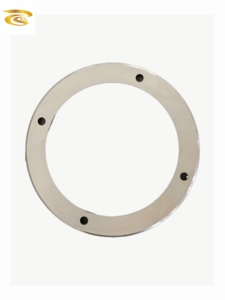
For kitchenware and multi-cooker OEMs, the demand for SS 430 (EN 1.4016) ferritic stainless steel induction base plates has eclipsed traditional non-magnetic SS 304 components. Ferritic alloys offer high magnetic permeability essential for induction cooktops while retaining deep-draw formability and corrosion resistance.
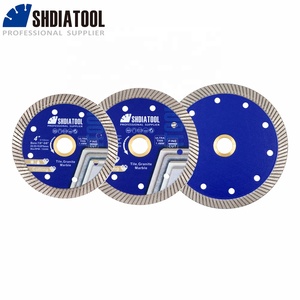
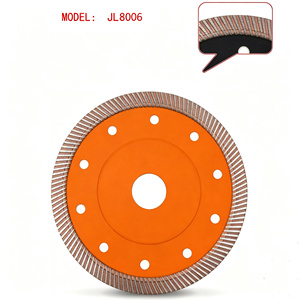
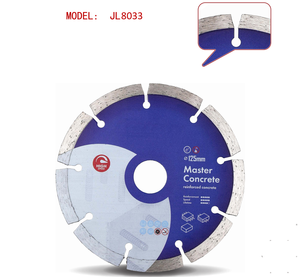
Conventional cold-pressed diamond segments are increasingly replaced by hot-pressed matrix sintering and vacuum brazing. Hot pressing eliminates internal micro-voids, ensuring diamond grains remain firmly bonded under intense shear forces during porcelain, granite, or reinforced concrete grooving.
Furthermore, procurement directors are restructuring their supplier risk frameworks. Leading global buyers favor modern manufacturing ecosystems that operate multi-plant facilities, maintaining redundant stamping capacity and parallel tooling production across different industrial zones to absorb seasonal peak demands and prevent supply chain bottlenecks.
Comprehensive comparative analysis of alloy grades, tungsten carbide density, diamond bond hardness, and operational performance thresholds for industrial metal blanks and rotary slitting blades.
| Material / Component Category | Primary Metallurgy / Composition | Hardness & Tensile Rating | Thermal & Magnetic Properties | Ideal Industrial Applications |
|---|---|---|---|---|
| SS 430 Induction Base Plates | EN 1.4016 Ferritic Stainless Steel (16-18% Cr) | Tensile: 450–600 MPa Yield: ≥ 260 MPa |
High Ferromagnetic Permeability; Low Thermal Expansion | Non-stick cookware induction bottoms, multi-cooker heating discs, pressure cooker base plates. |
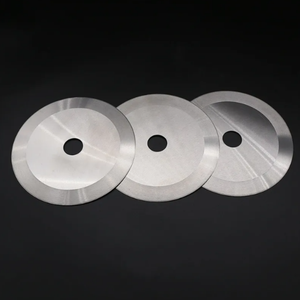
| Tungsten Carbide Slitting Blades | Micro-Grain WC + 6%-12% Cobalt Binder (YG8/YG15) | Hardness: 89.5–92.5 HRA TRS: ≥ 2800 N/mm² |
High Thermal Stability up to 800°C; Severe Friction Resistance | Industrial rubber slitting, plastic bag rotary knives, corrugated paper slitting, foil converting. |
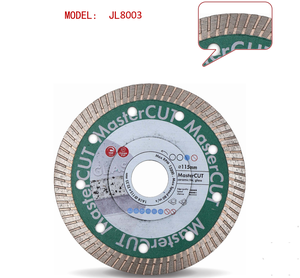
| Hot-Pressed Diamond Saw Blades | Synthetic Diamond Grit + Cobalt/Nickel/Iron Alloy Matrix | Matrix Density: ≥ 7.8 g/cm³ Bond: Medium-Hard Sintered |
Heat Dissipating Turbo Slots; High Segment Retention | Chip-free porcelain tile cutting, granite slab processing, ceramic sawing, concrete wall grooving. |
| Tool Steel Punching Dies & Circle Cutters | D2 / SKD11 / High-Speed Steel (M2) Tool Steel | Hardness: 60–62 HRC Cryogenically Treated |
High Toughness; Edge Sharpness Retention under Continuous Shear | Industrial circular die punching, sheet metal blanking machinery, heavy paper & gasket craft dies. |
| Vacuum Brazed Masonry Discs | Monocrystalline Diamond Grains + Active Brazing Alloy | Bond Strength: Mechanical + Chemical Metallurgical Weld | Extreme Thermal Resistance; Dry Cutting Capable | Ductile iron pipe sawing, stone profiling, masonry restoration, emergency rescue saw blades. |
Why international brands trust our manufacturing infrastructure: From mill-certified raw coil sourcing to custom tool-die engineering and total export compliance.
We do not rely on third-party machine shops for tooling. Our precision CNC wire EDM and die-making centers build stamping dies, embossing molds, and custom circle cutting dies directly from your CAD/DXF drawings within tight turnaround times.
Every shipment of metal blanks, stainless steel circles, or tungsten carbide knife blanks is accompanied by certified Mill Test Reports (MTRs) documenting chemical composition, yield strength, hardness (HV/HRC), and grain structure per batch.
Utilizing high-precision hydraulic tensioning and laser levelling machines, our circular saw blade blanks and rotating slitting knives maintain axial runout below 0.03mm, preventing wobble, blade binding, and excessive wear at high RPMs.
Equipped with automatic progressive die presses ranging from 100 to 800 tons, our plants process coil thicknesses from 0.4mm up to 6.0mm with flawless edge shear quality, minimal burr formation (<0.02mm), and zero material delamination.
We provide full white-label contract manufacturing for global distributors. Your proprietary logo, part numbers, barcode markings, and specialized hole patterns are precision laser-etched or stamped into the blanks prior to export packaging.
Strategically linked to major ocean ports, we handle all export documentation including Certificates of Origin, Form E, commercial invoices, and exact HS classification (e.g., HS 7220.9090 for steel circles, HS 8202.3900 for diamond saw discs).
Send us your engineering drawings, DXF files, or target specifications. Our metallurgy engineering desk will provide a technical review, tooling estimation, and competitive factory quotation within 24 hours.
Get a QuoteExpert answers regarding metal blank metallurgy, tolerance standards, diamond segment bonding chemistry, and OEM international procurement.
Induction cooktops heat cookware by generating eddy currents via a rapidly alternating magnetic field. SS 304 is an austenitic stainless steel, making it non-magnetic (paramagnetic) and ineffective on induction hobs. In contrast, SS 430 is a ferritic alloy containing 16–18% chromium with a body-centered cubic (BCC) crystal structure. This gives SS 430 high ferromagnetic permeability required to couple with induction cooktops, while retaining high corrosion resistance, deep-drawing ductility, and food-grade safety standards under EN 1.4016 / AISI 430 specifications.
Tile chipping occurs when the saw blade's kerf is too thick, the axial runout causes lateral vibration, or the diamond grit matrix is improperly bonded. Hot-pressed ultra-thin continuous rim turbo blades address this through three mechanisms: (1) Sintering under high temperature and hydraulic pressure eliminates matrix voids, ensuring firm grit retention; (2) The turbo mesh rim design provides rapid heat dissipation and debris clearance; and (3) The ultra-thin kerf (typically 1.2mm–1.4mm) minimizes force application against delicate porcelain glazes, resulting in a clean, zero-chipping cut line.
Tungsten carbide grade selection depends on the balance between hardness (wear resistance) and transverse rupture strength (impact toughness). Grade YG8 (8% Cobalt binder) provides higher hardness (approx. 91-92 HRA), making it ideal for sharp slitting of non-abrasive materials like thin plastic films, paper, and foil. Grade YG15 (15% Cobalt binder) offers greater shock resistance and toughness, making it superior for heavy rubber slitting, thick synthetic leather, and automated cutting lines where shock loads or mild axial impacts occur.
Our automated progressive stamping and laser cutting lines consistently maintain diameter tolerances within ±0.05mm and thickness variation within ±0.02mm. For circular base plates and slitting knife cores, flatness is held to within 0.1mm per 100mm diameter, and edge burrs are strictly controlled below 0.02mm using secondary automated deburring and vibratory polishing processes.
Every export shipment includes a formal Certificate of Analysis / Mill Test Report (MTR) detailing chemical analysis (spectrometer verified) and mechanical testing (tensile, yield, hardness). Commercial export documents include the Commercial Invoice, Packing List, Bill of Lading, Certificate of Origin (Form E / CO as requested), and accurate Harmonized System (HS) code documentation for seamless customs clearance in North America, Europe, the Middle East, and Southeast Asia.
For custom hole patterns, embossing logos, or non-standard diameters, our in-house tool room designs and manufactures progressive stamping dies or diamond segment sintering molds. Tooling costs are quoted transparently upfront based on die steel selection (e.g., D2 or carbide inserts). For ongoing annual procurement programs, tooling fees are fully amortized or refunded upon reaching agreed minimum order volume milestones.
First-article qualification samples from existing dies are dispatched within 3 to 5 working days. For custom die development, sample production typically requires 12 to 18 days (including 3D CAD sign-off, die machining, and trial pressing). Once first-article samples and inspection reports are approved by the buyer, standard mass production lead time ranges between 15 and 25 days depending on total order volume and surface finishing requirements.