Explore our high-performance engineered components, manufactured with mill-certified raw materials, micron-level tolerances, and advanced hot-press diamond metallurgy for global OEM applications.
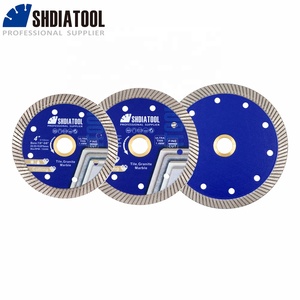
Engineered for ultra-fast, chip-free precision wet and dry cutting of vitreous porcelain, granite slabs, hard ceramics, and marble tiles with minimum kerf loss.
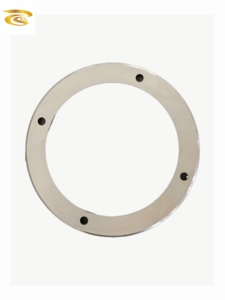
High-speed rotary circular knives crafted from SKD-11 / D2 steel for plastic bag making machinery, film converting, and flexible packaging extrusion lines.
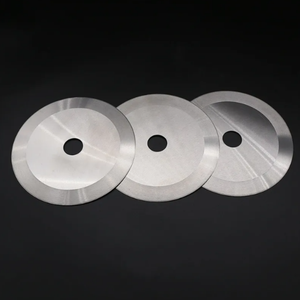
Sub-micron grade YG10X solid tungsten carbide circular knives designed for continuous high-shear slitting of rubber compounds, textiles, and dense synthetic materials.
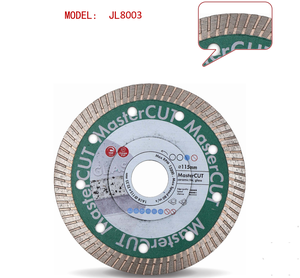
Industrial grade 7" continuous rim diamond cutting wheel featuring optimized matrix density to deliver clean, fracture-free cuts on delicate porcelain and ceramic tiles.
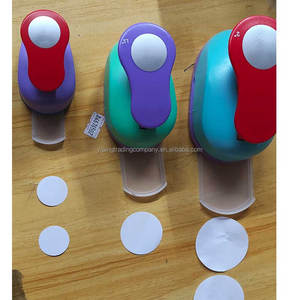
Precision single-hole and multi-shape punch cutters engineered for heavy-duty paper converting, industrial craft die-cutting, metallic foil blanking, and sample prep.
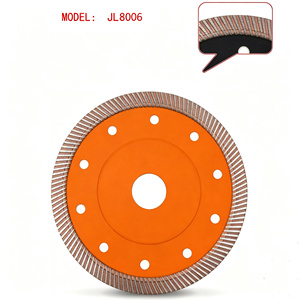
Advanced vacuum brazing technology locks synthetic diamond grit directly to the steel core, providing extreme heat tolerance and aggressive cutting for masonry and stone.
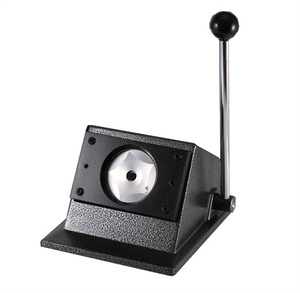
Factory-direct benchtop and automated die cutting machinery engineered for high-volume blanking of round metal plates, gaskets, circular labels, and plastic discs.
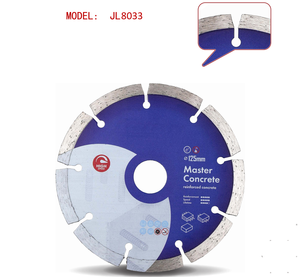
Specialized V-pattern diamond segments designed for fast crack chasing, joint routing, dry mortar raking, and deep concrete wall channel grooving applications.
As a premiere China Best Stainless Discs Supplier & Exporter, our manufacturing architecture integrates advanced metallurgical engineering, precision hydraulic stamping, and high-frequency induction bonding technology. Whether supplying ferritic stainless steel discs (SS 430 / EN 1.4016) for cookware thermal induction bases, or manufacturing super-abrasive hot-pressed diamond cutting discs and tungsten carbide rotary knives, our production standard is anchored in sub-micron tolerance control and material integrity.
In modern industrial manufacturing, component performance is defined by matrix stability, planar flatness, and edge durability under extreme thermal and mechanical loading. Below is an technical comparison of our primary stainless steel and cutting alloy formulations designed for global B2B procurement leaders:
| Material / Component Grade | Primary Alloying Elements | Mechanical Hardness | Thermal & Magnetic Properties | Primary Industrial Application |
|---|---|---|---|---|
| Ferritic Stainless Steel (SS 430 / EN 1.4016) | Cr 16.0–18.0%, C ≤ 0.12%, Mn ≤ 1.0% | HRB 80 - 88 (Soft Annealed) | Ferromagnetic (High Induction Response) | Impact-bonded induction base plates, pressure cooker caps |
| Austenitic Stainless Steel (SS 304 / EN 1.4301) | Cr 17.5–19.5%, Ni 8.0–10.5% | HRB 88 - 92 | Paramagnetic (Corrosion Immune) | Deep-drawn vessels, food-grade lids, hospitality strainers |
| Tungsten Carbide (YG10X / Sub-Micron) | WC 90%, Co 10% (Grain: 0.6µm) | HRA 91.5 – 92.5 (Vickers > 1600) | Thermal stability up to 800°C | High-speed rotary circular knives, rubber slitting blades |
| Hot-Pressed Sintered Diamond Matrix | Synthetic Diamond + Fe/Cu/Co Matrix | Segment Bond Hardness: 85-110 HRB | Controlled thermal degradation core | Super-thin porcelain saw blades, V-segment crack chasers |
Our dual-facility architecture allows parallel production streams for custom OEM stamping and ultra-hard tool grinding. Key process milestones include:
Global supply chains are undergoing rapid evolution driven by automation, material efficiency, and environmental regulations. Industrial procurement directors evaluating OEM partners for stainless steel discs, induction plates, and circular cutting blades must align with key emerging trends:
Rising raw material costs are driving demand for ultra-thin diamond cutting discs (1.0mm – 1.2mm) and thin-gauge SS 430 induction plates (0.4mm – 0.5mm). Thinner kerfs reduce power consumption in power tools and minimize precious alloy waste during continuous cutting.
Rotary slitting blades and industrial cutting discs are increasingly specified with TiAlN, DLC (Diamond-Like Carbon), or CrN nanostructured surface coatings. These PVD treatments decrease friction coefficients by up to 40% and extend blade life threefold in continuous plastic and rubber converting.
In cookware manufacturing, traditional hot-impact pressing is shifting toward high-frequency Radio Frequency (RF) induction braze bonding. SS 430 discs with engineered hole geometry and precise land widths ensure void-free aluminum-to-steel interface bonding, eliminating delamination claims.
International buyers in North America and the EU now mandate verified Scope 1 and Scope 2 carbon footprint accounting, 100% recyclable material scrap loops, and full origin documentation for all stainless steel heat lots.
The manufacturing landscape for circular metal components and diamond cutting blades is undergoing a technological renaissance. As production speeds increase across automated packaging lines, ceramic processing plants, and cookware assembly operations, tooling failure is no longer tolerated. Our R&D division focuses on three foundational engineering advancements:
Traditional diamond saw blades rely on sintered metal powder matrices to mechanically hold synthetic diamond grit. Under extreme heat, mechanical wear wears down the matrix, leading to premature diamond drop-out. Modern vacuum brazed diamond discs utilize active titanium alloy brazing chemistry that creates a chemical bond between the steel core and the diamond crystal. This yields 90%+ grit exposure for unprecedented cutting speed in natural stone, granite, and reinforced concrete.
In rotary slitting applications (such as plastic bag converting and rubber industry knives), conventional tungsten carbide blades suffer from micro-chipping along the ultra-sharp cutting bevel. By refining WC grain sizes down to 0.6 microns and optimizing cobalt binder distribution, our carbide circular blades achieve HRA 92+ hardness without brittleness, ensuring clean shear cuts across millions of cycles.
For cookware base plates, thermal expansion mismatch between aluminum cookbodies (α ≈ 23 × 10⁻⁶/K) and stainless steel plates (α ≈ 10.5 × 10⁻⁶/K) causes thermal warping during high-temperature cooking. Our proprietary hole matrix patterns and concentric expansion relief grooves redistribute shear stress along the bond line, guaranteeing flatness over thousands of heating cycles.
Over five decades of specialized metal fabrication and blade engineering have established our organization as a trusted OEM supplier to major cookware brands, industrial equipment manufacturers, and commercial tooling importers worldwide.
Operating parallel manufacturing units allows us to absorb seasonal surge demand (peak Q3-Q4 cycles) without bottlenecking lead times. Substantial coil inventory guarantees pricing stability against fluctuating raw material markets.
Located near major international container terminals (JNPT), shipments are dispatched smoothly with complete Certificate of Origin, Form E/FTA documentation, commercial invoices, and proper HS code classification (HS 7220.9090 for circle blanks / HS 8202.3900 for circular saw blades).
Every single batch undergoes dimensional verification on optical profile projectors, Rockwell/Vickers hardness testing, dynamic balancing checks, and chemical spectrographic coil analysis prior to packing.
Clear, technical answers to common queries regarding material selection, tooling lead times, custom design tolerances, and export compliance.
Induction cooktops heat cookware by generating eddy currents via a high-frequency magnetic field. SS 304 is an austenitic stainless steel, which is paramagnetic and will not react with induction hobs. SS 430 is a ferritic alloy with high magnetic permeability, allowing efficient thermal energy transfer while retaining strong corrosion resistance and food-contact compliance under EN 1.4016.
We manufacture rotary circular blades and slitting knives to exact customer engineering drawings. Bore diameters range from 10mm up to 250mm with precision keyways, pin holes, or smooth press-fit tolerances held within ±0.005mm. Bevel profiles can be single-edge, double-edge, or compound angle ground based on target material shearing requirements.
Yes. Every export shipment includes raw material Mill Test Reports (EN 10204 3.1 certification) confirming exact elemental chemical composition (Chromium, Carbon, Nickel, Manganese content) and mechanical tensile properties. This ensures seamless incoming quality control (IQC) and compliance auditing for global buyers.
For new component geometries or complex perforation patterns, die design and in-house CNC/EDM tooling fabrication typically takes 12 to 18 working days. First-article sample inspection reports (FAIR) and physical samples are delivered immediately upon tool completion for customer sign-off prior to releasing bulk production runs.
Hot-press sintering applies simultaneous high temperature and mechanical hydraulic pressure during matrix consolidation. This produces a higher density diamond segment with superior bond strength compared to cold-pressed blades, resulting in longer blade lifespan, reduced segment loss, and smooth, chip-free cutting speeds in hard porcelain and tiles.
We operate strictly under non-disclosure and private-label agreements. Your brand logo, part numbers, barcoding, and customized packaging artwork (color boxes, blister packs, export master cartons) are applied directly in-house. Our corporate identity never appears on white-label products delivered to your end markets.
We support standard Incoterms 2020 including FOB (JNPT / Shanghai / Ningbo), CFR, CIF, and DDP for select destinations. Flexible payment structures include Telegraphic Transfer (T/T), Irrevocable Letter of Credit at sight (L/C at sight), and structured credit terms for qualified high-volume procurement partners.
Send us your engineering drawings, required material specifications, target dimensions, or annual volume requirements. Our technical sales engineers respond within 2 business hours with quotation details and tooling lead times.
Send an Inquiry