Engineered to rigorous metallurgical tolerances for seamless integration into cookware bonding lines, stone cutting machinery, and industrial slitting systems.
Technical evaluation of ferromagnetic permeability, thermal conductivity matching, impact bonding mechanics, and precision circular blanking.
In modern high-efficiency commercial and consumer cookware manufacturing, the thermal transfer efficiency of non-stick pans, stainless steel pressure cookers, and multi-ply cookware hinges entirely upon the engineering quality of the bottom induction disc. As China's premier induction disc manufacturer and global supplier network, our manufacturing methodologies merge advanced metallurgical material selection with precise power-press blanking and perforation tooling.
Induction cooktop hobs operate by producing high-frequency alternating magnetic fields (typically 20 kHz to 50 kHz). When an induction-compatible vessel is placed on the hob, these magnetic lines of force pass through the bottom disc, inducing rapid high-density eddy currents and magnetic hysteresis losses. Non-ferrous materials such as pure 1050 or 3003 aluminium, as well as austenitic stainless steel (such as AISI 304 / EN 1.4301), possess paramagnetic properties—meaning they do not naturally couple with the induction hob's electromagnetic field.
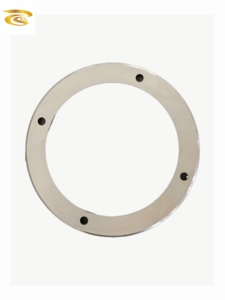
To overcome this, engineers utilize SS 430 (EN 1.4016 / AISI 430) ferritic stainless steel induction base plates. SS 430 contains 16% to 18% chromium with zero nickel content, imparting strong ferromagnetic properties, high relative magnetic permeability (μr > 500), and robust atmospheric corrosion resistance. When high-tonnage friction presses or impact-bonding equipment fuse an SS 430 disc onto an aluminium cookware body, the resulting multi-metal composite delivers instant magnetic responsiveness alongside optimal heat dispersion.
Global procurement teams must evaluate the bonding technique used when sourcing induction bottom plates. The longevity of cookware under severe thermal cycling depends on preventing thermal stress delamination:
Side-by-side engineering evaluation of stainless steel grades and industrial metals for induction bottom plates and rotary cutting disc substrates.
| Performance Parameter | SS 430 (EN 1.4016) - Our Standard | SS 304 (EN 1.4301) | SS 410 (EN 1.4006) | Mild Carbon Steel (IS 2062) |
|---|---|---|---|---|
| Microstructure Category | Ferritic (Magnetic) | Austenitic (Paramagnetic) | Martensitic (Magnetic) | Ferritic-Pearlitic |
| Relative Magnetic Permeability (μr) | High (> 600) | Low (~ 1.02) | Medium-High (~ 500) | Very High (> 1000) |
| Induction Heating Efficiency | 92% – 96% Thermal Conversion | Incompatible (0%) | 85% – 89% Conversion | 94% (Corrosion Prone) |
| Chromium Content (%) | 16.0% – 18.0% | 17.5% – 19.5% | 11.5% – 13.5% | < 0.25% |
| Tensile Strength (MPa) | 450 – 600 MPa | 515 – 720 MPa | 550 – 750 MPa | 400 – 540 MPa |
| Elongation (A50mm %) | ≥ 22% (Excellent Stamping) | ">≥ 40% ">≥ 15% ">≥ 20%|||
| Delamination Risk Grade | Zero Risk (Impact Keyed) | N/A | Moderate Thermal Stress | High Oxidation Detachment |
Combining 50+ years of tooling heritage with modern multi-facility redundancy, mill traceability, and stringent international export compliance.
We own and operate precision CNC wire-cut EDM and high-speed milling machine shops. From custom perforation geometries to specialized branding logos, our dies are manufactured in-house, accelerating sample turnaround to under 7 working days.
Operated across two specialized production facilities in primary industrial hubs. This dual-facility structure guarantees peak-season capacity absorption (up to 5 million discs monthly) and eliminates single-source supply chain bottlenecks for international buyers.
Every shipment of SS 430 coil is sourced directly from top-tier stainless steel mills accompanied by EN 10204 3.1 Mill Test Reports (MTR). Full heat-number chemical and mechanical batch traceability is maintained from coil slitting to packaged goods.
Key technological shifts shaping global OEM procurement, environmental compliance, and high-efficiency induction heating design through 2030.
Next-generation induction base plates are moving away from solid stamping toward computer-optimized micro-perforated hole layouts. These designs reduce total vessel mass by 12–15% while improving mechanical locking during impact bonding. The reduced thermal inertia allows faster response times on smart induction hobs with temperature sensor feedback.
Global buyer specifications now mandate 100% inline non-destructive testing (NDT) to inspect structural bonding integrity. By applying high-frequency ultrasonic scanning after impact bonding, production systems can instantly spot internal micro-voids or edge lift, ensuring zero-defect disbonding during high-temperature frying cycles.
With the European Union implementing the Carbon Border Adjustment Mechanism (CBAM), enterprise buyers require detailed Scope 1, 2, and 3 embodied carbon data for stainless steel components. Forward-thinking suppliers rely on scrap-recycled stainless steel melted in electric arc furnaces (EAF) powered by green energy, lowering overall product carbon footprints by up to 35%.
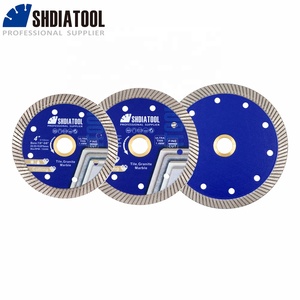
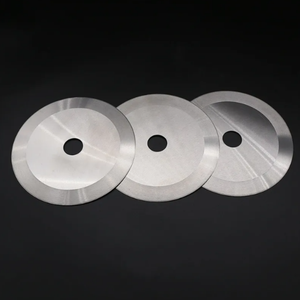
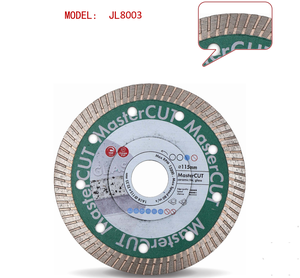
In stone, tile, and industrial slitting tools, conventional hot-pressed matrix blades are rapidly giving way to vacuum-brazed diamond discs and ultrafine micrograin tungsten carbide rotary knives. These advanced cutting components provide up to 5x longer operational life, lower friction coefficients, and zero chipping on high-density ceramic surfaces.
Clear, authoritative answers to essential questions asked by purchasing directors, quality assurance managers, and OEM engineering leads.
Induction cooktop hobs require a ferromagnetic material to couple with alternating magnetic fields and generate eddy currents. SS 304 is austenitic and paramagnetic (non-magnetic), meaning it will not heat on an induction hob. SS 430 is ferritic, providing high magnetic permeability required for rapid heating while retaining excellent atmospheric corrosion resistance and deep-draw formability compliant with food-contact standard EN 1.4016.
Delamination is prevented by controlling three key variables: precise hole perforation layout (allowing thermal-plastic aluminium to flow smoothly into mechanical keyways during high-tonnage impact bonding), strict degreasing of stainless coil surfaces before stamping, and holding planarity flatness within ±0.15mm across the disc surface to eliminate air pockets during thermal expansion.
We manufacture custom induction base plates ranging from 100mm to over 280mm in outer diameter, with standard thicknesses from 0.4mm to 0.6mm. Custom perforation layouts, concentric ribbing, and embossed customer logos are produced directly in our in-house die tool room based on your engineering drawings (CAD/DXF) or physical samples.
Every export shipment includes a EN 10204 3.1 Mill Test Certificate, Certificate of Origin (COO), Commercial Invoice, Detailed Packing List, and Bill of Lading. Standard customs HS classifications are HS 7220.9090 for stainless steel circle-cut blanks and HS 7326.9099 for finished metal components.
For standard catalogue disc sizes, our baseline production MOQ starts at 5,000 units. For specialized custom tooling projects, initial prototyping samples are delivered within 7 to 10 days following drawing approval. Full production batch orders are regularly fulfilled within 20 to 25 calendar days, shipped via ocean freight through JNPT port access.
Yes. We welcome qualified international buyer audits, as well as third-party inspection teams (SGS, TÜV, Bureau Veritas, Intertek). Our factories maintain full ISO 9001:2015 quality management compliance, raw material batch segregation, and complete operational transparency across die-cutting, stamping, packing, and container loading processes.