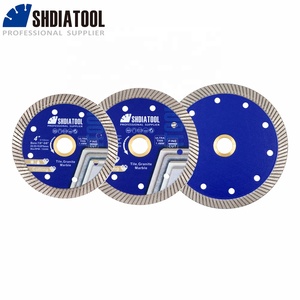
Hot Pressed Turbo Diamond Circular Blade for Cookware Die Tooling
Ultra-thin hot-pressed continuous rim cutter engineered for ultra-smooth edge finishing on heavy-gauge stainless steel blanks and ceramic-coated cookware rims.
Get a QuoteEngineered for seamless thermal transfer, zero-delamination structural integrity, and ultra-precise circle slitting for high-capacity production lines.
Ultra-thin hot-pressed continuous rim cutter engineered for ultra-smooth edge finishing on heavy-gauge stainless steel blanks and ceramic-coated cookware rims.
Get a Quote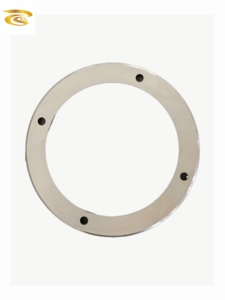
Custom-sized high-speed steel rotary slitting knife for automated circular cutting of tri-ply stainless steel and multi-clad aluminium sheets.
Get a Quote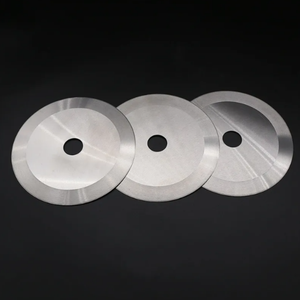
Industrial tungsten carbide circular shear blade guaranteeing burr-free slitting of copper core plates and SS430 induction disc materials.
Get a Quote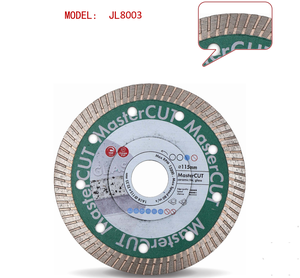
7-inch high-grade industrial hot-pressed diamond cutting disc for clean margin trimming on deep-drawn stainless steel pressure cooker bodies.
Get a Quote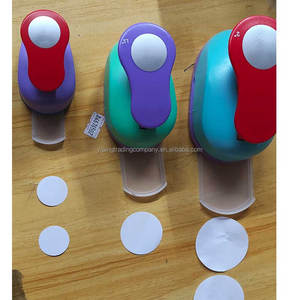
High-precision single-hole and multi-punch circle cutting machine tooling designed for severe-duty handle mounting bracket preparation.
Get a Quote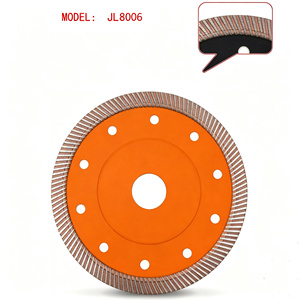
Brazed diamond turbo mesh circular blade engineered for rapid heat dissipation during edge deburring of hard-anodized cookware bodies.
Get a Quote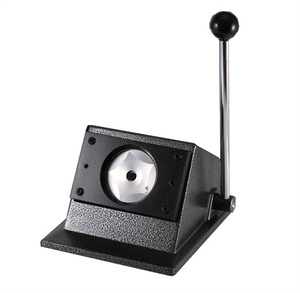
Industrial-grade rotary circle shearing machine for continuous production of round stainless steel blanks from coil stock with factory-direct precision.
Get a Quote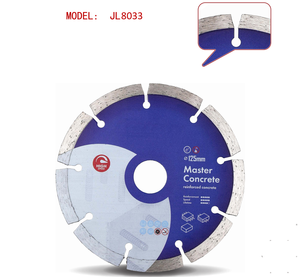
V-segment hot-pressed dry grooving diamond disc designed for rapid re-tooling, mold maintenance, and precise metal structural grooving.
Get a QuoteIn modern culinary hardware engineering, the performance of a kitchenware product is almost entirely dictated by the structural and metallurgical integrity of its underlying cookware body. As a premier China Cookware Bodies Supplier & Exporter, our manufacturing methodology transcends basic metal stamping. We specialize in deep-drawn stainless steel shells, heavy-gauge forged aluminium bodies, and multi-clad tri-ply composite vessels engineered to withstand thousands of high-temperature thermal expansion cycles without structural distortion or layer separation.
The transition from traditional single-ply stamped cookware to advanced multi-layer encapsulated base structures has redefined global procurement standards. Modern commercial induction cooktops demand flawless magnetic responsiveness coupled with rapid lateral heat distribution. Achieving this requires precise control over plastic deformation parameters during hydraulic deep drawing, strict anisotropy management of raw coil stock, and advanced roll-bonding or impact-bonding processes.
Information Gain Insight: Standard stamped cookware bodies often suffer from micro-fissuring and severe edge wall thinning during deep draw ratios exceeding 1.8. Our proprietary multi-stage hydraulic press system incorporates hydraulic hydraulic cushion controls, reducing wall thinning variances to under 4% across the vessel radius while maintaining absolute magnetic flux density on SS430 induction bases.
When selecting an OEM partner for cookware bodies, international buyers must evaluate the supplier's capability to mitigate earing effects (plastic anisotropy variance), grain boundary cracking, and intermetallic oxidation during heat treatments. Our manufacturing facilities leverage mill-certified ferritic (EN 1.4016 / AISI 430) and austenitic (EN 1.4301 / AISI 304) stainless steel coils sourced directly from top-tier metallurgical mills, providing verifiable batch-level chemical analysis and mechanical testing reports (MTRs).
Our export catalogue encompasses five distinct architectural classes of cookware bodies, each tailored to specific cooking applications, heating sources, and price points:
| Cookware Body Type | Material Layering / Construction | Typical Gauge Range | Induction Efficiency | Primary Application |
|---|---|---|---|---|
| Tri-Ply Stainless Steel Shell | SS304 (Interior) + Pure Aluminium Core + SS430 (Exterior) | 2.0mm – 3.5mm | High (94-97%) | Premium Retail & Professional Chef Lines |
| Impact-Bonded Aluminium Body | Aluminium 3003 Body + 0.5mm SS430 Stamped Base Disc | 3.0mm – 5.0mm | Medium-High (90-93%) | Non-Stick Frypans & Commercial Stockpots |
| Hard-Anodized Composite Vessel | Electro-chemically Hardened AL 3003 + Bonded SS Plate | 3.5mm – 4.5mm | High (92-95%) | Heavy-Duty Commercial Restaurant Ware |
| 5-Ply Copper Core Body | SS304 + AL + Pure Copper + AL + SS430 Exterior | 2.5mm – 3.2mm | Ultra-High (98%) | Luxury Culinary Equipment |
| Deep Drawn Pressure Cooker Shell | High-Yield SS304 or Heavy Aluminium 1050/3003 | 1.2mm – 4.0mm | Custom Encapsulated Base | High-Pressure Culinary Vessels |
Each cookware body variant undergoes rigorous dimensional tolerance testing. We utilize high-speed circular slitting die cutters and rotary shears to cut precise round blanks from metal coils prior to deep drawing, ensuring zero burr contamination and complete structural uniformity around the lip rim.
How evolving regulatory frameworks, PFAS restrictions, and energy efficiency targets are shaping the future of cookware body sourcing.
With European and North American markets transitioning rapidly from gas hobs to smart induction cooktops, cookware bodies require optimized ferritic bottom area coverage. Micro-embossed SS430 plates with engineered perforation matrices are replacing solid flat discs to enhance thermal transfer rates and prevent warping under high-wattage booster modes.
As global environmental agencies mandate the phase-out of traditional PTFE/PFAS chemistry, cookware body interior surfaces must be pre-conditioned for ceramic and sol-gel non-stick adhesion. Our automated shot-blasting and micro-texture laser etching processes deliver optimal surface roughness ($Ra\ 3.2 - 4.5\mu m$), doubling mechanical coating bond strength.
Commercial buyers demand ergonomic cookware without compromising thermal mass. Future body designs integrate cold-rolled multi-clad metals featuring inner structural aluminium cores combined with thin-gauge exterior stainless steel skins, achieving a 22% weight reduction while retaining identical heat retention capacity.
As a premier China Best Cookware Bodies Exporter, our competitive moat is built upon complete vertical integration—from raw material coil slitting to final surface polishing and export documentation. Operating under strict ISO 9001:2015 and IATF 16949 quality management systems, our facilities ensure every batch meets rigid international standards including EN 12983-1 for cookware safety and performance.
Detailed technical answers to common engineering, quality, and supply chain queries encountered by international procurement managers.