Explore our CE-marked, mill-certified industrial line manufactured under stringent quality control protocols across our state-of-the-art facilities.
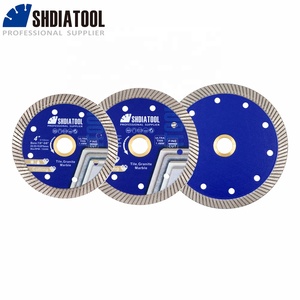
Ultra-thin diamond matrix engineered for chip-free cutting of hard porcelain, granite, ceramic, and dense tile substrates.
High-alloy tool steel rotary knife ground to micron-level tolerance for automated plastic bag converting lines.
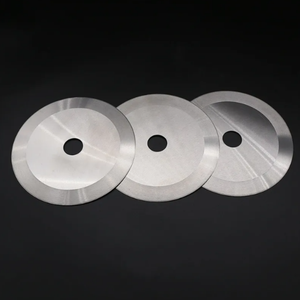
Micro-grain tungsten carbide formulation resistant to extreme frictional wear during continuous rubber and elastomer converting.
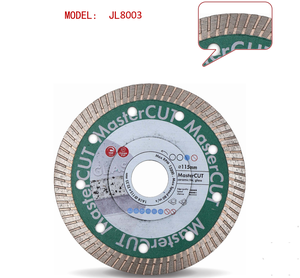
7-inch industrial grade diamond disc formulated with reinforced core plate to eliminate blade deflection and edge chipping.
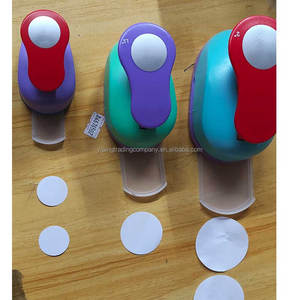
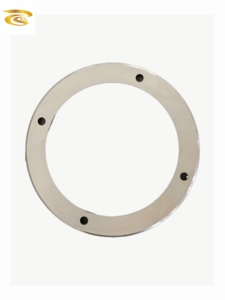
Precision-machined stainless steel punch components for high-speed circular die punching and material trimming.
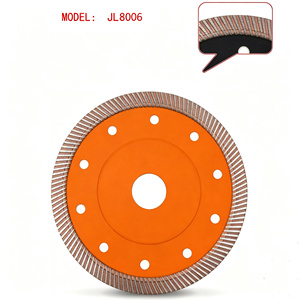
Vacuum-brazed diamond technology offering enhanced bond strength for aggressive cutting of marble, masonry, and stone.
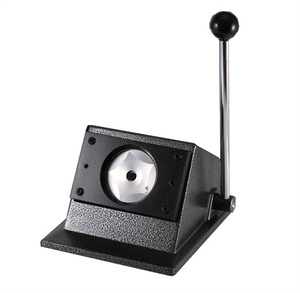
Heavy-duty motorized rotary die cutting machinery engineered for accurate circular blanking of sheet metals and synthetic composites.
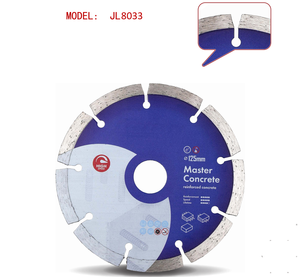
V-shaped diamond segment design tailored for crack restoration, wall expansion joint grooving, and structural masonry dry cutting.
Combining 50 years of metallurgical heritage with automated multi-axis stamping and precision blade cutting operations.
Every batch of SS 430 ferritic, SS 304 austenitic steel, or high-alloy tool steel undergoes strict chemical spectral analysis and mechanical yield testing to meet strict European Union safety and structural directives.
Eliminate reliance on third-party toolmakers. Our in-house CAD/CAM toolroom produces progressive dies, deep-draw punches, and custom rotary slitting geometry directly from your STEP/DXF files.
With operational headquarters in Mumbai and high-capacity production facilities at Sarigam (Gujarat), we provide buyers uninterrupted supply security, capacity surge absorption, and zero single-point factory risk.
We issue DIN EN 10204 3.1 mill certificates with every consignment. Heat numbers are etched into production batches to guarantee raw material authenticity from coil to final delivery.
Specialized hydraulic presses capable of complex deep drawing without thinning or micro-fracturing, alongside diamond-lapped circular rotary slitters for smooth, burr-free slitting performance.
Situated within 35 km of Jawaharlal Nehru Port Trust (JNPT) Mumbai, our factories deliver containerized global shipments efficiently under compliant HS Codes (7220.90.90 / 7326.90.99 / 8208.90.90).
An authoritative analysis of technical shifts in metal forming, diamond cutting matrix engineering, and regulatory compliance imperatives.
The global stainless steel processing and industrial cutting tool market is experiencing a structural transition driven by automated high-speed conversion equipment, tighter environmental regulations, and demanding performance requirements. As enterprise buyers seek higher operational uptime and reduced scrap rates, manufacturers must adapt their core metallurgical processes.
In the abrasive cutting sector, traditional cold-pressed diamond saw blades are rapidly being superseded by hot-pressed sintered turbo matrix blades. Modern porcelain tiles, engineered quartz, and high-density ceramics exhibit compressive strengths exceeding 200 MPa. Standard blades cause edge micro-flaking and excessive kerf loss. Hot-pressing under controlled vacuum atmosphere binds diamond grit with cobalt-bronze alloys at optimal density, permitting kerf widths under 1.2mm without compromising structural blade stiffness.
With international energy directives favoring induction-based thermal transfer over gas heating, the demand for specialized SS 430 (EN 1.4016) ferritic induction plates has accelerated. Unlike paramagnetic austenitic grades (e.g., SS 304), ferritic stainless steel maintains high magnetic permeability ($\mu_r > 500$), enabling immediate electromagnetic coupling with hob coils. Modern production trends require co-stamping these discs onto cookware bases using multi-tonnage hydraulic impact bonding, ensuring zero void formation and heat dispersion rates up to 94%.
Automated converting machinery for flexible packaging, rubber, and synthetic polymer processing demands continuous slitting speeds up to 800 meters per minute. High-speed steel (HSS) knives suffer frequent thermal softening at shear contact zones. Modern manufacturing trends favor sub-micron grain tungsten carbide (WC-Co) rotary circular blades. Lapped to surface roughness values of $Ra < 0.05 \mu m$, these carbide knives maintain razor edge retention up to 20 times longer than HSS, drastically cutting downtime in industrial converting plants.
Standard off-the-shelf industrial components often fail under heavy thermal-mechanical stress. Sourcing customized, heat-treated components manufactured from mill-certified coils eliminates unexpected line shutdowns, extends die service life, and reduces overall total cost of ownership (TCO).
How global procurement directors are re-engineering supply chains for resilience, compliance, and material integrity.
Enterprise procurement teams are migrating away from single-region supply dependencies. Establishing production channels with certified manufacturers in India—backed by robust port infrastructure like JNPT Mumbai—ensures supply continuity during regional trade disruptions.
With the European Union Carbon Border Adjustment Mechanism (CBAM) coming into full force, buyers must track the carbon intensity of imported steel products. Forward-thinking factories are adopting energy-efficient electric induction melting and closed-loop scrap recycling.
Before committing capital to multi-cavity progressive die tooling, top-tier buyers now demand Finite Element Analysis (FEA) and mold-flow digital twin simulations to predict grain flow, thinning ratios, and springback characteristics during metal forming.
Detailed technical benchmarking across primary manufacturing grades utilized in our CE-certified production lines.
| Material / Component Grade | EN Designation | Tensile Strength (MPa) | Hardness Range | Primary Industrial Application | CE Safety Standard Alignment |
|---|---|---|---|---|---|
| SS 430 (Ferritic Steel) | EN 1.4016 / AISI 430 | 450 - 600 | HRB 80 - 88 | Induction Base Plates, Deep Drawn Vessels | EN 10088-2 / Food Contact 1935/2004 |
| SS 304 (Austenitic Steel) | EN 1.4301 / AISI 304 | 520 - 720 | HRB 82 - 92 | Pressure Cooker Lids, Food-Service Ware | CE Pressure Equipment Directive (PED) |
| Tungsten Carbide (WC-Co) | ISO K20 - K40 Grade | 1600 - 2400 | HRC 64 - 68 | Rotary Slitting Knives, Rubber Cutting Discs | ISO 1832 Industrial Tooling Standard |
| Hot-Pressed Diamond Matrix | Sintered Co-Cu Bond | N/A (Bond Shear >45) | HV 1100 (Diamond) | Turbo Circular Saw Blades, Tile/Granite Discs | EN 13236 Safety Req. for Superabrasive |
| High Chrome Tool Steel (D2/SKD11) | EN 1.2379 | 750 - 950 | HRC 58 - 62 | Circular Blanking Dies, Punch Shears | Machinery Directive 2006/42/EC |
Direct answers to critical technical and logistical questions asked by OEM purchasing directors.
CE certification confirms that industrial cutting discs, machinery components, and presswork comply with European Health, Safety, and Environmental protection directives (such as EN 13236 for superabrasive diamond tools and EU 1935/2004 for food-contact alloys). Importing CE-certified components prevents customs impoundment, ensures worker safety under high RPM operating conditions, and guarantees product liability protection across international jurisdictions.
SS 430 is a ferritic stainless steel containing 16-18% chromium with a body-centered cubic (BCC) crystal structure, making it natively ferromagnetic. This allows induction cooktops to generate intense localized eddy currents for high thermal efficiency. Conversely, SS 304 is an austenitic stainless steel with a face-centered cubic (FCC) structure, rendering it non-magnetic and inert to induction fields. Therefore, SS 430 discs are essential as bonded base plates on non-magnetic vessels.
Micro-cracking and orange-peeling occur when metal elongation stresses exceed material yield limits. We mitigate this by procuring deep-drawing quality (DDQ) mill-annealed coils with controlled grain size (ASTM 7 to 8). Furthermore, our press tooling incorporates precise draw-ring radii, variable blank-holder force control, and high-performance synthetic drawing lubricants to maintain uniform wall thickness.
Yes. Every containerized shipment is accompanied by DIN EN 10204 3.1 certified Mill Test Reports verifying exact chemical heat analysis (C, Cr, Ni, Mn, Si, P, S) and mechanical yield/tensile testing. Complete export documentation—including Form A/COO, Packing Lists, Commercial Invoices, and Bill of Lading filed under precise HS codes—is delivered directly upon dispatch from JNPT port.
Standard prototype tooling and first-article inspection (FAI) samples are delivered within 12 to 18 working days from CAD drawing sign-off. High-speed progressive production die sets require 3 to 4 weeks depending on geometric complexity. Once tooling is qualified, standard production lead times range from 15 to 25 days for container-load volumes.
MOQs depend on part geometry, material yield from raw coils, and tooling setup complexity. For standard stamped discs or stock rotary blades, MOQs start as low as 1,000 units. For fully customized deep drawn vessels or custom-embossed OEM components, production batch runs are structured to optimize coil utilization and amortize setup costs efficiently.
Send us your technical drawings (STEP, DWG, PDF) or sample specifications. Our metallurgical engineering team responds within 24 business hours with comprehensive pricing and tooling options.