Examine our high-performance induction bottom plates, specialized cutting blades, and industrial punching tools. Every unit is manufactured with strict metallurgical control and dimensional tolerance to guarantee flawless impact bonding and induction coupling.
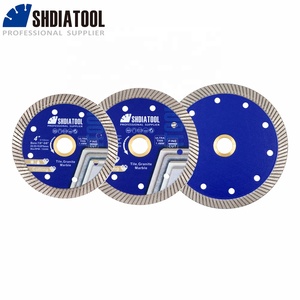
Designed for smooth chipping-free wet or dry cutting of tile, porcelain, granite, and ceramic materials. Features ultra-thin core design for high speed processing.
Contact Us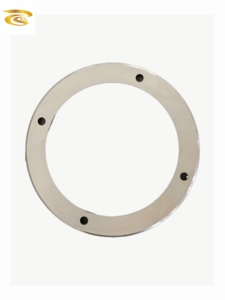
Precision-ground rotary cutting knives for plastic bag making machines, film converting, and automated high-speed slitting lines.
Contact Us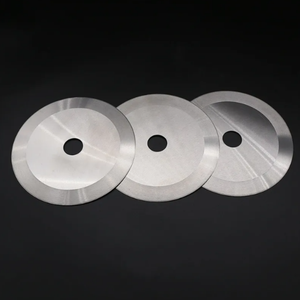
High-wear resistant tungsten carbide slitting knives engineered for rubber, polymer processing, and industrial shearing applications requiring long service life.
Contact Us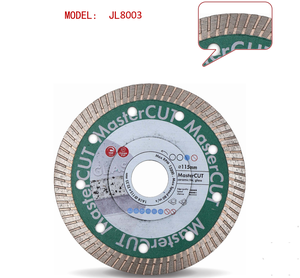
Industrial grade hot-pressed zero-chipping diamond disc specifically formulated for clean cuts in high-density porcelain tile and ceramic sheets.
Contact Us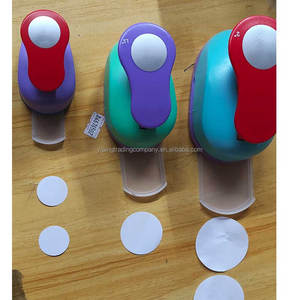
Precision hole punch circle cutter for paper, craft, and sheet metal blanking operations, supporting multiple standard diameters from 25mm to 50mm.
Contact Us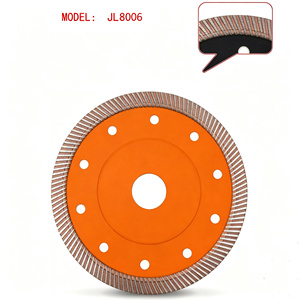
Heavy-duty vacuum brazed diamond saw blade with turbo mesh configuration for rapid dry and wet cutting of natural stone and concrete block.
Contact Us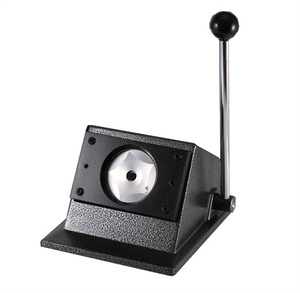
Factory-direct high precision round die cutting equipment engineered for automated circular blanking of metallic sheets and gasket components.
Contact Us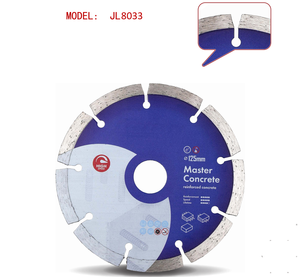
Heavy-duty V-segment diamond crack chaser for dry grooving, mortar removal, and concrete expansion joint repair in masonry construction.
Contact UsUnderstanding electromagnetic coupling efficiency, thermal stress dissipation, and impact-bonding adhesion in high-performance cookware manufacturing.
Induction cooking hobs operate via high-frequency alternating magnetic fields (typically 20 kHz to 50 kHz), which induce oscillating eddy currents within the base of cookware. Standard austenitic stainless steel (such as SS 304 / EN 1.4301) possesses a paramagnetic face-centered cubic (FCC) crystal structure, rendering it virtually non-responsive to electromagnetic fields.
Conversely, SS 430 (EN 1.4016 / AISI 430) is a ferritic stainless steel with a body-centered cubic (BCC) structure. This grants it high magnetic permeability ($\mu_r > 500$) and sufficient electrical resistivity ($\rho \approx 0.60 \, \mu\Omega\cdot\text{m}$). As a result, when an SS 430 induction bottom plate is exposed to the hob's magnetic field, it maximizes both skin effect resistance and magnetic hysteresis losses, turning electromagnetic energy into rapid, uniform heat.
Achieving zero delamination over thousands of thermal cycles requires specialized bonding techniques. During high-tonnage friction impact bonding (utilizing 2,500 to 3,500 tons of hydraulic press force at 450°C–500°C), an SS 430 perforated plate, an intermediate pure aluminum disk (AA 1050 / AA 1070), and the primary vessel body (aluminum or 304 SS) undergo solid-state interdiffusion.
The aluminum extrudes through the precision-punched geometric perforations of the SS 430 plate, forming a mechanical rivet lock alongside an atomic-level metallic bond. This dual locking mechanism yields a shear bond strength exceeding 18 MPa, comfortably surmounting the CE Directive standards for thermal expansion differential stress.
How international regulations, energy efficiency benchmarks, and material innovations are reshaping procurement criteria for global cookware brands.
Traditional large-hole induction bottoms are rapidly giving way to high-density micro-perforated layouts (1.5mm to 3.0mm hole diameters). Micro-perforations increase the aluminum keying contact surface area by up to 35%, drastically reducing micro-air pockets, improving thermal conductivity, and preventing post-stamping bottom concavity (warping) during high-heat frying applications.
With the European Union's Carbon Border Adjustment Mechanism (CBAM) entering full implementation, European cookware importers demand verifiable Scope 1, 2, and 3 emissions data. Procuring SS 430 induction discs stamped from mill-certified coils produced in solar-assisted or energy-optimized facilities ensures lower embedded carbon tariffs at EU customs entry points.
Strict compliance under REACH and RoHS regulations prohibits heavy metals in braze matrix flux. Procurement managers are mandating fluxless cold-impact pressing or silver-copper zero-cadmium friction brazing dishing, guaranteeing that cookware items undergo zero leaching during high-temperature boiling or acidic dishwashing cycles.
While single-plate impact bonding remains dominant for forged aluminum pans, premium culinary markets are shifting toward fully encapsulated tri-ply (SS304 + Aluminum Core + SS430) clad discs. Manufacturers that offer both stamped standalone SS 430 plates and pre-cut clad blanks provide crucial inventory consolidation for B2B buyers.
Supply chain volatility has exposed the risks of third-party die outsourcing. Procurement executives prioritize OEMs with fully integrated CAD/CAM toolrooms capable of modifying die geometry, center-boss stamping depth, and peripheral rim profiles within 48 to 72 hours, reducing new product NPI lead times from months to weeks.
Modern smart induction hobs apply localized rapid heating pulses. To prevent concave deformation ("oil pooling"), induction bottoms must incorporate concentric radial expansion grooves engineered directly into the steel disc stamping, ensuring flat hob contact across thermal transitions from 20°C to 260°C.
Choosing the precise alloy grade is the foundation of high-performance cookware manufacturing. Below is the chemical and mechanical breakdown of SS 430 versus alternative raw materials.
| Property / Characteristic | SS 430 (EN 1.4016) - Our Standard | SS 304 (EN 1.4301) | SS 201 (Austenitic Low-Ni) | Mild Steel (IS 2062) |
|---|---|---|---|---|
| Metallurgical Structure | Ferritic (Body-Centered Cubic) | Austenitic (Face-Centered Cubic) | Austenitic (Mn-Substituted) | Ferritic / Pearlitic |
| Magnetic Response ($\mu_r$) | High ($\mu_r > 500$) • Induction Active | Non-Magnetic ($\mu_r \approx 1.02$) | Weak / Paramagnetic | High ($\mu_r > 750$) |
| Chromium (Cr) Content | 16.0% – 18.0% | 17.5% – 19.5% | 13.5% – 15.5% | < 0.25% |
| Nickel (Ni) Content | Max 0.75% (Economical) | 8.0% – 10.5% | 1.0% – 1.5% | Negligible |
| Tensile Strength (MPa) | 450 – 600 MPa | 515 – 720 MPa | 650 – 850 MPa | 400 – 540 MPa |
| Yield Strength (0.2% MPa) | ≥ 260 MPa | ">≥ 205 MPa≥ 350 MPa | ≥ 250 MPa | |
| Corrosion Resistance | High (Atmospheric & Food Acids) | Excellent (Pitting Resistant) | Moderate (Prone to Flash Rust) | Low (Requires Coating) |
| CE Food Contact Suitability | Fully Approved (EU 1935/2004) | Fully Approved | Restricted in EU Markets | Non-Compliant Uncoated |
While SS 304 offers superior corrosion protection for inner vessel surfaces coming into direct contact with acidic foods (such as tomatoes or citrus solutions), its non-magnetic properties make it incapable of coupling with induction hob coils. Adding an SS 430 induction plate to an aluminum base or 304 vessel body strikes the ideal engineering balance: uncompromising food safety on the inside, and rapid electromagnetic thermal induction on the outside.
Over five decades of precision stamping engineering, dual-state production facilities, and end-to-end B2B supply chain accountability.
Established in Mumbai in 1974, Jagruti Steels Pvt. Ltd. has evolved from a local metal press shop into a global OEM supplier of stainless steel cookware components. We maintain private-label confidentiality, ensuring our clients' brand names shine on retail shelves worldwide.
Our operations span two strategic manufacturing centers: our primary hub in Mumbai, Maharashtra, supported by Mammal Industries in Sarigam, Gujarat. This dual-facility model guarantees risk reduction, seamless capacity scaling, and zero disruption during peak production cycles.
We do not outsource critical press dies. Our dedicated toolroom handles die modification, blanking punch maintenance, and custom geometry fabrication in-house, keeping engineering IP secure and maintaining die accuracy to within ±0.05mm tolerances.
Every shipment of SS 430 coils is accompanied by Mill Test Certificates (MTRs) detailing chemical spectro-analysis and mechanical tensile testing. Materials strictly adhere to European Norm EN 1.4016, guaranteeing seamless customs clearance in EU ports.
Located just 35 kilometers from Jawaharlal Nehru Port Trust (JNPT / Nhava Sheva) in Mumbai, our export logistics pipeline minimizes inland freight transit times, ensuring ocean containers are loaded and customs-cleared within tight shipment windows.
We welcome technical audits from international brand procurement teams, third-party inspection agencies (SGS, TÜV, Bureau Veritas), and private-label buyers. Full process traceability is maintained from raw coil to packaged pallet.
In-depth technical answers addressing material integrity, CE certification, custom tooling setup, export logistics, and quality assurance protocols.
Induction cooktops generate heat by creating high-frequency magnetic fields that induce eddy currents directly within ferromagnetic materials. SS 430 is a ferritic stainless steel with high magnetic permeability ($\mu_r > 500$), enabling efficient electromagnetic coupling. In contrast, SS 304 is an austenitic stainless steel, which is paramagnetic ($\mu_r \approx 1.02$) and cannot produce heat on an induction hob. Using SS 430 on the bottom plate guarantees rapid induction heating while retaining corrosion resistance and CE compliance.
Delamination occurs when thermal expansion mismatches create stress between the aluminum vessel body and the steel base disc. We eliminate this through precise geometric perforations (custom hole matrices) and controlled impact press tonnage (up to 3,500 tons). Under high pressure, the intermediate pure aluminum layer (AA 1050) extrudes through the SS 430 plate's perforations, creating an interlocking mechanical rivet alongside atomic-level friction bonding. Shear tests routinely confirm bonding resistance exceeding 18 MPa, far surpassing standard European compliance thresholds.
Every export consignment includes a full documentation package: Mill Test Certificates (MTRs) detailing chemical heat analysis and mechanical property compliance under EN 1.4016, Certificates of Origin (COO / Form A), commercial invoice, itemized packing list, and correct HS code classifications (HS 7220 9090 for circle-cut blanks, HS 7326 9099 for finished pressings). This documentation guarantees smooth customs entry without regulatory holds.
Yes. Our fully integrated in-house CAD/CAM toolroom designs and cuts press dies directly from customer engineering drawings, DXF files, or physical reference samples. We produce custom diameters ranging from 100mm to 240mm+, adjust plate thickness (0.4mm to 0.6mm+), engineer custom micro-perforation arrays, and emboss corporate brand logos into the center boss of the disc without compromising plate flatness.
For custom engineered dies, tool fabrication and first-article sampling (FAIR) require 10 to 14 business days. Once first-article samples are tested and approved by your quality team, mass production lead times typically range between 2 and 3 weeks, depending on total volume. Recurring order programs are supported by buffer stock agreements at our Mumbai or Sarigam plants.
Our twin-plant footprint provides critical supply chain resilience. Our primary Mumbai headquarters houses executive engineering, primary toolmaking, and international buyer support, while Mammal Industries in Sarigam, Gujarat expands total stamping capacity. This structure absorbs seasonal demand spikes (such as Q3/Q4 holiday inventory builds) and guarantees uninterrupted output even if one plant is undergoing maintenance.
MOQ depends on disc diameter, plate thickness, and tooling complexity. For standard catalog diameters (e.g., 125mm, 140mm, 165mm, 180mm, 200mm), MOQs start at 5,000 units. For fully custom tooling geometries, initial pilot runs of 2,000 to 3,000 units are accommodated to facilitate buyer line integration testing prior to full-scale commercial production.
Yes. All SS 430 raw material coils are mill-certified to meet European Norm EN 1.4016 and comply with Regulation (EC) No 1935/2004 on materials intended to come into contact with food, as well as German LFGB and US FDA requirements. The alloys are non-toxic, lead-free, cadmium-free, and highly resistant to organic food acids and high-temperature dishwashing chemicals.
Partner with an established B2B OEM exporter. Request CAD die drawings, material test samples, or a comprehensive factory quotation within 24 hours.