Choosing the right Stainless Steel Bar Trays is about more than a polished finish. Buyers should compare tray dimensions, rim height, weight, surface texture, and resistance to everyday scratches. Picture a crowded service station: a tray must hold chilled glasses securely, move smoothly between tables, and wipe clean without leaving stubborn water marks. Small details matter.
This guide compares ten options for different needs, from compact trays for home bars to larger designs suited to busy hospitality settings. Check the steel grade when the seller provides it, but also inspect construction, edge finishing, and care instructions. A mirror finish can look striking under warm lights. It may also show fingerprints quickly. No single tray suits every buyer.
A trustworthy introduction should not invent an expert or attribute an unverified quotation. No source article or verifiable expert statement was provided here, so this guide does not present a made-up quote as fact. The comparisons instead focus on practical buying checks and clearly observable features. That approach has limits: product specifications can vary by seller, and photographs may hide uneven edges or a light-gauge feel. Verify details before ordering.
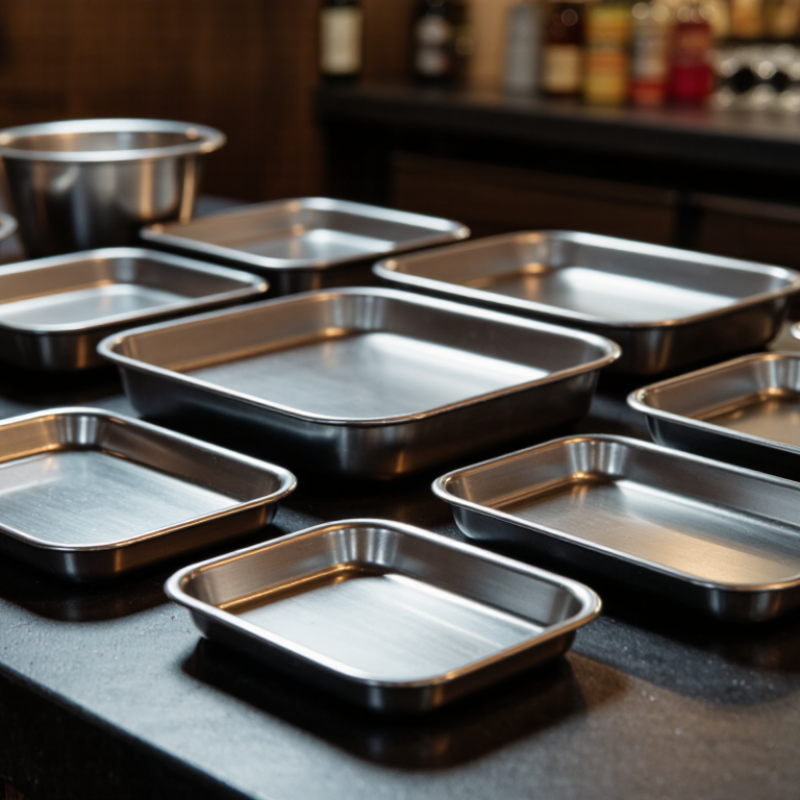
A stainless steel bar tray is a serving or staging surface made from corrosion-resistant steel, shaped to hold glasses, tools, or garnishes. Buyers should check the stated grade, not rely on a shiny finish. Many trays use grade 304, often described as 18/8 stainless steel. Its chromium helps resist corrosion; nickel supports formability and durability. Details matter. A rolled rim feels smoother in the hand, while a raised edge helps contain drips. Brushed surfaces can disguise light scratches, but may show residue more clearly under bright bar lighting.
The World Stainless Association’s Stainless Steel in Figures 2024 reports global crude stainless steel production of 58.4 million tonnes in 2023. That figure reflects a large materials industry, not a guarantee that any tray is well made. Inspect the underside, corners, and seams for rough edges, uneven joins, or trapped residue. Ask about steel grade and thickness; “heavy duty” alone is vague. Grade 430 may suit some dry, light-duty settings, but it generally offers less corrosion resistance than grade 304. A magnet test is not decisive: magnetic response can vary with grade and processing. One honest limitation: a tray can still stain or scratch if neglected. Clean it promptly, dry it after washing, and judge construction by the edges as well as the finish.
Stainless steel bar trays differ in grade, finish, shape, and edge design. For frequent service, buyers can check the stated steel grade and care instructions rather than relying on a shiny appearance. Grade 304 is commonly chosen for its corrosion resistance, while other grades may suit lighter-duty use. Finish matters too: a brushed surface hides small scuffs better than a mirror polish, though it can still show fingerprints.
Shape affects how a tray works in a crowded room. Rectangular trays hold rows of glasses neatly; round trays are easier to turn through tight spaces. Oval designs offer a middle ground. Raised rims help contain drips and keep glass bases on the tray. Small detail, big difference. Rolled edges can feel more comfortable in the hand, while cutout handles may be easier to grip when carrying a heavier load. Check that edges are smooth.
Some trays include textured surfaces or nonslip inserts. These can steady glasses, but textured areas may take longer to clean. A flat tray is simpler to wipe, yet drinks can slide when it tilts. No shape solves every task. Compare tray diameter with the glasses you actually serve, and consider whether it fits your shelf or dishwasher. Measurements are easy to overlook. An attractive tray that is awkward to carry may spend more time stored than used.
A practical comparison of ten common tray configurations. The order is for comparison only, not a sales or performance ranking; dimensions and metal thickness vary by manufacturer.
| No. | Tray Configuration | Typical Material | Shape & Indicative Size | Surface & Construction | Useful Features | Best Suited To | Buyer Consideration |
|---|---|---|---|---|---|---|---|
| 1 | Classic round serving tray | Food-contact-grade 304 stainless steel | Round; approximately 30–40 cm diameter | Smooth, shallow tray with a rolled rim | Easy to carry and present; raised rim helps contain glasses and small items | Serving drinks, glassware, and bar snacks | Check the usable flat area and rim height; a highly polished surface can show fingerprints. |
| 2 | Rectangular service tray | 304 stainless steel; 430 may suit drier, budget-conscious settings | Rectangular; commonly around 30 × 40 cm or 35 × 45 cm | Flat base with folded or rolled edges | Uses counter and storage space efficiently; accommodates rows of glasses | Busy bars, restaurants, and room service | Confirm that the tray fits the intended shelf, dishwasher rack, or storage area. |
| 3 | Oval presentation tray | 304 stainless steel | Oval; approximately 35–45 cm long | Smooth face with a shaped rim | Long serving area with rounded ends for a formal presentation | Table service, cocktail presentations, and shared snacks | Compare the tray’s length with available storage; oval shapes may stack less compactly than rectangles. |
| 4 | Deep-rim spill-control tray | 304 stainless steel | Round or rectangular; roughly 30–40 cm across or long | Deeper sides than a standard serving tray | Helps contain small spills and shifting items during transport | Carrying drinks across longer distances | A deeper rim adds containment but can make loading and unloading glasses less convenient. |
| 5 | Textured-base carrying tray | 304 or 430 stainless steel, depending on the environment | Usually round; approximately 30–36 cm diameter | Embossed or patterned metal base with a raised edge | Texture may reduce sliding compared with a smooth metal face | General drink service where a metal-only surface is preferred | Texture is not a substitute for a dedicated non-slip tray; check cleaning access between raised patterns. |
| 6 | Non-slip service tray with stainless construction | Stainless steel body with a fitted non-slip surface or insert | Commonly round; approximately 35–40 cm diameter | Metal tray paired with a rubber-like or other non-slip layer | Added grip can help limit glass movement when the tray is level and properly loaded | High-volume drink service | Check whether the insert is removable, replaceable, and suitable for the cleaning method used. |
| 7 | Lightweight rolled-edge tray | Thin-gauge 304 or 430 stainless steel | Round or rectangular; sizes vary by service needs | Thin sheet with a rolled edge for stiffness and a smoother rim | Lower carrying weight and easy handling | Frequent light-duty service | Ask for the metal thickness and check rigidity; thinner sheet can flex more under load. |
| 8 | Heavy-duty reinforced tray | 304 stainless steel, often with a thicker sheet or reinforced underside | Typically rectangular; approximately 35 × 45 cm or larger | Reinforced base, stiffened edge, or heavier-gauge construction | Greater resistance to flexing during repeated service | Commercial settings with frequent handling | Heavier construction can increase carrying weight; compare load needs with staff comfort. |
| 9 | Brushed-finish utility tray | 304 or 430 stainless steel | Rectangular or round; size selected for the counter or station | Brushed or satin finish rather than mirror polish | Subdued appearance; fine directional marks are less visually prominent than on a mirror finish | Bar stations, prep areas, and everyday service | Follow the grain when cleaning and avoid abrasive pads that may scratch the finish. |
| 10 | Compact garnish or accessory tray | 304 stainless steel for frequent wet use; 430 may be considered for drier use | Small rectangular or round format; often about 15–25 cm across | Shallow pan or tray, sometimes with divided sections | Organizes garnish tools, small bar accessories, or condiments | Bar-top organization and mise en place | For food contact, verify the intended use and cleaning instructions; sections should be easy to wash and dry. |
Choosing among stainless steel bar trays starts with the service setting, not appearance alone. Measure the shelf, pass-through, and storage rack before ordering. A tray that holds six tumblers may feel awkward in a narrow aisle. Compare usable surface area with rim height: deeper rims contain drips, but can catch glass bases. Check listed dimensions carefully, since handles and rolled edges may add width. Measure twice.
For frequent use, ask about the steel grade, thickness, and edge construction. Stainless steel resists corrosion, but it is not stain-proof when neglected. Look for smooth seams, a level base, and reinforced corners. Run a cloth along the edges to check for burrs. Heavier trays feel stable, yet staff may carry them for hours. Test one with a realistic load of bottles and ice. A wobble matters.
Design affects daily handling. A mirror finish looks polished but shows fingerprints and water marks; brushed finishes can disguise minor scratches. Prioritize comfortable grip, stackability, and easy cleaning. In a busy bar, trays get lifted wet, crowded, and stacked quickly. I would not choose by shine alone; that test is tempting, but incomplete. Ask for care instructions rather than assuming a tray is dishwasher-safe.
What Are the Top 10 Stainless Steel Bar Trays for Buyers?
A useful top-ten shortlist includes round service trays, rectangular trays, oval trays, raised-edge trays, perforated trays, non-slip trays, nesting trays, divided trays, lightweight trays, and heavy-gauge trays. Each suits a different job. Round trays turn easily in tight aisles, while rectangular models use shelf space well. Raised rims help contain spills. Perforated designs can drain melted ice, but may not suit every service setting. For buyers, shape is only part of the decision. Check the steel grade, thickness, finish, handle design, and stated load capacity. Ask the supplier for specifications rather than judging quality by shine alone.
Tips: Measure the storage shelf and the busiest serving route before ordering. Compare tray weight when empty, since a heavy tray can feel tiring after repeated trips. Look for smooth seams and rolled edges that are comfortable to grip and easy to clean. A mirror finish looks polished, but it can show fingerprints quickly. Brushed steel may be less striking, yet easier to maintain between services.
There is no single best tray for every buyer. A small venue may value nesting trays, while a high-volume bar may prefer sturdy, easy-to-carry models. I would not rank attractive appearance above practical handling; that choice can disappoint once trays are in daily use. Check replacement availability and care instructions, too. A small detail, perhaps, but worth asking.
How to read this chart: These ten tray formats are compared by approximate footprint area in square centimeters, calculated from the sample dimensions shown. Round and oval areas use geometric estimates. This is an illustrative size comparison, not a market ranking; actual dimensions and usable surface area vary by product, especially around rims and handles.
A stainless steel bar tray handles ice, citrus, glass rings, and frequent contact, so regular care helps preserve its finish. After serving, empty the tray and wipe away spills promptly. Use warm water, a little mild dish soap, and a soft cloth. Rinse off soap, then dry the tray with a clean towel. Dry it fully. Pay attention to the rim and corners, where moisture can linger.
Fingerprints and cloudy marks often show more clearly under bright bar lighting. Wipe with the grain of the steel when visible, rather than scrubbing in circles. Avoid steel wool, gritty powders, and chlorine-based cleaners, which can scratch or damage the surface. Salt and acidic drinks, such as lemon juice, should not sit on the tray for long. Check handles and nonslip feet occasionally; a loose part can make a loaded tray harder to carry. Honestly, drying every time can feel fussy, but it prevents water spots.
Tips: Keep a soft microfiber cloth nearby. For stubborn marks, use diluted dish soap first, then rinse and dry. Follow any care instructions supplied with your tray.
Check the stated grade and care instructions. Grade 304 is commonly selected for corrosion resistance. Shine alone proves little.
Brushed steel tends to hide small scuffs better. Mirror finishes look polished but show fingerprints quickly. That can get old.
Round trays turn easily through narrow aisles. Rectangular trays keep glasses in neat rows. Oval trays offer a middle ground.
Raised rims help contain drips and keep glass bases on the tray. A small edge can make a difference.
They can help steady glasses, especially when a tray tilts slightly. Textured areas may take longer to clean. Trade-off.
Measure the storage shelf and serving route. Compare tray diameter with the glasses you use. Measurements are easy to miss.
Yes. A heavy tray may feel tiring after repeated trips. Rolled edges can feel comfortable, while cutout handles may help with heavier loads.
Check smooth seams, load capacity, and care instructions. Consider how easily it fits a shelf or dishwasher. I might still overlook one detail.
Stainless Steel Bar Trays are practical serving and organizing tools valued for their clean appearance, strength, and resistance to everyday wear. Buyers can compare materials, shapes, finishes, and features such as raised edges, nonslip surfaces, and comfortable handles to find a tray suited to drinks, glassware, or bar accessories. The right choice depends on available space and intended use: consider tray dimensions, weight, construction quality, and how easily the design can be carried and stored.
When comparing the top options, balance durability and function with appearance and budget rather than choosing by style alone. A well-made tray should feel stable, have smooth edges, and be simple to clean. Routine care helps preserve its finish: wash it with mild soap and a soft cloth, dry it thoroughly, and avoid abrasive cleaners that may scratch the surface. With thoughtful selection and basic maintenance, a stainless steel tray can remain useful and attractive for years.