Choosing the best China-made Ferritic Stainless Steel Induction Discs requires more than comparing price lists. Buyers must examine steel grade, magnetic response, bonding quality, flatness, and long-term heat stability. The disc sits between the induction field and the cookware base. Small manufacturing differences can affect heating speed, noise, and service life.
The International Stainless Steel Forum reported approximately 58.4 million tonnes of stainless steel production worldwide in 2023. China contributed the largest share, confirming its importance in global stainless-steel manufacturing. However, national production volume does not automatically prove product quality. That distinction matters. A reliable disc should show consistent ferritic structure, controlled thickness, clean edges, and strong attachment to aluminium or stainless cookware. Common grades such as 430 stainless steel offer useful magnetic performance and corrosion resistance, but their suitability depends on the final application.
Professor Harold M. Cobb, a recognised stainless-steel historian, stated, “Stainless steel is not one material.” His point applies directly here. Ferritic Stainless Steel Induction Discs must be selected according to cookware design, heating power, temperature cycles, and required service life. Relevant standards, including ASTM A240 and EN 10088, help verify material specifications, yet factory testing remains essential. Buyers should request chemical composition reports, tensile data, flatness measurements, and induction-heating tests. A polished sample may look excellent. It can still fail during repeated heating. Therefore, the best Chinese supplier is not simply the cheapest. It is the manufacturer that connects documented metallurgy with stable production, transparent inspection, and practical application experience. The market still has room for better testing.
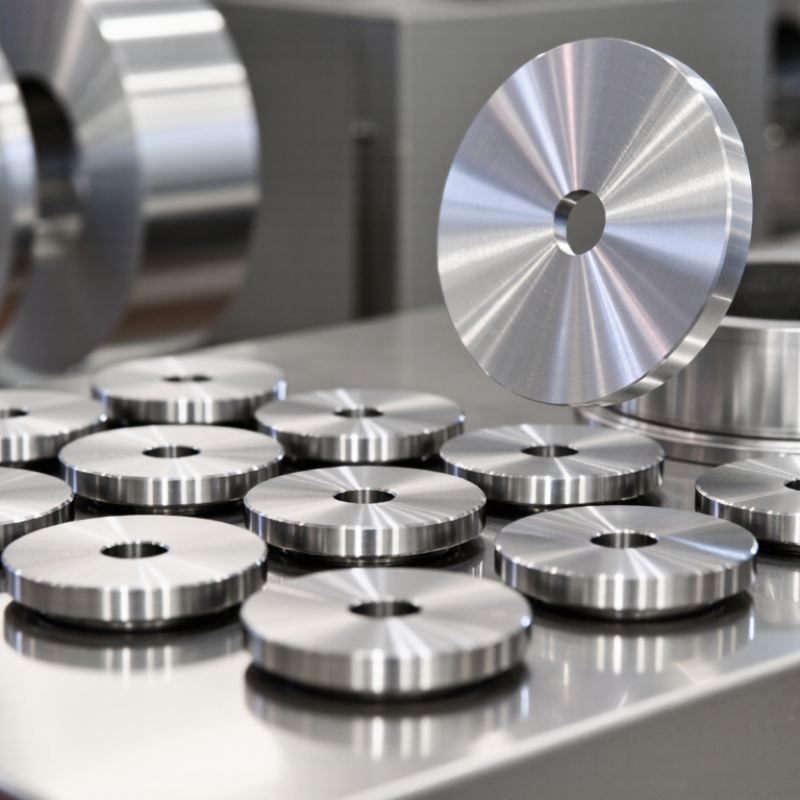
Ferritic stainless steel induction discs from China are magnetic metal plates used to make non-magnetic cookware suitable for induction heating. Manufacturers usually bond the disc to aluminum or copper cookware bases. The ferritic layer responds to the cooktop’s magnetic field, while the inner metal spreads heat across the pan.
In practical quality checks, disc performance depends on more than magnetic attraction. Inspectors should examine thickness, flatness, surface condition, and bonding strength. Poor bonding may create air gaps, uneven heating, or a faint rattling sound after repeated use. A magnet test is helpful, but it cannot confirm heating efficiency. Real induction testing is necessary.
Chinese suppliers may offer discs in different ferritic stainless steel grades, sizes, and finishing conditions. Buyers should request material certificates, dimensional tolerances, corrosion test results, and production samples. Food-contact requirements also need careful review when the disc could become exposed. This step is often overlooked.
One limitation remains. A thicker disc does not automatically provide better cooking results. It can improve durability, but may slow heat response and increase weight. I would compare several samples under the same cookware and power settings. Small differences in bonding pressure can change the final result, even when the steel grade appears identical.
Ferritic stainless steel induction discs are magnetic stainless steel layers used to transfer heat from an induction cooktop to compatible cookware. The chart compares representative standardized ferritic grades commonly considered for induction-disc applications. Chromium values are representative midpoints of typical specification ranges, while carbon values show maximum limits.
Key point: Grades 430, 439, 441, and 444 are ferritic and magnetic. Grade 430 is widely used for general-purpose induction components, while stabilized grades such as 439 and 441 can offer improved resistance to sensitization during heating. Grade 444 provides higher corrosion resistance because of its molybdenum addition.
Chinese ferritic stainless steel induction discs are manufactured through controlled forming, bonding, and inspection. Production usually begins with ferritic stainless steel coils. Technicians check thickness, magnetic response, surface condition, and chemical composition before cutting circular blanks.
The blanks are stamped or deep-drawn into precise discs. Ferritic steel is magnetic, which allows induction cookers to transfer energy through the cookware base. In many designs, an aluminum layer is bonded between the stainless disc and the cooking vessel. This layer spreads heat across the bottom and reduces hot spots. The bonding process may use high-pressure impact bonding or controlled brazing, depending on the structure and production equipment.
Clean surfaces matter greatly. Oil, oxide, and tiny particles can weaken the bond. After bonding, workers machine the edges, correct flatness, and polish the exposed surface. Each batch should undergo adhesion tests, dimensional checks, salt-spray evaluation, and induction heating trials. Operators also inspect the disc for warping after repeated heating and cooling.
Small defects can become visible later. That is why experienced factories retain samples from every production lot. Still, no manufacturing line is flawless. Temperature variation, uneven pressure, or minor material changes may affect heat distribution.
Better factories record these details and adjust their process instead of hiding them. The best discs are not judged by appearance alone. Consistent thickness, strong bonding, reliable magnetism, and stable performance matter more.
Ferritic stainless steel induction discs work because their magnetic structure responds directly to an induction cooktop’s electromagnetic field. When placed under a non-magnetic pan, the disc transfers heat from the cooking zone to the pan base. This makes aluminum, glass, and some ceramic cookware more usable on induction surfaces.
The most important property is magnetic permeability.
A well-selected ferritic grade can generate heat efficiently without becoming excessively heavy. Thickness also matters. A thin disc heats quickly but may develop hot spots. A thicker disc spreads heat more evenly, although it responds more slowly. In practical cookware testing, a flat disc usually gives steadier contact and fewer rattling sounds. Small gaps can reduce heat transfer.
Material quality affects long-term performance.
Good ferritic stainless steel resists ordinary moisture, food acids, and repeated heating. A smooth surface is easier to clean, while a stable bonded structure helps prevent separation between metal layers. Manufacturing control should include flatness checks, magnetic response testing, and repeated heating cycles. These details often matter more than appearance.
Not every ferritic disc performs perfectly.
Some models heat unevenly around the center. Others warp after careless overheating. That deserves attention. The best designs balance magnetic response, thermal distribution, surface durability, and safe handling. A comfortable edge and a secure grip can also prevent slips when moving a hot disc.
Ferritic stainless steel induction discs from China are used mainly beneath cookware that needs reliable magnetic heating. Common applications include frying pans, saucepans, pressure cookers, kettles, and commercial food containers. Their magnetic response allows induction energy to transfer through the base. Ferritic grades also contain little or no nickel, helping control material costs. Production experience shows that disc thickness, flatness, and bonding quality matter more than appearance alone. A bright surface cannot repair poor heat contact.
Chinese manufacturers supply these discs for household kitchens, restaurants, catering equipment, and portable induction cookers. They are often pressed into aluminum cookware or joined within multilayer bases. The U.S. Department of Energy states that induction cooking can use up to 10% less energy than conventional smooth-top electric cooking. That advantage depends on close contact and correct cookware geometry. The World Stainless 2023 production report recorded 58.4 million tonnes of stainless steel worldwide, showing the scale of the supporting material industry. However, production volume does not guarantee stable performance. Some low-cost discs warp after repeated heating, especially when welding control is weak. Buyers should check magnetic response, thickness tolerance, bonding strength, corrosion resistance, and thermal cycling results. This is where specifications sometimes need more honest revision.
| Ferritic Stainless Steel Grade | Typical Chromium Content | Magnetic Property | Induction Heating Suitability | Typical Disc Characteristics | Common Cookware Applications | Key Selection Considerations |
|---|---|---|---|---|---|---|
| AISI 430 / EN 1.4016 | Approximately 16–18% Cr | Magnetic | Very good | Good electrical conductivity for a ferritic stainless steel; widely available; suitable for formed or bonded discs. | Frying pans, saucepans, stockpots, kettles, and induction-compatible kitchenware. | Suitable for general-purpose induction bases where moderate corrosion resistance and cost control are required. |
| AISI 439 / EN 1.4510 | Approximately 16–18% Cr with titanium stabilization | Magnetic | Very good | Better resistance to intergranular corrosion after welding than unstabilized 430; good formability and thermal cycling performance. | Multi-layer cookware bases, pressure-cooker components, large pots, and cookware exposed to repeated heating and cooling. | A practical choice when improved weldability and durability are needed without using an austenitic stainless steel. |
| AISI 441 / EN 1.4509 | Approximately 17–19% Cr with titanium and niobium stabilization | Magnetic | Very good | Good high-temperature oxidation resistance, dimensional stability, and resistance to thermal fatigue. | Premium cookware bases, high-temperature pans, grill plates, and cookware designed for frequent daily use. | Useful when repeated thermal cycling and long service life are more important than the lowest material cost. |
| AISI 444 / EN 1.4521 | Approximately 17–20% Cr with molybdenum stabilization | Magnetic | Very good | Higher resistance to pitting and corrosion than basic 430 in many service environments; suitable for robust disc construction. | Heavy-duty cookware, induction pots, commercial kitchen vessels, and cookware used with salty or acidic foods. | Consider when corrosion resistance is a priority; the higher alloy content generally increases material cost. |
| AISI 409 / EN 1.4512 | Approximately 10.5–12% Cr with titanium stabilization | Magnetic | Good | Economical ferritic grade with useful oxidation resistance and magnetic response. | Cost-sensitive cookware bases, low-to-moderate duty pots, and induction adapters where appearance requirements are limited. | Best suited to applications where budget and magnetic response are more important than premium corrosion resistance. |
| AISI 410 / EN 1.4006 | Approximately 11.5–13.5% Cr | Magnetic | Good | Higher strength and hardness than many common ferritic grades; corrosion resistance is lower than that of 430, 439, or 444. | Special-purpose cookware components, reinforcement parts, and induction discs requiring higher mechanical strength. | Requires careful surface-finish and corrosion requirements review before use in direct food-contact cookware. |
| 430-Based Multi-Layer Disc | Ferritic induction layer commonly uses approximately 16–18% Cr | Magnetic induction layer | Very good | Usually combined with aluminum and an inner food-contact stainless steel layer to balance induction response, heat distribution, and corrosion resistance. | Clad frying pans, saucepans, sauté pans, stockpots, and stainless steel induction cookware. | One of the most practical constructions for combining magnetic heating with more even heat distribution. |
| Perforated or Patterned Ferritic Disc | Usually produced from a magnetic ferritic grade such as 430 | Magnetic | Good to very good | Openings or patterned geometry can reduce weight and support mechanical bonding during impact or pressure welding. | Encapsulated cookware bases, lightweight pans, and cookware requiring controlled bonding between the disc and vessel body. | Disc geometry, flatness, bonding quality, and full contact with the cookware base strongly affect heating performance. |
| Solid Ferritic Disc | Commonly produced from 430, 439, 441, or 444 depending on requirements | Magnetic | Very good | Continuous metal surface provides consistent magnetic coupling and a simple structure for brazing, welding, or impact bonding. | Cookware with encapsulated bottoms, induction-compatible kettles, pressure cookers, and commercial kitchen pots. | Disc diameter, thickness, flatness, surface cleanliness, and bonding method should match the cookware design. |
| Typical Induction Disc Dimensions | Material-dependent | Magnetic response depends on grade and thickness | Design-dependent | Common cookware discs are engineered to match the base diameter; thickness is selected according to heating response, rigidity, and forming requirements. | Small pans, household pots, large stockpots, commercial cookware, and induction adapter plates. | There is no universal size. The disc should cover the intended heating area without interfering with forming, handles, or edge finishing. |
| Typical Chinese Manufacturing Uses | Depends on the selected grade and product specification | Ferritic grades provide the required magnetic response | Application-specific | Produced as blanked, stamped, perforated, patterned, bonded, welded, or encapsulated components for cookware production. | Household cookware, hotel and restaurant cookware, export-oriented kitchenware, induction adapters, and replacement bases. | Quality control should cover chemical composition, magnetic response, thickness tolerance, flatness, surface condition, and bonding strength. |
Choosing China’s best ferritic stainless steel induction disc requires more than checking a shiny surface. Ferritic steel should respond firmly to a magnet, but magnetism alone proves little. Ask for the steel grade, chemical composition, thickness tolerance, and production batch records. A reliable supplier should provide inspection reports and clear traceability. The disc must remain flat after pressing, bonding, and repeated heating. Even a slight warp can create uneven contact with an induction cooktop.
Tips: Request production samples before placing a large order. Check the disc with a straightedge, caliper, and magnet. Inspect the edge for burrs, cracks, or peeling. If possible, ask for cross-section photographs or a bonding-strength test. Heat a sample gradually, then cool it several times. Watch for distortion, discoloration, or separation. Do not judge quality by polishing alone. A bright surface can hide weak bonding or inconsistent thickness.
Buyers should also compare thermal performance, not only unit price. Disc diameter must match the cookware base, while thickness affects heat transfer and weight. A good disc supports stable heating without excessive hot spots. However, performance depends on the cookware structure, bonding method, and induction power. No disc is perfect. I would treat supplier claims as starting points, not final evidence. Independent testing is worthwhile when failure could affect production schedules or customer trust.
They make non-magnetic cookware suitable for induction heating. The disc reacts to the cooktop’s magnetic field. It transfers heat into the pan base. Useful for aluminum, glass, and some ceramic cookware.
Production starts with ferritic stainless steel coils. Workers check thickness, composition, surface quality, and magnetic response. Circular blanks are then stamped or formed. The disc may bond with an aluminum heat-spreading layer.
Manufacturers may use high-pressure impact bonding or controlled brazing. Clean surfaces are essential. Oil, oxide, or particles can weaken the connection. Poor bonding may create air gaps and uneven heating.
No. A magnet confirms magnetic attraction, not heating efficiency. Real induction testing is necessary. Inspectors should compare heating speed and temperature distribution under identical settings.
Not necessarily. A thicker disc can improve durability and heat spreading. However, it may respond more slowly and add weight. Thin discs heat quickly but may develop hot spots. The balance is imperfect.
Request material certificates and dimensional tolerances. Ask for corrosion test results and production samples. Check thickness, flatness, surface condition, and bonding strength. Repeated heating cycles can reveal later warping.
Weak bonding may cause rattling, air gaps, or uneven heating. Temperature changes can expose small manufacturing defects. Some discs warp after careless overheating. A clean appearance does not guarantee stable performance.
Compare several samples using the same pan and power level. Review batch records and retained samples. Confirm food-contact requirements if the disc becomes exposed. This detail is often overlooked.
Ferritic Stainless Steel Induction Discs from China are specially engineered metal components designed to improve the compatibility of cookware with induction heating systems. They are typically produced by selecting corrosion-resistant ferritic stainless steel, cutting it into precise shapes, forming or laminating the disc when necessary, and carefully controlling thickness, flatness, and surface quality. During manufacturing, attention is also given to strong bonding, dimensional consistency, and reliable heat transfer.
These discs are effective because ferritic stainless steel offers magnetic responsiveness, durability, resistance to oxidation, and good thermal stability. They are commonly used in cookware such as pots, pans, kettles, and other household or commercial heating products that need to work efficiently on induction cooktops. Buyers should evaluate material composition, magnetic performance, thickness uniformity, bonding strength, surface finish, production consistency, and inspection documentation. Comparing samples, testing heating performance, and confirming suitable customization capabilities can help buyers select high-quality Ferritic Stainless Steel Induction Discs for their intended application.