The 2026 market for Pressure Cooker Lids & Support Rings is becoming more demanding, not merely larger. Buyers now examine sealing reliability, material quality, dimensional accuracy, and replacement support. A lid may look polished, yet fail if its gasket channel is uneven. A support ring may appear simple, but small thickness changes can affect stability and heat performance.
Laura Pazzaglia, founder of Hip Pressure Cooking, has often emphasized, “A pressure cooker is only as reliable as its maintenance.” That practical view should guide supplier evaluation. Strong manufacturers provide clear specifications, consistent testing, traceable materials, and instructions that ordinary users can understand. They also explain compatibility instead of hiding behind broad product claims.
This guide reviews leading 2026 suppliers through an experience-based lens. It considers stainless steel grades, reinforced handles, silicone gasket quality, ring resilience, production controls, and after-sales service. Supplier responsiveness matters too. A prompt technical answer can prevent an expensive purchasing mistake.
No supplier ranking is perfect. Some information changes quickly. Factory capacity, certifications, and lead times should be verified directly before a contract is signed. Samples deserve careful inspection. Check the locking fit, ring compression, edge finish, and long-term replacement availability.
The best suppliers do more than deliver components. They help brands build safer, more dependable pressure-cooking systems. That difference becomes visible in everyday use, from a secure lid closure to a support ring that remains stable after repeated heating cycles.
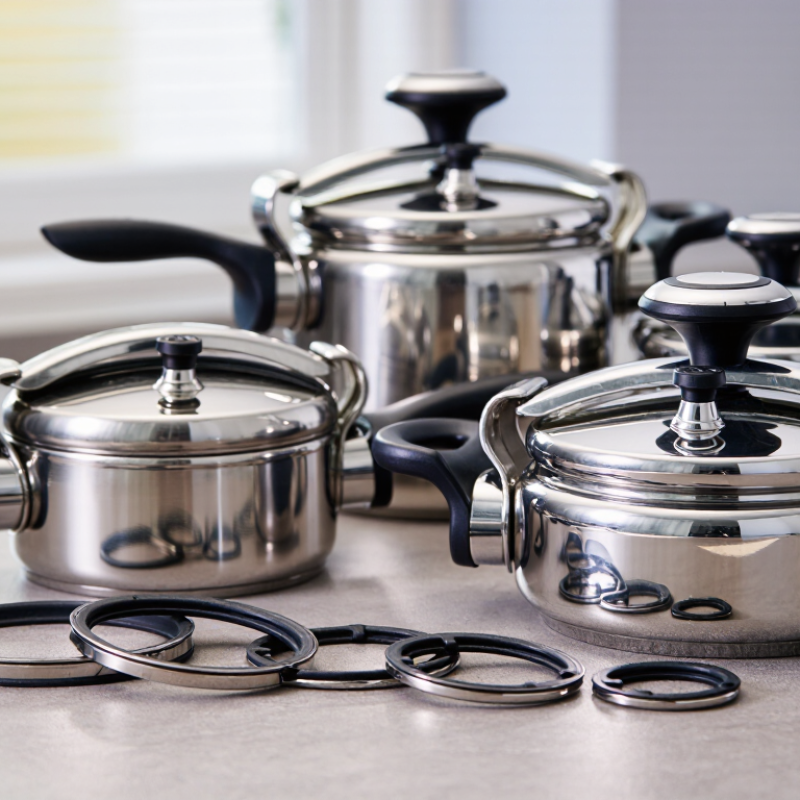
A pressure cooker lid seals the pot and keeps steam inside. This creates pressure, raising the cooking temperature above normal boiling point.
A reliable lid usually includes a sealing gasket, pressure indicator, steam valve, and safety release system.
Common lid designs include twist-lock, bolt-down, and inner-lid styles. Twist-lock lids use aligned grooves and handles for quick engagement. Bolt-down lids rely on clamps or screws and may suit heavier cooking vessels.
Inner-lid models place the locking structure inside the pot rim. Each design needs exact alignment.
Fit matters.
The support ring helps position the lid or gasket and spreads pressure around the sealing area. Some rings are fixed to the lid, while others are removable for cleaning or replacement.
Typical materials include stainless steel, coated steel, heat-resistant silicone, and durable food-grade polymers.
A ring with a warped edge can cause uneven sealing, even when the gasket looks new.
During inspection, check for dents, cracks, hardened rubber, and blocked vents. Replace parts according to the cooker’s specifications, not by appearance alone.
I have found that small gaps matter more than expected. Users sometimes over-tighten a lid, thinking extra force improves safety. It can distort the seal instead.
Cleaning is also easy to underestimate; dried starch near the ring may interrupt pressure control. Manufacturer measurements and pressure ratings remain essential, although household storage and repeated heating can still change a component’s condition.
Pressure cooker lid and support ring suppliers are increasingly judged by compatibility, not appearance. Fortune Business Insights estimates the global pressure cooker market exceeded US$5 billion in 2023. Its forecast also indicates steady growth through 2030. More replacement parts will enter mixed, aging appliance fleets. That creates a practical risk.
A compatible lid must match the cooker’s rim diameter, locking geometry, sealing-gasket channel, and pressure-release path. Small dimensional errors can cause leakage or failed locking.
Support rings require equal attention. Their inner diameter, load-bearing height, heat resistance, and contact points must match the pot body. EN 12778 and applicable regional safety requirements provide useful reference points, but they do not guarantee universal interchangeability. Supplier drawings remain essential.
The process needs evidence. Suppliers should publish measured tolerances, material specifications, batch traceability, and fit-test records. A 0.5-millimeter difference may matter. Grand View Research identifies replacement demand and household convenience as important market factors, yet market reports rarely measure cross-model compatibility. That is a weakness worth acknowledging. Experienced buyers should request sample fitting across several production batches, inspect gasket compression, and test locking without pressure. Visual matching is not enough. It fails too often. Support rings should also be checked for deformation after repeated heating cycles, because a stable cold fit may become unsafe when the metal expands.
Choosing pressure cooker lids and support rings in 2026 requires more than comparing prices. Suppliers should provide clear material records, dimensional tolerances, and food-contact documentation. Ask how each batch is inspected. A reliable supplier can explain pressure testing, heat-cycle testing, and rejection rates without avoiding details. Small deviations can affect sealing performance and user safety.
Experience matters during factory evaluation. Request production samples, not only polished showroom pieces. Check lid alignment, ring flexibility, surface finish, and fit after repeated heating. Review the supplier’s quality system, complaint records, corrective actions, and delivery history. Independent testing may confirm performance, but supplier documents still need careful verification. A certificate alone proves little.
Tips: Build a practical scoring sheet before contacting suppliers. Include testing, traceability, capacity, response speed, packaging, and replacement support. Ask for one pilot order with defined acceptance criteria. Low prices attract attention, yet inconsistent dimensions can create hidden costs. I have found that fast replies do not always mean strong production control. No checklist is perfect. Recheck critical measurements yourself, especially after transport and storage. Also examine whether the supplier can maintain stable quality during seasonal demand, because impressive samples may not represent every production batch.
Supplier selection is becoming more specialized as pressure-cooker demand expands. Grand View Research estimates the global pressure-cooker market will grow at about 6% annually through 2030. This growth supports four supplier categories: complete cookware manufacturers, OEM and ODM factories, replacement-part specialists, and metal-stamping component suppliers.
Lids usually require formed aluminum or stainless steel, heat-resistant handles, precise vent openings, and repeatable sealing surfaces. Support rings need tighter dimensional control. Small errors can cause poor fitting.
Manufacturing remains concentrated in Asia, especially China, India, and Southeast Asia. These regions offer established stamping, machining, polishing, and assembly networks. India has strong domestic cooking-equipment demand, while China provides broad tooling capacity and export logistics. Southeast Asian plants are gaining attention for supply-chain diversification. Europe and North America remain important for engineering, testing, and premium replacement components. Mordor Intelligence also identifies Asia-Pacific as the leading regional market for pressure cookers.
The data is not perfectly clean. UN Comtrade classifications often combine pressure-cooker parts with wider kitchenware categories. Therefore, trade figures should be checked against factory audits, sample measurements, and material certificates.
I would not trust a supplier from catalog photos alone. Ask for ring roundness records, lid pressure testing, corrosion results, and batch traceability. One overlooked detail matters: a ring can look identical yet fail after repeated heating cycles.
When sourcing pressure cooker lids and support rings in 2026, purchasing decisions should begin with fit, not price. Ask suppliers for dimension drawings, material certificates, batch numbers, and compatibility records. A reliable supplier should explain sealing-surface tolerances, heat resistance, and expected service life. Request samples from the same production line used for bulk orders. This step can expose uneven threads, rough edges, or weak ring elasticity. Confirm minimum quantities, lead times, packaging protection, replacement policies, and inspection rights before payment.
Quality control should combine supplier documents with physical checks. Inspect lid alignment, vent openings, gasket contact, and ring deformation. For incoming goods, record measurements at several points, not only one approved sample. Pressure and thermal testing should follow applicable safety standards. Qualified technicians should perform these tests. Keep photos, test results, and lot records for traceability. I have learned that polished surfaces can hide inconsistent dimensions. Visual appearance is useful, but it is not proof. Some inspection plans still miss damage caused during transport.
Tips: Build a written acceptance standard with clear limits. Keep spare lids and rings for urgent replacements. Ask how complaints are logged and answered. After-sales support matters when a ring loses flexibility or a lid arrives scratched. Suppliers should provide technical guidance, response times, and replacement procedures in writing. Test communication before placing a large order. Fast answers are not always useful answers. Review performance quarterly, then adjust specifications when repeated defects appear.
Procurement evaluation priorities for ordering, quality control, and after-sales service
The chart uses a practical 100-point procurement framework. Lead-time reliability and pressure/leak testing receive the highest weighting because they directly affect supply continuity and product safety. Material compliance, order flexibility, warranty coverage, and replacement-part support are also essential when comparing suppliers.
The lid seals the pot and traps steam. Pressure raises the cooking temperature above normal boiling.
Common parts include a sealing gasket, pressure indicator, steam valve, and safety release system. Each part has a separate role.
Common designs include twist-lock, bolt-down, and inner-lid styles. Exact alignment is essential for every design.
A support ring positions the lid or gasket. It also spreads pressure around the sealing area.
Typical materials include stainless steel, coated steel, heat-resistant silicone, and food-grade polymers. Material choice affects durability and heat resistance.
Check for dents, cracks, hardened rubber, blocked vents, and warped edges. Dried starch near the ring can interrupt pressure control.
No. The rim diameter, locking geometry, gasket channel, and release path must match.
Request material records, dimensional tolerances, batch traceability, and fit-test results. A certificate alone proves little.
Metal can expand during repeated heating cycles. A stable cold fit may become unsafe when heated.
Request production samples and one pilot order. Review testing, complaints, corrective actions, packaging, and delivery history.
Not always. Inconsistent dimensions can create leakage, returns, and hidden costs.
No checklist is perfect. Recheck critical measurements after transport and storage. Small gaps matter.
This guide to 2026 Top Pressure Cooker Lids and Support Rings Suppliers explains how these essential components help maintain pressure, improve sealing performance, and support safe, efficient cooking. It reviews common lid designs, sealing structures, support ring types, and material choices, while emphasizing the importance of compatibility with cooker size, locking systems, pressure ratings, gasket dimensions, and relevant safety standards.
The article also outlines key criteria for evaluating suppliers, including manufacturing capability, material consistency, quality inspection, production capacity, customization options, and documentation. It compares supplier categories and major manufacturing regions without focusing on specific brands, then highlights practical considerations for ordering, such as sampling, technical communication, packaging, lead times, and batch traceability. Reliable after-sales service, clear warranty terms, replacement support, and responsive handling of quality issues are presented as essential factors for building stable and long-term supply relationships.